But the Congress also faces important local challenges in the run-up to 2024
Among the major states which will go to polls before the 2024 elections -- Gujarat, Himachal Pradesh, Karnataka, Telangana, Rajasthan, Madhya Pradesh and Chhattisgarh -- the Congress is a direct challenger to the BJP in all but one (Telangana).
{{^htLoading}} {{/htLoading}} The Gujarat and Himachal Pradesh elections are scheduled later this year. In both states, and especially in Gujarat, the Congress faces a very critical challenge. Even if it cannot defeat the BJP, it needs to finish a credible second, which seems difficult at least in Gujarat , given the momentum the Aam Admi Party (AAP) is seeing in the state. It is reasonable to expect that the AAP is more interested in finishing as the major opposition party than grabbing power in Gujarat.
Also Read| Congress’s ‘Bharat Jodo’ Yatra may not pass through Gujarat
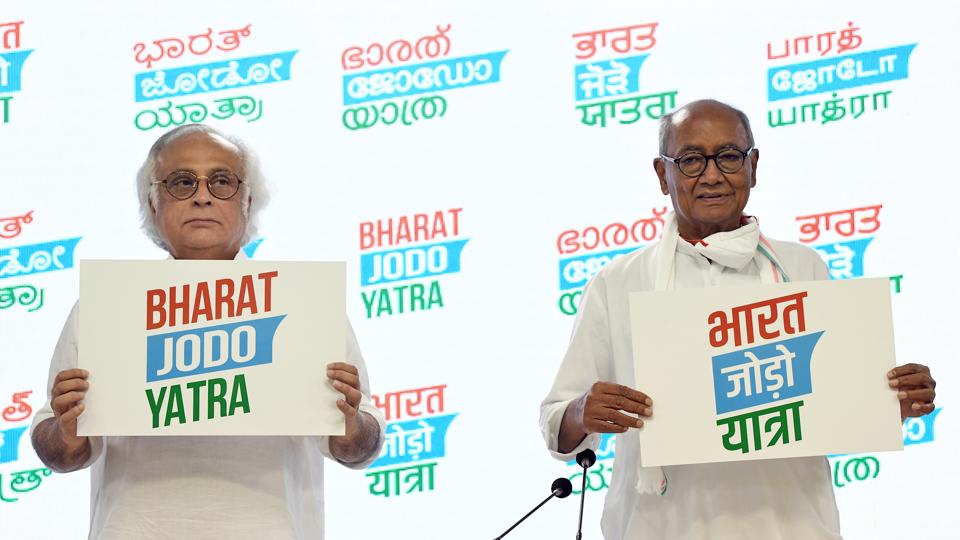
The fact that Gujarat does not even figure on the Yatra’s map, may suggest that the Congress plans to run its Gujarat campaign and the Yatra separately. This also means that the party’s central leadership will not be able to devote as much time to the Gujarat campaign as it did in 2017. Rahul Gandhi pretty much led the Gujarat campaign in 2017 and Ashok Gahlot -- he was not the Rajasthan chief minister then -- was the General Secretary in-charge of organisation and oversaw the campaign. The Yatra may serve as a distraction from the task at hand in Gujarat , and could harm the Congress’s prospects . If the Congress were to fall behind the AAP, it could completely derail the momentum of the Bharat Jodo Yatra.
{{^htLoading}} {{/htLoading}} The Congress also needs clever ideological manoeuvring in the run-up to 2024
In Gujarat, Himachal Pradesh and Karnataka (scheduled for elections in early 2023), the Congress is the main opposition party and it will have the advantage of anti-incumbency. However, in at least two of these states, namely Gujarat and Karnataka, it will also have to deal with aggressive Hindutva politics.
{{^htLoading}} {{/htLoading}} An analysis of the 2017 Gujarat results by Sanjay Kumar and Shreyas Sardesai from CSDS-Lokniti captures this predicament of the Congress well. “In constituencies where Muslims in the population are less than 10%, the BJP’s lead over the Congress among Hindu voters is only 4 percentage points. In seats where Muslims constitute 10-20% of the population, the gap is six times higher at 25 points. And in areas where Muslims are over 20% of the population, the BJP leads the Congress by 42 points among Hindu voters”, Kumar and Sardesai found .
Perhaps, it will help if the Congress manages to make local level anti-incumbency a bigger issue than the secularism-communalism binary in Gujarat and even Karnataka.
In the following election cycle--the last one before the 2024 general elections -- the Congress will be at the receiving end of anti-incumbency in Rajasthan and Chhattisgarh and lead the opposition’s charge in Madhya Pradesh.
{{^htLoading}} {{/htLoading}} Would it not have been a better tactical plan for the Congress to first focus on the Gujarat elections, finish a credible second even if it cannot achieve victory, make a spirited effort at winning Karnataka (its vote share was more than that of the BJP in the 2018 elections), and then hold the Yatra to build momentum before the late 2023 election cycle?
That may have helped the Congress nullify anti-incumbency to some extent in Rajasthan and Chhattisgarh and generate tailwinds for its campaign in Madhya Pradesh. The fact that Congress and BJP vote shares were almost neck-to-neck in Rajasthan and Madhya Pradesh in the 2018 elections, supports this argument. The “hawa” (mood) which the Yatra would have generated could have really helped, especially on the back of strong performances in Gujarat and Karnataka.
{{^htLoading}} {{/htLoading}}