The Delhi high court on Thursday sought the Centre’s response on a petition claiming that the provisions of the Criminal Procedure (Identification) Act, which enables the police to “forcibly take measurements” of convicts, those arrested and others, are unconstitutional and illegal.
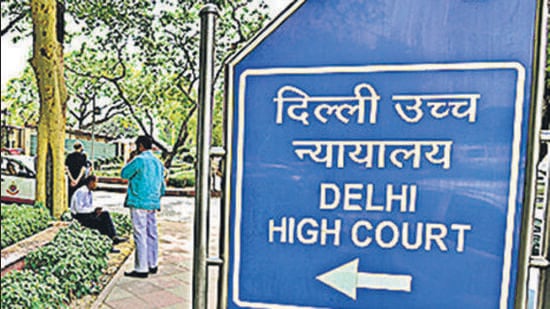
Issuing notice on the plea, a bench of acting chief justice Vipin Sanghi and justice Navin Chawla said the public interest litigation (PIL), filed by lawyer Harshit Goel alleging that the law aids profiling and creation of a surveillance state, “requires consideration”.
Also Read | Criminal identification Bill gets President’s assent
Senior advocate Amit Mahajan, appearing for the Union government, said the petition was not maintainable while arguing that the validity of a law cannot be challenged in vacuum in a PIL.
To this, the court asked the Centre to file its reply to the challenge, including the aspect of maintainability.
The petitioner, while seeking judicial review of sections 2(1)(a) (iii), 2(1) (b), 3, 4, 5, 6 and 8 of the Act, has claimed that the provisions grant “unguided discretionary powers” to authorities and are arbitrary, excessive, unreasonable, disproportionate, devoid of substantive due process and in violation of fundamental rights of the citizens of India as well as of the basic structure of the Constitution.
In his plea filed on April 19, the petitioner has said that under the Act, the police can “forcibly take measurements” — which would include iris and retina scan, biological samples and behavioural attributes — of convicts, arrestees, detainees, undertrials and any person who may be remotely involved in an offence, without prima facie establishing their involvement or the evidentiary value of such ‘measurements’.
{{/usCountry}}In his plea filed on April 19, the petitioner has said that under the Act, the police can “forcibly take measurements” — which would include iris and retina scan, biological samples and behavioural attributes — of convicts, arrestees, detainees, undertrials and any person who may be remotely involved in an offence, without prima facie establishing their involvement or the evidentiary value of such ‘measurements’.
{{/usCountry}}The petition stated that while the old law created a statutory framework to lawfully collect finger and foot-print impressions and photographs of only a class of individuals, the present Act puts all persons in the same bracket.
“Under the present Act, such aim is apparent upon a reading of Section 3 (taking of measurement) with Section 4 (databasing of measurements). Together, it is clear that these provisions intend to create a database of ‘measurements’ profiling the class of persons identified in Section 3 for the purposes of aiding investigations of future crimes,” the petition stated.
The matter would be heard next on November 15.