E-Paper



Himachal Pradesh becomes fourth fully literate state
Under Ullas, a state is considered fully literate when at least 95% of its population above 15 years can read, write and perform basic numeracy tasks needed in daily life

 Prefer HTon Google


Himachal Pradesh on Monday became the fourth fully literate state in India after Tripura, Mizoram, and Goa, under the Ullas (Understanding lifelong learning for all in society) scheme, a centrally sponsored literacy programme for people above the age of 15 years.
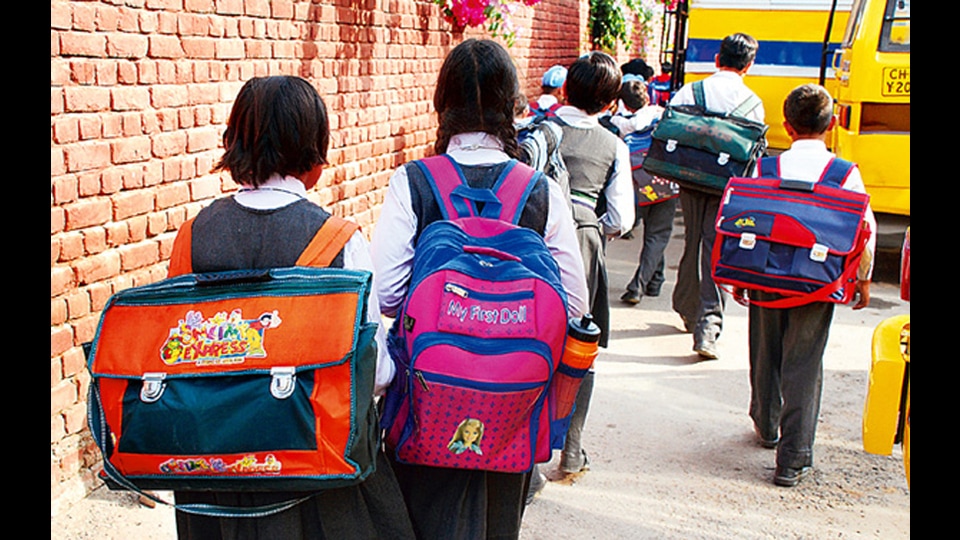
Under Ullas, a state is considered fully literate when at least 95% of its population above 15 years can read, write and perform basic numeracy tasks needed in daily life.
“As a result of reforms introduced by the present government, the literacy rate in Himachal Pradesh has reached to 99.30% higher than the national benchmark of 95%,” state’s chief minister Sukhvinder Singh Sukhu said at an event in Shimla.
Sukhu added that the Himalayan state also ranks first in the country in terms of student-teacher ratio.
In June 2024, Ladakh became the first Union territory to be declared fully literate with a 97% literacy rate. Between May and June this year, Mizoram (98.2%), Goa (99.5%) and Tripura (95.6%) were also recognised as fully literate under the Ullas initiative, which is being implemented from 2022 to 2027.
“We are hoping 10 more states will declare themselves fully literate by the end of this year,” Archana Sharma Awasthi, joint secretary, Union education ministry, said at an event to mark the International Literacy Day 2025.
Launched in 2022 with an outlay of ₹1,037.9 crore, the Ullas scheme aims to empower people above 15 years of age who missed formal schooling, helping them integrate into society and contribute to national growth. Now in its fourth year, the scheme has about 29.7 million learners and 4.5 million volunteers. Implemented in hybrid mode, the scheme runs on volunteerism, with in-person training and workshops, while learning materials in 26 Indian languages are delivered digitally via TV, radio, and mobile apps.
Virtually addressing the event, Union education minister Dharmendra Pradhan said literacy goes beyond reading and writing and it is a means to dignity, empowerment and self-reliance. “India’s literacy rate has risen from 74% in 2011 to 80.9% in 2023-24. However, true progress will be achieved only when literacy becomes a lived reality for every citizen,” he added.
Union minister of state (MoS) for education Jayant Chaudhary said the Ullas scheme will focus on three priorities: sustaining volunteerism; linking literacy with skills and livelihoods for immediate benefits; and expanding literacy to include digital, financial, and civic awareness.