
 E-Paper



How did the Indian markets perform in 2021?
A comparison of BSE Sensex with 10 major world indices across nine countries indicates that it has shown the best performance among major Asian economies in the current year and has the second-best performance in the world.

 Prefer HTon Google


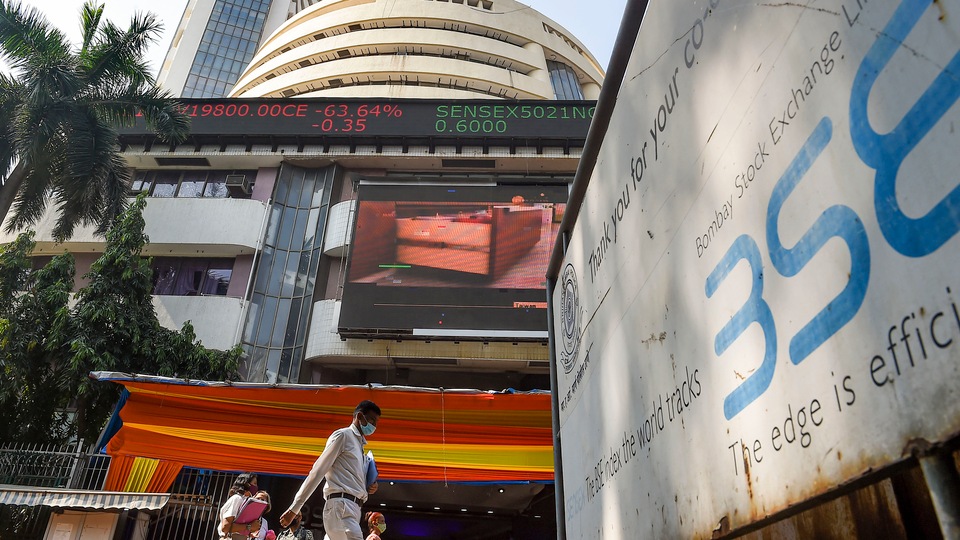
What did 2021 bring for Indian equity markets? In all likelihood, they will close at levels which are lower than the record high seen during 2021. BSE Sensex, India’s benchmark equity index reached an all-time high of 62,245 points on October 19. It closed on 57,806 points on December 29. Despite this, India’s equity markets have had the best performance in Asia. To be sure, there is more to the equity markets story in 2021 than just headline index numbers. Here is a summary of the performance of Indian equity markets in 2021.
Best performance in a long-time and across Asia
In nominal terms, 2021 was the best year for BSE as the Sensex moved by around 10,000 points in a single year. The BSE Sensex has gained 10,054 points between January 1, 2021 to December 29, 2021. This is the highest year-on-year increase in absolute terms historically. Even in percentage terms, the 2021 performance is the best in last four years. A comparison of BSE Sensex with 10 major world indices across nine countries indicates that it has shown the best performance among major Asian economies in the current year and has the second-best performance in the world.
2021’s stock market rally was driven by domestic retail investors
Where did the tailwinds for Indian stock markets come from in 2021? The answer is mainly domestic retail investors. Numbers on net investment by domestic and foreign investors and the number of demat accounts – a good proxy for individuals trading in stock markets – shows this clearly. Foreign investors actually contributed very little to the stock market rally in 2021. Their net investment as of December 28, 2021 is just ₹26,000 crore, much lower compared to the ₹1 lakh crore plus amounts in 2020 and 2019. Domestic investors, who took out around ₹54,000 crore from the markets last year, put in ₹82,340 crore until December 22, 2021 this year. The number of new demat accounts continued their rapid momentum from 2020. A total of 27.4 million new demat accounts were opened in 2021 (numbers until November) compared to the 10.5 million number last year. This number had never crossed 10 million until 2020.
Which sectors performed well?
There are 19 sector-wise indices in the BSE Sensex. All of these have shown positive growth in 2021 (numbers until December 28). The biggest gainers in 2021 were the power and realty subsectors, a sharp contrast to their below-average performance in 2020. The IT subindex continued to perform well in keeping with its 2020 trend. The fast-moving consumer goods (FMCG) subindex showed the smallest gains, largely a reflection of the weak consumer demand in the economy. Among the 30 stocks, which are a part of the BSE S&P Sensex, Tech Mahindra Ltd. was the biggest gainer, while Kotak Mahindra Bank Ltd. had the worst performance.
Exuberance or performance?
Indian stock markets have been overvalued for quite some time; a fact best seen in higher PE multiples for BSE Sensex. PE multiple measures the ratio of price of a stock with earnings per share and the higher the number the greater is the future expectation (or exuberance) component over the actual performance of a stock in its current price. While the PE multiple value continues to remain high, it has come down slightly from its even higher values in 2020. This could be a reflection of a sharp growth in corporate profits in the post-pandemic phase as well as the expectation that the market has already reached very high levels and is there could be no short-term gains in the near future.
The year of IPOs
From Zomato to Paytm, 2021 was the year when some of the biggest Indian start-ups listed themselves in the stock market. According to data compiled by CareEdge, there were 121 issues of ₹1,18,736 crore in 2021. This amount is the highest ever in India’s stock market history, with the previous best being ₹67,147 crore in 2017, a CareEdge note said. The IPO listing were distributed across sectors and 50% of the companies listed at a discount, while 11 out of the 121 companies listed at more than a 100% premium. If 2021 was a big year for IPO listings, 2022 promises to be even bigger with the government preparing to list the Life Insurance Corporation of India (LIC). The LIC IPO is expected to garner ₹1 lakh crore alone, almost at par with all 121 IPOs put together managed in 2021.


