
 E-Paper



HT Archive: Dalai Lama wins Nobel Peace for Tibet movement
The selection of the Tibetan Buddhist Lama could be seen as a signal of encouragement for the democratic movement in China itself, following the repression of student protesters in Beijing in June

 Prefer HTon Google


OSLO: The Dalai Lama was on October 5 awarded the Nobel Peace Prize for his non-violent struggle to free Tibet from Chinese rule.
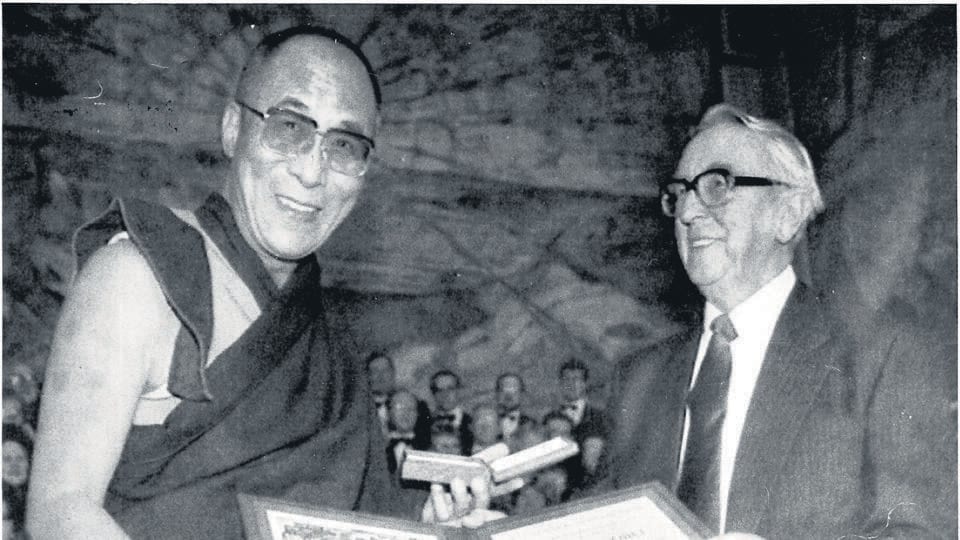
The Norwegian Nobel Committee raised the Dalai Lama’s preaching of universal reverence and respect for all people and things in nature. The committee said it was looking for the Nobel laureate, who was in Los Angeles, to inform him of the coveted award.
Mr Tinley Nyandak, a spokesman in New York for Tibet’s government-in-exile, hailed the Nobel committee’s decision. “It’s certainly long overdue for someone who has genuinely worked for peace, not only for the Tibetan people, but he has strived to gain a genuine peace for the entire world”, he said.
The selection of the Tibetan Buddhist Lama could be seen as a signal of encouragement for the democratic movement in China itself, following the repression of student protesters in Beijing in June. According to reports, Chinese troops clashed with protesters at Tiananmen Square in Beijing demanding reform, killing dozens of people.
“The committee wouldn’t have anything against them interpreting it like that”, committee chairman Egil Aarvik said after reading the citation to reporters.
“If I was a Chinese student, I could be fully in support of the decision”, he said, referring to the student-led pro-democracy movement that was crushed by the army on June 3-4.
Norwegian television said the choice was “a slap” to the Chinese authorities.
Last March, Chinese troops imposed martial law in Tibet following the most recent round of rioting by Tibetans in protest of China’s 39-year occupation of the mountain kingdom. In 1987, 38 people were reported killed in Lhasa, the Tibetan capital.
The Dalai Lama, who was born Tenzin Gyatos in 1935 and now lives in exile in India, was cited for shunning violence and advocating peaceful measures to liberate Tibet.
Last year, in a speech to the European Parliament, the Dalai Lama proposed a compromise, offering to keep Tibet as an autonomous Chinese territory and to relinquish control of foreign affairs to Beijing.
He also has renounced the desire for any future political role for himself in a free Tibet, saying he preferred to live as a simple monk.
The Nobel Peace Prize carries a cash award of three million Swedish kronor, or, about $469,000 It will be awarded in a ceremony in Oslo on December 1, the anniversary of benefactor Alfred Nobel’s death in 1895.
“The Dalai Lama has come forward with constructive and forward- looking proposals for the solution of international conflicts, human rights issues and global environmental problems”, the citation said.
The Dalai Lama’s persistent campaign to free Tibet from Chinese rule has sometimes embarrassed countries that he has visited, including Norway. when those nations were trying to improve ties with Beijing.
During a visit to Norway in September 1988, the Dalai Lama’s appointments with several Norwegian officials were cancelled without explanation, but the Chinese Embassy reportedly had protested against the visit to the Government.
“The Dalai Lama in his struggle for the liberation of Tibet consistently has opposed the use of violence”, the committee said. “He has instead advocated peaceful solutions based on tolerance and mutual respect in order to preserve the historical and cultural heritage of his people.”
“The Dalai Lama has developed his philosophy of peace from a great reverence for all things living and upon the concept of universal responsibility embracing all mankind as well as nature,” the citation added.
The Buddhist monk had been nominated for the coveted prize for at least the last three consecutive years, the national NTB news agency reported.
He is the 14th Dalai Lama, chosen when he was five as the reincarnation of Tibet’s god-king, making him both the religious and political leader of the isolated mountain kingdom until the Chinese take over in 1950.
The Dalai Lama and about 100,000 of his supporters fled Tibet in 1959 and established a government-in-exile in Dharamsala in India, in the foothills of the Himalayas.
In recent years he has offered to relinquish any political role for himself in Tibet, saying he preferred to see a democratic government while he led the simple life of a Buddhist monk.
“Let the young, intelligent Tibetans carry the responsibility for leading the Government”, he said last year during a visit to Stockholm, Sweden.
Norwegian foreign minister Thovald Saltenberg said he was surprised by the decision.
“I hope that the Dalai Lama’s long standing message of non-violence will be strengthened”, he said.
Other contenders for this year’s prize were two Czech dissidents. Mr Vaclav Havel and Mr Jiri Hajek, both of whom signed Charter 77, the human rights manifesto, and have faced repeated arrest and harassment from the authorities.


