
 E-Paper



HT Brand Studio Live: Is New Bharat just a marketing buzzword?
New Bharat is all about unabashed and self-confident consumers, on the lookout for brands that can provide personalised messages, products and solutions. In the 10th episode of HT Brand Studio Live, Season 2, four brand leaders shared their views.


What is ‘New Bharat’? This question has been pondered upon by marketeers and the answer lies in the disruptions caused in this digital economy through a variety of factors. The first and foremost are the massive changes sweeping the industry thanks to the smartphone.
“India is mobile first. People use mobile phones not just for communication, but also for business,” said Ruchira Jaitly, Chief Marketing Officer (CMO) – India and APAC, HMD Global. “If you ask me, the disruption is yet to come. You are going from marketing to many, to talking to one. It is disruptive because it defines the way choices will be made on brands and businesses.”
Watch | New Bharat presents a brand-new marketplace. Know more in Episode 10, Season 2 of HT Brand Studio Live
The 10th episode of HT Brand Studio Live, Season 2, had industry leaders like Jaitly dissecting a new marketplace and a more confident set of consumers.
HT Brand Studio Live is a series that gets the brains behind India’s top brands to decode marketing innovations and more. It is anchored by Rameet Arora, Chief Operating Officer, HT Digital Streams, and co-hosted by HT Brand Studio and DMAasia.
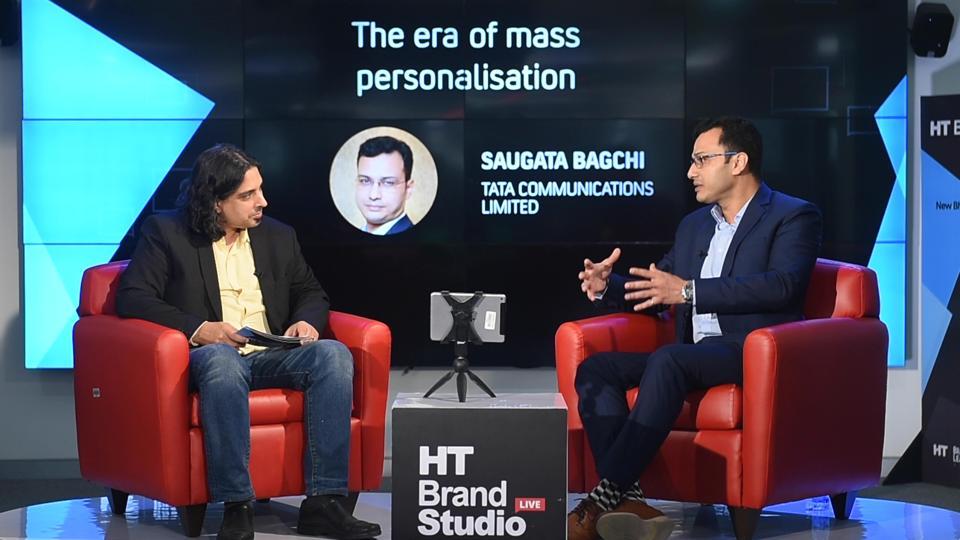
Smartphone access is spread across new consumer cohorts, empowering them, bringing their voices to the fore. This is especially true for women. “There’s been a democratisation of access to smartphones,” said Saugata Bagchi, Head, Global Content Marketing, Tata Communications Ltd. “It’s not a new phenomenon, but it took us a little longer than anywhere else in the world. Smartphones were predominantly owned and controlled by the men of the house. Women had restricted access to data and content; the last few years have seen them coming to the fore and the decision-making journeys of households have also evolved.”
Most importantly, the scenario is no different when it comes to B2B markets. Bagchi continued: “A B2B buyer is exposed to a very different world of communication and levels of service when he/she is playing in the B2C space. They now expect the same levels of service in the B2B world, which has caused a lot of flutters. B2B was always perceived to be a non-emotional, fact driven and less interpersonal, but a more data-driven way of buying and selling.”
At the heart of this lies hyper-personalisation, with marketing efforts being tailored to every consumer. “It’s important for brands to look at growth engines through two different lenses—one is data and the other is user feedback,” said Tejinder Gill, Vice President of Global Sales (South East Asia, MENA and Africa), Truecaller. “Once you launch in different markets, localisation becomes key.”
This is especially relevant for consumers who have historically been overlooked by marketers. Think tier 2 and 3 cities. The choices of such consumers are as aspirational as their metropolitan counterparts. The only way for brands to break into ‘New Bharat’ is to personalise their offerings.
Ali Imran, Vice President (External Engagement), Ashoka University, said, “New Bharat is aspirational, confident, and wants the best. There are a lot of similarities between people from metros and tier 2 & tier 3 cities, in terms of aspirations. But tier 2 and 3 consumers are hungrier than those in tier 1.”


