The Rowlatt Act and the Jallianwala Bagh massacre had enraged nationalist opinion. And it was in this backdrop that the Mahatma launched his first truly mass-based national movement against the Empire — the Non-Cooperation movement — in 1920. Added to it was the demand for the restoration of the Caliphate, a demand close to the heart of Indian Muslims.
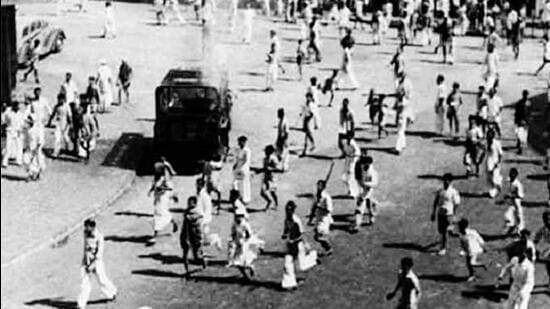
The movement democratised India’s freedom struggle and saw the participation of women, peasants, workers, students, and people from all castes and religions. It energised the Congress leadership and base. The British were stunned. And then a violent incident in Chauri Chaura saw Gandhi withdraw the movement on principle, much to the disappointment of even his colleagues.
In this episode, historian Aditya Mukherjee brings alive the mood in India during those turbulent years when the nation stopped cooperating with the Empire, explains the wider significance of the movement and its close link with the idea of protecting civil liberties, contextualises the Mahatma’s decision to integrate the Khilafat movement with non-cooperation, and argues that Chauri Chaura was not a surrender.
Link to podcast: https://www.htsmartcast.com/history-podcasts/1947-road-to-indian-independence/ep-7-when-india-stopped-cooperating/