All three hydraulic systems on the Air India flight from Thailand’s Phuket to Delhi that dropped 300 feet, briefly failed, leaving the aircraft without elevators and ailerons for 4 seconds, a preliminary report by Airbus has found.
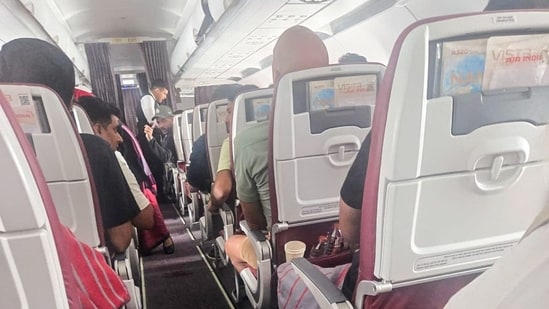
According to the report, the co-pilot of the flight AI2379 applied full nose-down input, but the controls initially did not respond. The hydraulics then recovered after the brief problem, it said.
To be sure, the root cause continues to remain unknown.
On August 4, the Phuket-Delhi flight AI2379 dropped 300 feet in a sudden loss of altitude during cruise, injuring 20 passengers and four crew members. An initial statement from Air India had cited turbulence as the reason.
The preliminary report from the French aircraft manufacturer, prepared on the day of the incident, stated that the aircraft experienced loss of hydraulic pressure in its Green, Blue, and Yellow hydraulic systems, resulting in a temporary loss of elevator and aileron control surfaces for about four seconds. The aircraft pitched up, the autopilot disconnected, and the First Officer or the co-pilot who was the pilot flying the aircraft applied nose-down input before the flight-control surfaces recovered as hydraulic pressure returned, the report added.
Airbus is assisting the Aircraft Accident Investigation Bureau (AAIB), which began a probe into the incident immediately after it was reported. The pilots have been off-rostered pending the probe, and the incident was classified as serious.
{{/usCountry}}Airbus is assisting the Aircraft Accident Investigation Bureau (AAIB), which began a probe into the incident immediately after it was reported. The pilots have been off-rostered pending the probe, and the incident was classified as serious.
{{/usCountry}}According to ICAO Annex 13, an aircraft accident is an occurrence associated with operations—from boarding to disembarkation for manned flights, or from being ready to move to shutdown for unmanned flights—resulting in serious injury, fatal injury, structural damage, or the aircraft being missing.
"Key criteria of an accident are injury, death or serious injury caused by being in or in direct contact with the aircraft, or by jet blast, excluding self-inflicted or natural cause. The moment passengers or crew are injured and hospitalised, it changes from a serious incident to an accident by law. There are other parameters of the definition as well, but this case has now moved beyond being an incident to an accident, which is why the Montreal Convention comes into play, which includes compensation for passengers. Could that be the reason why the DGCA, MoCA, AAIB and the airline are avoiding calling it an accident ??”There is already a legal precedent in India with an old Vistara case."Sanjay Lazar, aviation expert and CEO of Avialaz consultants, said.
Airbus wants more information
Airbus has asked Air India to provide more detailed pilot reports from the reported event, clarifying what was observed. It said that the whole episode required a detailed analysis considering both aircraft systems and structural integrity, as the airframe may have been affected by the sudden movement.
The aircraft manufacturer said it would continue the event assessment and that additional inspections may be required depending on the outcomes of the ongoing assessment.
Lazar raised questions about the airline.
"The post-flight report was known on August 4 itself by 12 noon. It now appears that Air India had written to Airbus that afternoon and got a reply from them on 4th Aug 2129Hrs UTC itself, and the reply is self-explanatory. Therefore, it is surprising that the government, the regulator, and the airline did not speak of major technical issues and focused on turbulence. This is very disappointing," he said.
Captain tests positive for marijuana
The pilot-in-command (PIC) of the flight tested positive for a psychoactive substance during a post-flight screening, people familiar with the developments said on Tuesday.
The pilot’s preliminary drug test had returned “non-negative”, a government release earlier said. “The pilot in question has tested positive in the confirmatory test. He has tested positive for Marijuana,” an official aware of the details in the report told HT.
Soon after the incident on August 4, the aircraft, with 137 passengers and eight crew members on board, stabilised and landed safely in Delhi.
As part of prescribed procedures, both pilots underwent a screening for psychoactive substances after the flight landed in the Capital. The initial screening of the PIC had indicated a result requiring confirmatory testing, following which the sample was sent to a designated laboratory.
"The alleged pilot dope test is unforgivable, and he must face the full force of the law if proven guilty. However, I have still not seen the test results as yet," Lazar said.
PIC cites ‘sleep difficulty’
The PIC in question was on medication for “sleep difficulty”, people familiar with the matter told HT on Wednesday, adding that the revelation was made by the pilot before an AAIB team during the course of investigation.
“In his statement to the AAIB, the PIC said he was experiencing sleep difficulty over a preceding period related to personal circumstances for which he was prescribed medication by a family doctor,” one of the persons said, seeking anonymity.
“He also claimed that he struggled to sleep during his layover as well,” the person added.