E-Paper



In affidavit, JD(U)-BJP govt in Bihar backs caste survey
The caste survey in Bihar defined political battle lines around caste ahead of the 2024 Lok Sabha elections and the 2025 assembly elections in Bihar.


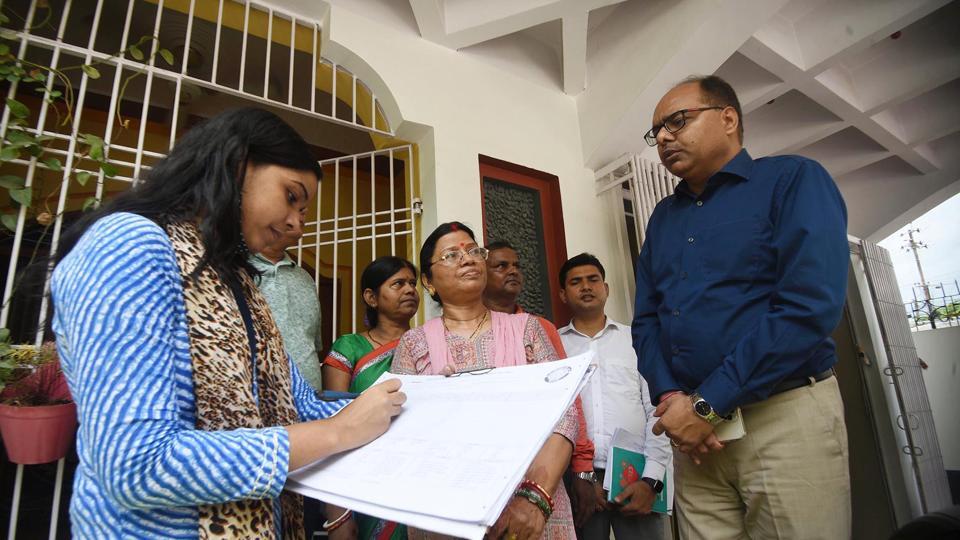
In the first affidavit submitted to the Supreme Court by the coalition government in Bihar, comprising the Janata Dal (United) and the Bharatiya Janata Party-led National Democratic Alliance, the state said it supported the caste survey conducted last year, emphasising that it complied with constitutional mandates to achieve social equality.
Also Read | Bihar caste census survey: 112 EBC castes under reserved category. See full list
“The caste survey was carried out under the constitutional mandates and aimed to achieve equality enshrined under the Constitution. The state had declared its aim and object for the survey and has now taken steps to achieve the same on the basis of facts appearing in the survey report,” Bihar said in its affidavit filed a day before the court is slated to hear the legal challenge to the survey.
The issue of conducting a national caste census has emerged as a crucial campaign issue ahead of the Lok Sabha elections, and the Bihar government’s latest affidavit, despite political realignments, signalled a continuation of the idea that initially gained momentum during chief minister Nitish Kumar’s alliance with the Rashtriya Janata Dal.
At the time, both parties had supported the survey, viewing it as a means to address social disparities and ensure equitable development. However, following the dissolution of the JD(U)-RJD coalition and Kumar’s subsequent alliance with the BJP, the new government’s stand on the survey and implementation of consequent measures appeared uncertain. To be sure, the state unit of the BJP had also supported the survey at the time.
Also Read | ‘Greater population, greater right’: Rahul Gandhi hails Bihar's caste census
On January 28, Kumar took oath as Bihar CM for a record ninth time, returning to the NDA just 18 months after he left it, in his fifth switch in political loyalties since 2015.
The caste survey in Bihar defined political battle lines around caste ahead of the 2024 Lok Sabha elections and the 2025 assembly elections in Bihar. The survey was ordered by the Bihar government when it was run by the JD(U)-RJD coalition. While several leaders of the INDIA bloc, including Congress leader Rahul Gandhi and Tamil Nadu chief minister M K Stalin, supported a nationwide caste census, Prime Minister Narendra Modi , at a poll rally in Madhya Pradesh on October 2, said the Congress was playing with the emotions of the poor and had divided the country on caste lines. He later said that only four castes were important to him -- farmers, women, youth and poor.
Speaking at an election rally in Madhya Pradesh last week, BJP chief JP Nadda said his party was not against a caste census, but claimed that the Congress wanted to carry out the exercise to divide society.
In its affidavit on Monday, Bihar gave an overview of the steps taken in pursuance of the findings of the survey report, including quota benefits, housing scheme, employment generation support, small entrepreneur scheme and educational support.
“The copy of the report on data released under the caste-based survey has already been sent to all the departments of the state government for framing plans and making schemes for the welfare of the people of the state,” it said. “Different departments are working to provide the required welfare benefits to the people of Bihar.”
A bench of justices Sanjiv Khanna and Dipankar Datta will on Tuesday take up a bunch of petitions challenging the August 1, 2023, judgment of the Patna high court that allowed the state government to carry out the caste survey. The high court judgment called the state’s action “perfectly valid, initiated with due competence, with the legitimate aim of providing ‘development with justice’”. The survey passed the test of proportionality, and thus, was not in breach of the rights of privacy of the individual, it had said.
The high court further held that the word “census” falls under Entry 69 of List I of the Constitution, which is solely within prerogative of the Centre, but this does not prohibit any state government from collecting data for implementing welfare schemes and carrying out affirmative action. The state had relied on the Collection of Statistics Act, 2008, to justify its survey, although the June 6 notification made no mention of it.
Challenging this judgment, the petitioners before the top court, which included NGOs Youth for Equality and Ek Soch Ek Prayas, attacked the survey being violative of the right to privacy as personal details about religion, caste and income were collected by the state in the absence of any mechanism to protect the data. The petitions contended the Bihar government lacked the power to carry out the survey and that it impinged on the right to privacy.
Bihar’s caste survey results, made public on October 2 last year, showed that EBCs (extreme backward classes) , which comprise 112 castes, constituted 36.01% of the state’s population, and backward classes ( 30 communities), made up another 27.12%. Together, the umbrella group consisting of backward castes and EBCs was 63.13%, confirming estimates by exercises such as the National Family Health Surveys. Scheduled castes accounted for 19.65% and scheduled tribes, 1.68%.
The data was then cited to raise the quota for Scheduled Castes (SC) from 16% to 20%, scheduled tribes (STs) from 1% to 2%, extremely backward castes (EBCs) from 18% to 25% and other backward classes (OBCs) from 15% to 18%, elevating the total quantum of caste-based reservations to 65%.