
 E-Paper



In letter to citizens, PM Modi urges support for ‘Made in India’ products
The prime minister also urged state governments to encourage industry, manufacturing and improve the investment climate in their states.

 Prefer HTon Google


In a letter to citizens on the day of the rollout of the Goods and Services Tax (GST) reforms, Prime Minister Narendra Modi on Monday urged the public to buy and sell “Made in India” products. Follow GST live updates.
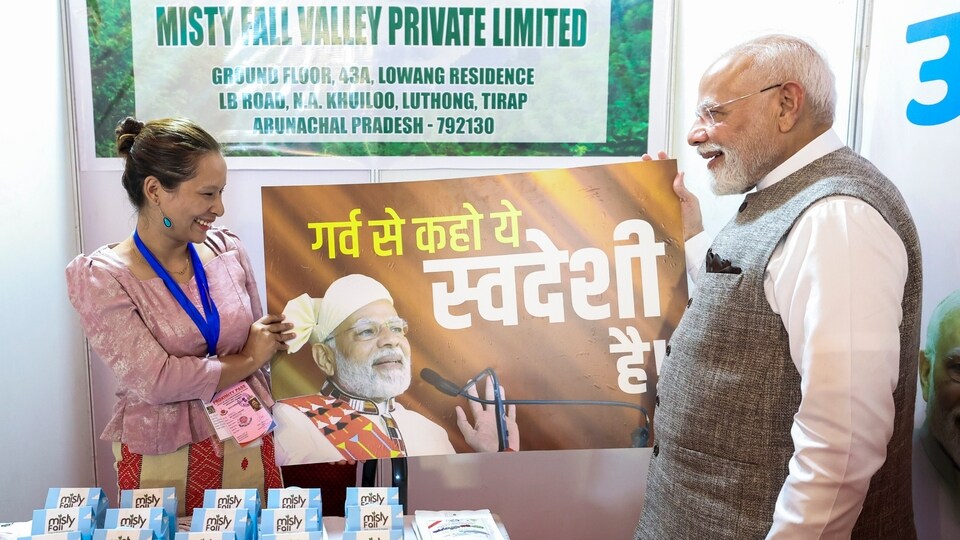
The prime minister also urged state governments to encourage industry, manufacturing and improve the investment climate in their states.
“…This festive season, let us also resolve to support products that are Made in India,” Modi said in his letter. “This means buying Swadeshi products that have the sweat and toil of an Indian involved in their making, irrespective of the brand or the company that makes them.”
He said that by purchasing products made by Indian artisans, workers, and industries, the public would help many families earn their livelihood and create job opportunities for the youth.
Also Read | PM Modi hails GST reforms rollout: ‘Lower costs, brighter smiles in every home’
“I appeal to our shopkeepers and traders to sell products that are Made in India. Let us proudly say – what we buy is Swadeshi. Let us proudly say – what we sell is Swadeshi,” he added.
‘GST reforms to boost savings’
Hailing the Goods and Services Tax (GST) reforms, which are being rolled out from today, Modi said tha the reforms will boost savings and directly benefit every section of society, from farmers, women, youth, poor, middle class to traders and MSMEs.
Also Read | New GST rates: Full list of items under new tax slabs
“Daily essentials such as food, medicines, soap, toothpaste, insurance and many more items will now either be tax-free or fall in the lowest 5% tax slab,” the PM said in his letter. “Goods that were earlier taxed at 12% have almost entirely shifted to 5%.”
“It is greatly heartening to see various shopkeepers and traders putting up ‘then and now’ boards which indicate taxes pre-reforms and post-reforms,” he added.
Also Read | GST rates before vs now: What has changed in 5 simple points
The GST reforms or GST rate cuts came into effect on Monday, September 22, the first day of the Navratri festival.
Under the GST reforms, the previous four-tiered tax rate structure has been revised into what the government says is a citizen-friendly ‘simple tax’ – a two-rate structure of 18 per cent and five per cent.


