
 E-Paper



In PM Modi’s plan to evacuate Indians, blue-collar workers have the first right
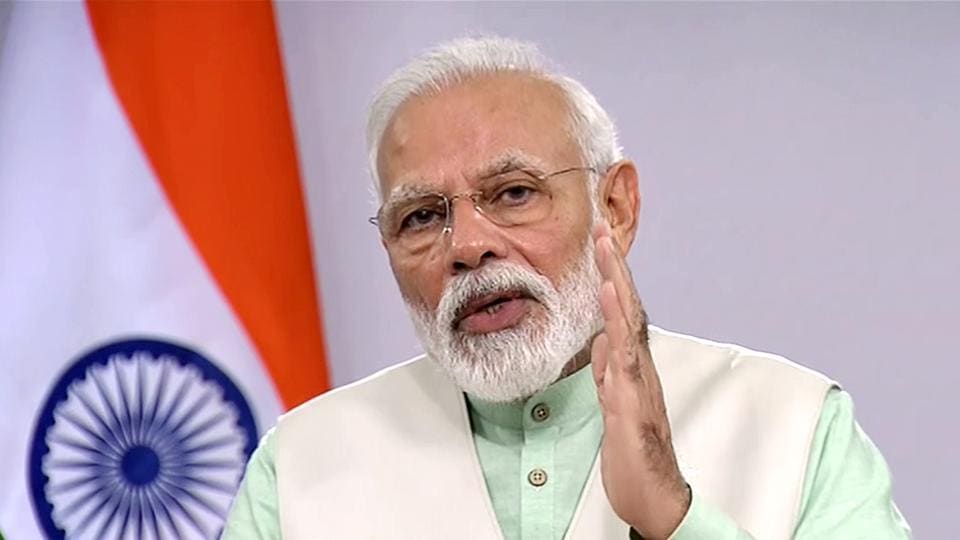
Coronavirus lockdown in India: At one meeting, PM Narendra Modi pointed out how the poorest of Indian immigrant workers - mostly in the Gulf countries - had helped India tide over the economic crisis.

 Prefer HTon Google


As the foreign and civil aviation ministries start work on a plan to fly back tens of thousands of Indians stuck abroad, Prime Minister Narendra Modi has spelt out the ground rule for the evacuation plan. India’s blue collar workers stranded abroad will get the first seats in the special flights that will be run by the government to get them home.
Students stranded in different countries will be next. Then, everyone else including Indians who were travelling for work, or pleasure.
“The prime minister was very clear… That the Indian expatriate workforce should get the first choice to return,” a top government official told Hindustan Times.
At one meeting, PM Modi pointed out how the poorest of Indian immigrant workers - mostly in the Gulf countries - had helped India tide over the economic crisis. Like in 1998, PM Modi told them, when the United States and other western countries imposed economic sanctions on India after the then PM Atal Bihari Vajpayee detonated five underground nuclear bombs in Pokhran in May 1998.
The Resurgent India Bond floated by the State Bank of India was targeted to raise $2 billion; it netted more than $4 billion.
Two decades later, India’s massive diaspora is still sending money home. In 2019, according to the World Bank, India was still the world’s top recipient of remittances. The diaspora sent $82 billion; nearly half came from migrant workers in West Asia.
But the Covid-19 pandemic has hit the Indian workers in West Asian countries hard. Many have lost their jobs due to suspension of projects and are stuck.
Also Watch: Pakistan’s terror tactic amid Covid-19 crisis explained
Given that the states did not have the capacity to accommodate the large number of workers, Prime Minister Narendra Modi and Foreign Minister S Jaishankar had worked the phones to reach out to the Gulf countries to ask them to take care of the Indians.
Indian workers in six Gulf countries account for 70 percent of 12.6 million Indians abroad. The United Arab Emirates is home to 3.4 million Indians. Another 2.6 million are in Saudi Arabia. Kuwait, Oman, Qatar and Bahrain are home to another 2.9 million NRIs.
Apart from workers in the Gulf countries, officials said, Indian missions had received requests from thousands of students who were stuck in countries across the world, ranging from the United Kingdom, Canada and the United States of America to Russia, Singapore and Philippines. In Russia alone, an official said, the total strength of Indian students is about 15,000.
Also Read: 70% of Indian citizens abroad are in 6 W Asian nations, shows data
“It will be a complicated exercise. Indian missions abroad will compile a list of people who want to return to India, prioritise them and then coordinate with the states concerned. When they eventually land in India, everyone would have to be screened to figure if the person should be sent to a quarantine centre or straight to the hospital,” a government official said.
The foreign ministry will have to set up a dedicated control room for this mammoth exercise, he said.
The Centre hasn’t yet decided when to start the evacuation flights but the timing, and the pace of the evacuation would be heavily dependent on governments in the home state of the workers.
If the home state of a worker is not ready to take the responsibility to house them in quarantine facilities, it may not be possible to evacuate them. It is for this reason that Cabinet Secretary Rajiv Gauba had told chief secretaries at his last virtual meeting to quickly set up quarantine facilities and hospital beds.
Kerala has been first off the block, announcing that they were prepared to accommodate at least two lakh expatriates, mainly blue-collar workers, at its special quarantine centres.


