
 E-Paper



Middle class jackpot! Who saves the most under the new tax regime?
Income Tax Slabs – AY 2025-26: Most taxpayers, especially those earning up to ₹25 lakh, will benefit from new regime exempting incomes up to ₹12L from tax.

 Prefer HTon Google


Income Tax Slabs and Rates – FY 2024-25, AY 2025-26: Union finance minister Nirmala Sitharaman, the Budget 2025, announced on Saturday that annual income of up to ₹12 lakh will be exempt from Income Tax under the new regime. For salaried taxpayers, this income threshold will be ₹12.75 lakh after considering the standard deduction.
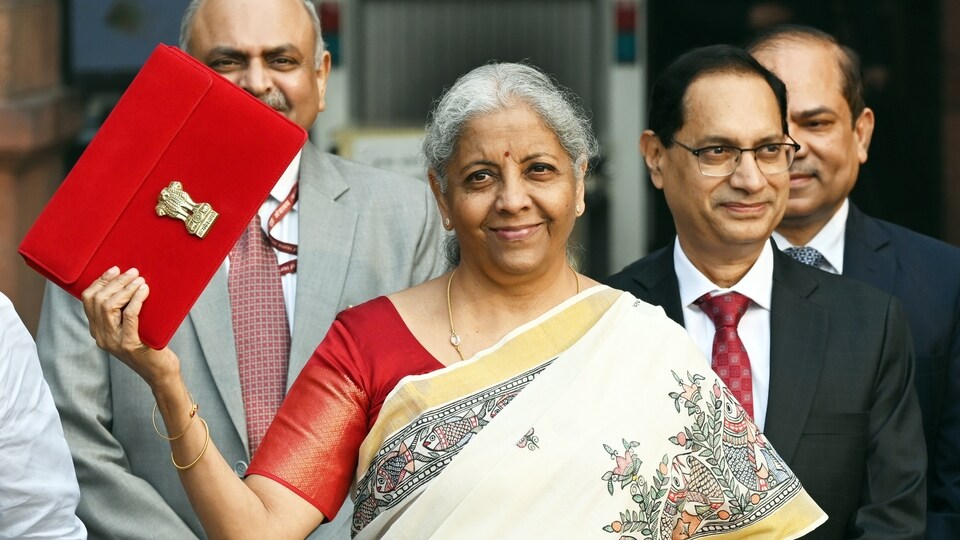
The new income tax slabs will increase disposable incomes, boosting household consumption, savings and investment, Nirmala Sitharaman said in her annual budget speech. Follow Union Budget 2025 live updates
Also Read | Income tax salary-wise details: How to calculate tax if salary is over ₹12.75 lakh
So, what do I-T slabs mean?
• A person earning ₹12 lakh pays zero tax now—saving ₹80,000 compared to last year.
• If a person's salary is ₹18 lakh, he/she saves ₹70,000.
- At ₹25 lakh, the person saves a whopping ₹1.10 lakh.
Also Read | New income tax slabs released in Budget for FY 2025-26 | Check full details
How does your tax bill change? We break it down
- A taxpayer with an annual income of up to ₹12.8 lakh will not have to pay any tax, up from the current cap of ₹7 lakh.
The change, however, is applicable only to those filing returns under the new tax regime. This system, introduced in 2020, has slightly lower tax rates but does not allow major exemptions.
Taxpayers can also opt for the old tax regime that allows exemptions for housing rentals or loans, and insurance premiums and other such expenses.
- Currently, under the new system, annual income of up to ₹15 lakh attracts a tax rate of between 5% and 20%, while income of more than that is taxed at 30%.
- Now, the 30% tax, the highest rate, will be applicable on annual income above ₹24 lakh.
How much will a taxpayer save?
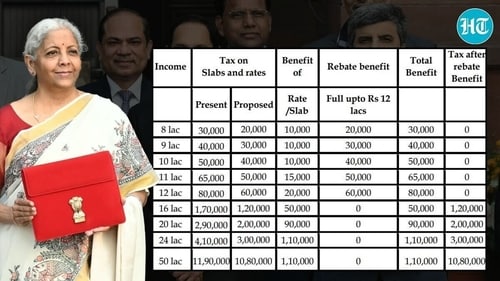
- Taxpayers earning up to ₹12 lakh per annum are also eligible to claim a standard deduction of ₹75,000 in the new system.
- Now, after the tax cut, this group will pay about ₹80,000 less tax each year, the government estimated.
- “The revamped tax slabs under the new tax regime as introduced by the Finance Bill 2025, aim to provide significant relief to taxpayers by extending the reduced personal income taxes up to ₹1.10 lakh. Under the new regime, individuals with an income of up to ₹12 lakh, excluding certain incomes such as capital gains subject to special tax rates, would be eligible for a full tax rebate under Section 87A, resulting in zero tax liability. This overhaul replaces the previous system and proposes to significantly reduce tax burden, under which an individual paying ₹80,000 in taxes would now effectively pay nothing against a total income of ₹12 lakh. Notably, the Finance Act 2023 had already established the new regime as the default framework,” said Sohrab Bararia, partner, Grant Thornton Bharat.
- Tax analysts said those earning ₹25 lakh a year would pay about ₹343,000 in tax, less than ₹457,000 they currently pay. This translates to about 5% more money in their hand and a monthly saving of around ₹9,500, a substantial relief for taxpayers, news agency Reuters quotes Adhil Shetty, CEO, BankBazar.com, as saying.
Which tax regime is better?
The income tax new regime under the Budget 2025 is more beneficial for most taxpayers, particularly those earning up to ₹25 lakh, reported CNBC TV18.
The old tax regime remains attractive for those with significant deductions such as home loans, 80C investments, since the new regime does not allow them.


