A concerted advance into areas once considered Maoist citadels, clear signalling to the security apparatus that an uptick in operations was imperative, and an ever increasing stream of human intelligence from core areas, are behind a sharp increase in aggression against Maoists in south Chhattisgarh’s Bastar in 2024, several officers that work in the area said. Twenty-nine Maoists were killed in an encounter with joint forces of the Chhattisarh Police and the Border Security Force on Tuesday, in the most significant single-incident blow to Maoists in eight years, and the biggest ever in the state.
Overall, security forces in Chhattisgarh have already killed 79 alleged Maoists in the first three and a half months of 2024 alone, higher than the combined Maoist deaths in 2022 and 2023. In 2022, 30 Maoist cadre were killed, and in 2023, 22 Maoists were killed through the year.
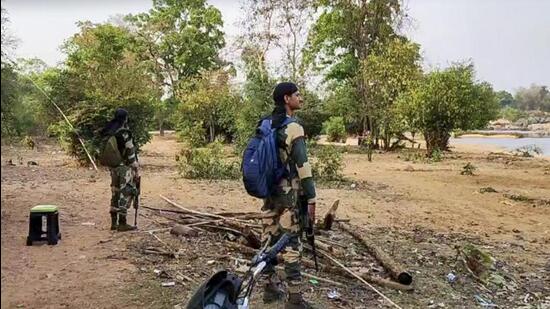
Senior security officials on the ground said that these “operational successes” come from a incessant, and consistent push into core Maoist citadels. “For the last decade, if we wanted to get to one point deep inside the forests, we had to operate from camps further away. But we have now finally taken control of those core areas themselves, or can reach them. Now, more than ever, we are face to face with Maoist groups as a result. They are pushed to a wall and their natural reaction is to respond with gunfire. In the coming days, there will be many such exchanges of fire,” a senior official said.
While officials said that there has been a concerted effort over several years to break new ground in the battle against left wing insurgents, which includes setting up new camps, or building new roads—efforts that span several years, the battle against Maoism has been identified as a key focus area by the current state government. In December 2023, the BJP returned to power in the state after a five year hiatus, and within two months of taking charge, the government ordered the transfer of 25 superintendents of police, including those of critical districts such as Bijapur, Kanker and Narayanpur. The message was clear, officials said—to act against Maoists. If Tuesday’s encounter took place in the confines of Kanker district, the encounter on April 2 where 13 cadre were killed, took place in Bijapur.
{{/usCountry}}While officials said that there has been a concerted effort over several years to break new ground in the battle against left wing insurgents, which includes setting up new camps, or building new roads—efforts that span several years, the battle against Maoism has been identified as a key focus area by the current state government. In December 2023, the BJP returned to power in the state after a five year hiatus, and within two months of taking charge, the government ordered the transfer of 25 superintendents of police, including those of critical districts such as Bijapur, Kanker and Narayanpur. The message was clear, officials said—to act against Maoists. If Tuesday’s encounter took place in the confines of Kanker district, the encounter on April 2 where 13 cadre were killed, took place in Bijapur.
{{/usCountry}}Officials said that since December 13, 2023, security forces have built at least 17 new camps in “forward operating areas.” This meant not only a security presence in areas hitherto inaccessible for the forces, but a source for human intelligence once the confidence of villagers is earned through civilian outreach such as social welfare programmes or health camps. “We already had a steady stream of information from villages where we have established camps for a while. Now, we are getting information from villages in forward areas. We have never had access to this before because for three decades, they had never believed the Maoists could ever leave. These places are so dense that some residents have seen a doctor for the first time,” a CRPF official said.
Security officials however are wary of a Maoist counter-attack and said that they were preparing both themselves, and the villages they have been interacting with. “They might respond and even attack civilians to plug their leaks. But with the work we have done, we are hopeful the villagers will continue to work with us,” the same CRPF official said.