India is days away from celebrating its 70th Independence Day. Independence has helped people and communities to smash barriers of caste, class, gender, ability and faith and achieve their dreams. But structures of oppression persist, and many people languish in islands of darkness where freedoms are few and choices absent.
HT brings you stories from of hope, courage and perseverance in “free India”, and of isolation, hate and despair that stalk the “unfree India” .
In Part 2, read about the trials of Muslim men in Hyderabad and the success story of a Kashmiri businessman . Here is the story of a Muslim man:
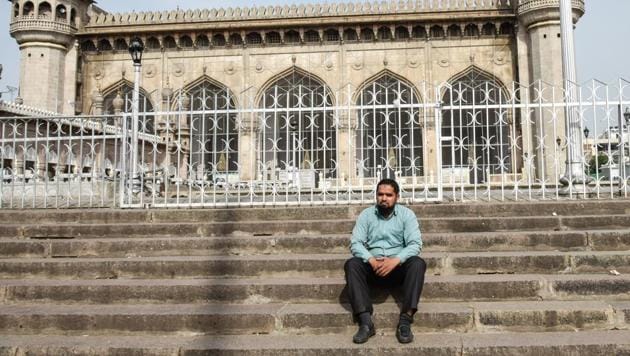
In 2009, Ibrahim Ali Junaid stopped meeting friends.
The 35-year-old Unani doctor had just been acquitted after two harrowing years in connection with the Mecca Masjid blasts in Hyderabad and thought keeping a low profile would keep him out of trouble.
He was wrong. Over the next six years, the city police allegedly tailed his every move, followed him from home to work and back and picked him up every time there was communal violence in the city.
“The police used to keep a watch on my movements till a couple of years ago… during the twin bomb blasts at Dilsukhnagar in February 2013, NIA authorities called me for questioning. And during the 2014 elections, I was bound over like a rowdy sheeter,” Junaid told Hindustan Times.
{{/usCountry}}“The police used to keep a watch on my movements till a couple of years ago… during the twin bomb blasts at Dilsukhnagar in February 2013, NIA authorities called me for questioning. And during the 2014 elections, I was bound over like a rowdy sheeter,” Junaid told Hindustan Times.
{{/usCountry}}Once outgoing and gregarious, Junaid is now reticent and doesn’t mingle with people, including relatives and friends. All that he does is to walk down from his residence at Yousufain Bazar near Chandrayangutta to his clinic which runs from 11am to 3pm and again from 6pm to 10pm. “I hardly go out for public functions and keep myself busy with my medical practice. Yet, the police keep a tab on people coming to my clinic,” Junaid said.
He was in the third year of medical college when the explosions ripped through the old city, next to the iconic Charminar in May 2007, killing 16 people. He says he rushed to help victims and talking to media about the incident. “That was my crime. The police called me in the name of gathering information and then warned me against speaking to media,” he recalled.
Days later, police arrested him at the Secunderabad railway station when he was returning from New Delhi from a Unani conference. “They subjected me to third-degree torture and tried to force me saying I had planted the bomb. Finally, they sent me to jail,” he said.
In January 2009, Junaid and 20 others were let off by the court as the police could not produce any evidence. But by then, the damage was done -- Junaid’s college admission had been cancelled and his family’s standing in society had been tarnished. “We were not getting invitations from any of our relatives for functions and marriages. I could not even get a match for myself for a couple of years,” he said.
Similar stories of horror run through the narrow maze of streets in the Muslim-dominated old city of Hyderabad, where men say the police’s needle of suspicion is forever tracked at them. Hundreds of such cases are reported from across India where Muslim men are picked up on trumped-up terror charges and let off after a few years, say activists, often on the flimsiest of grounds.
Mohammed Rayeesuddin agrees. The 33-year-old was working as a helper with a famous jewellery shop when the Mecca Masjid blast took place. He says his only crime was that he was from the same locality as Shahid Bilal, the member of Harkat-ul-Jihad-e-Islam (HuJI), a terrorist outfit based in Bangladesh.
“The police kept me under illegal detention for eight days. I was blindfolded and tortured in different farm houses. Later, I was produced in the court on the charge of conspiracy. Along with other boys, I was subject to Narco Analysis test, but they could not get anything. Later, the court acquitted me for want of evidence,” he recalled.
Rayees said the police continued to hound him even after his acquittal. “During Bonalu and Ganesh festivals, and during the elections, the police used to bind me over.”
The questions lessened as no communal incidents were reported in the past two years. “But my life has been spoiled. I have no permanent job now,” Rayees said.
Police say they have become more “people friendly”. “May be in the past, the police behaved tough…now, there are no complaints of any harassment of innocent Muslims,” Hyderabad south zone deputy commissioner of police V Satyanarayana told HT.
He said police have stopped shadowing suspects. “We have been adopting latest technology to track the movements of people having a dubious track records.”