
 E-Paper



India, EU discuss cooperation in joint naval activities in Indo-Pacific
India currently has one of the largest facilities for maritime domain awareness in the form of the Gurugram-based Information Fusion Centre-Indian Ocean Region of the Indian Navy.

 Prefer HTon Google


NEW DELHI: India and the European Union (EU) on Tuesday discussed cooperation in the field of maritime domain awareness and joint naval activities as part of their efforts to ensure an open, inclusive and rules-based order in the Indo-Pacific region.
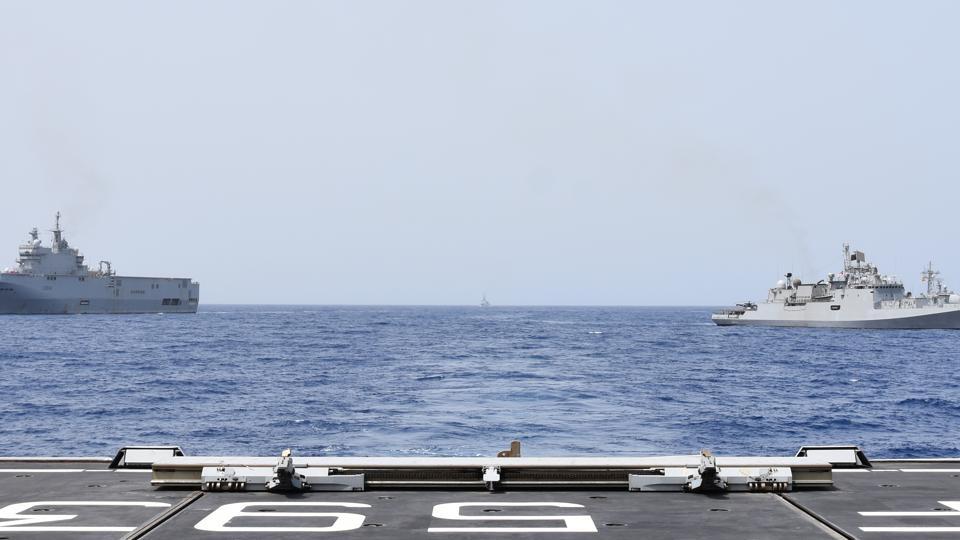
These issues figured in the second India-EU maritime security dialogue, which was held in a virtual format. The two sides said in a joint statement that the consultations focused on developments in the maritime security environment and policy developments covering the EU’s strategy for cooperation in the Indo-Pacific.
Officials of the two sides also discussed India’s Indo-Pacific Oceans’ Initiative, maritime cooperation and regional initiatives to address international maritime security issues.
“India and the EU discussed cooperation, including in the field of maritime domain awareness, capacity-building and joint naval activities, following their successful joint naval exercise in the Gulf of Aden in June 2021,” the statement said.
India currently has one of the largest facilities for maritime domain awareness in the form of the Gurugram-based Information Fusion Centre-Indian Ocean Region of the Indian Navy. Among the partner countries that have posted international liaison officers at the centre are Australia, France, Japan, the Maldives, Mauritius, Myanmar, Seychelles, Singapore, the UK and the US.
In addition to tracking merchant shipping, the centre helps maintain a close watch on the activities of Chinese naval and other vessels in regional waters.
Also Read: German warship’s visit to Mumbai reflects Berlin’s new focus on Indo-Pacific
The statement also said India and the EU are committed to a “free, open, inclusive and rules-based maritime order in the Indo-Pacific region” that is underpinned by respect for territorial integrity and sovereignty, democracy, rule of law, freedom of navigation and overflight, unimpeded lawful commerce, and peaceful resolution of disputes in accordance with international law, especially the United Nations Convention on Law of the Sea (UNCLOS).
This was an apparent reference to China’s activities across the Indo-Pacific, especially the South China Sea, where Beijing is involved in maritime disputes with several Southeast Asian nations and has stepped up its military activities.
The meeting was co-chaired by Sandeep Arya, joint secretary for disarmament and international security affairs in the external affairs ministry, and Joanneke Balfoort, the director for security and defence policy at the European External Action Service.
In a separate development, Saurabh Kumar, secretary (East) in the external affairs ministry, told an online roundtable discussion organised by Gateway House and the US embassy that India has sought to strengthen security and freedom of navigation in the Indo-Pacific by becoming a net security provider.
“It has built relations with partner countries across the region. It has provided defence training courses and deputed mobile training teams. Indian Navy’s Information Fusion Centre for the Indian Ocean region has enhanced maritime domain awareness among partner countries,” he said.
The Indian Ocean Naval Symposium, which gathers 35 navies, also contributes to deepening mutual understanding on maritime challenges, and the country’s Security And Growth for All in the Region” policy or SAGAR focuses on securing regional supply chains, avoiding disproportionate dependence on a single country, and ensuring prosperity of all stakeholders.



