India’s cities are generating far more sewage than they can treat, with an estimated 52,644 million litres per day (MLD) of sewage against an installed treatment capacity of 31,885 MLD, leaving a treatment gap of more than 20,700 MLD, a parliamentary standing committee report tabled on Tuesday said.
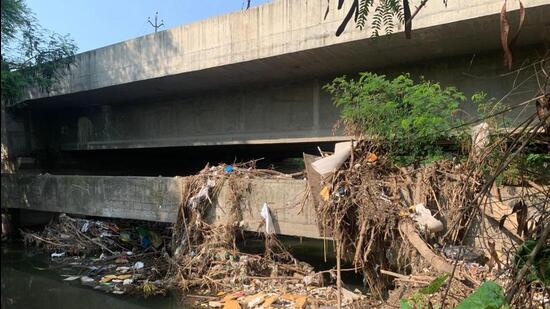
It warned that inadequate treatment capacity, weak operation and maintenance (O&M) and poor wastewater reuse continue to undermine urban sanitation.
The committee has also flagged the issue of capacity often failing to translate into effective sanitation outcomes.
The report said a third-party survey of over 1,000 plants revealed that only 51% of STPs comply with 2015 discharge standards and a mere 15% meet the more stringent 2019 norms.
It further noted that despite expansion of STPs out of 11.32 crore urban households, only 3.45 crore in AMRUT cities are connected to sewer networks, while nearly 2.85 crore depend on septage-based sanitation systems.
States including Madhya Pradesh, Tamil Nadu, West Bengal, Odisha, Jharkhand and Bihar rely more on septage systems than sewer networks, reflecting uneven sanitation infrastructure.
{{/usCountry}}States including Madhya Pradesh, Tamil Nadu, West Bengal, Odisha, Jharkhand and Bihar rely more on septage systems than sewer networks, reflecting uneven sanitation infrastructure.
{{/usCountry}}The committee also flagged serious deficiencies in septage-based sanitation, citing a study that found 60% of urban households depend on untrained masons instead of municipal guidance for septic tank construction, resulting in tanks that are often three to four times larger than prescribed standards.
It said only 32% of septic tanks are properly lined, raising the risk of groundwater contamination, while 43% lack access chambers for desludging and maintenance. The report further noted that many septic tanks receive only toilet waste, with kitchen and bathroom wastewater being discharged directly into open drains.
The Standing Committee on Housing and Urban Affairs, in its report on ‘Review of Sewerage and Septage Coverage in Cities with special reference to interventions under AMRUT (Atal Mission for Rejuvenation and Urban Transformation) and AMRUT 2.0’, said that despite investments under the flagship mission, urban wastewater management remains constrained by gaps across the sanitation chain, from collection and treatment to recycling and reuse.
On wastewater reuse, the panel headed by TDP MP Sreenivasulu Reddy said the country has made only limited progress despite growing water stress. It noted that the ministry has targeted creation of 10,000 MLD of reuse capacity by 2030 and meeting 20% of urban water demand through recycled water, but current reuse remains at just 6,012 MLD, with another 1,931.86 MLD of reuse capacity approved under AMRUT 2.0.
The committee also highlighted ageing sewer networks, frequent blockages and inadequate maintenance as persistent operational challenges. Although AMRUT 2.0 requires every sanctioned infrastructure project to include at least five years of O&M, States have earmarked ₹20,019.38 crore towards maintenance across approved projects, underscoring the scale of upkeep required.
Drawing on state-wise data submitted before the National Green Tribunal (NGT), the committee noted that although treatment infrastructure has expanded to 31,885 MLD, only 22,491 MLD is actually utilised, while merely 6,013 MLD of treated wastewater is being reused.
The report also flagged sharp disparities across states. While Maharashtra, Delhi, Gujarat, Uttar Pradesh, Tamil Nadu, Karnataka and West Bengal account for much of the country’s treatment capacity, several States and Union Territories either have limited infrastructure or continue to report treatment capacity far below sewage generation, leaving large volumes of wastewater untreated.
The committee called for addressing the persistent gaps in treatment capacity, operational sustainability and reuse infrastructure to achieve comprehensive sewerage and septage management in urban India.
The same panel in December 2025 in its report had flagged how Indian cities then produced 48,003 MLD of sewage, but had capacity to treat 30,000 MLD, of which merely 55.9% was actually utilised. On the drinking water front, the committee had then found while AMRUT supported the construction of 134 new water treatment plants with a capacity of 4,626 MLD, there was a shortfall of 1,189 MLD. Similarly under AMRUT 2.0, which began in October 2021, 133 water treatment plants were approved, but only two were completed.