
 E-Paper



Delhi Economic Survey 2025-26: Sewage treatment capacity rises slightly in a yr
Delhi's STP capacity increased to 794.26 MGD, aiming for 964.5 MGD by Dec 2026 to treat 80% of sewage, as part of efforts to clean the Yamuna River.

 Prefer HTon Google


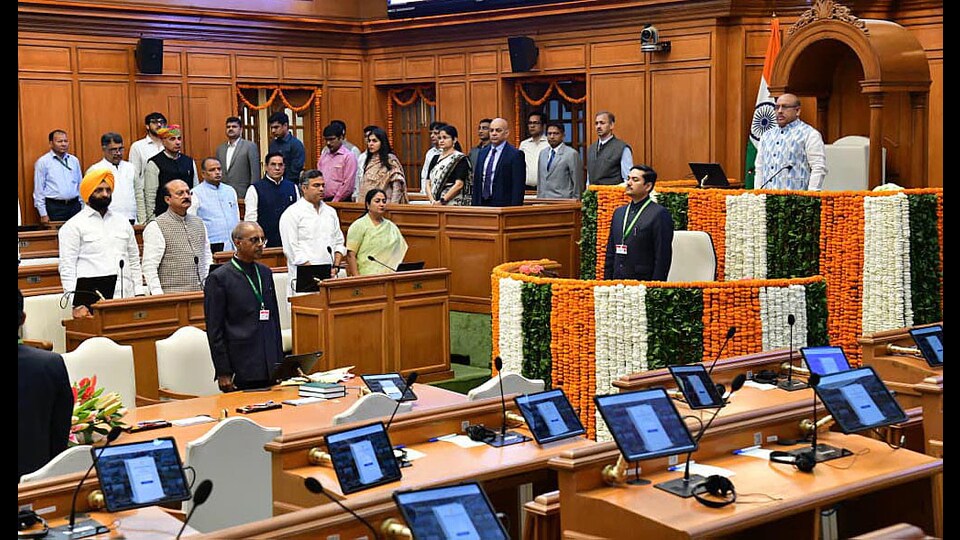
Delhi government in its economic survey report (2025-26) tabled on Monday has stated that the Sewage Treatment capacity of Delhi’s STPs has been increased from 742 MGD in December, 2024 to 794.26 MGD in 2025. It adds that projects have been initiated to increase the capacity to 964.5 MGD by December 2026 including rehabilitation of old plants, and new plants at Delhi Gate and Sonia Vihar. “It will be sufficient to treat the sewage of 924.8 MGD (80% of 1156 MGD Water Supply) in future. All the STPs (existing as well as new) with total capacity of 964.5 MGD are targeted to achieve standards prescribed by DPCC i.e BOD / TSS: 10/10 mg/l by December, 2026,” the report adds.
STPs are the primary tools in its attempt to clean the Yamuna in the city. Delhi estimates that the 80% of its water supply (1,000 MGD) comes back as wastewater. Delhi has 37 STPs spread at 20 different locations. Yamuna cleanup has been one of the key priorities of the government. Upon completing one year last month, the BJP led Delhi government stated that out of 37 sewage treatment plants found substandard, 28 have been upgraded and work continues on the remaining nine. “Tenders have been completed for 35 decentralised STPs costing ₹2,400 crore, and plans for 12 additional STPs worth ₹7,200 crore are underway. All the STPs (existing as well as new) with total capacity of 964.5 MGD are targeted to achieve standards prescribed by DPCC i.e BOD / TSS: 10/10 mg/l by December ,” the government said.
Yamuna, the reason for Delhi’s existence, has suffered heavily from pollution which is due to the flow of untreated / partially treated sewage and Industrial effluents. There is around 48 KM stretch in Delhi from Palla to Badarpur (Delhi-Haryana border) and 26 KM stretch from Wazirabad (Downside of Wazirabad Barrage) to Asgarpur Village (after Okhla Barrage), which is less than 2% of the river length, accounts for about major pollution load in the river.
“22 Drains outfall into river Yamuna including waste water coming into Najafgarh drain from Haryana and coming into Shahdara Drain from Uttar Pradesh. 10 Drains have been tapped, two Drains (Delhi Gate Drain & Sen Nursing Home Drain) are partially tapped and two drains (Najafgarh & Shahdara) are large drains and technically not feasible to tap, the report adds.
DJB has also said that only 10 Cumecs of Water is being released by the State of Haryana at Hathanikund during lean season. However, most of it evaporates or percolates before it reaches Wazirabad during the lean season and therefore it is highly inadequate to meet the dilution requirement to achieve the desired water Quality of BOD< 3 mg/l & DO >5 mg/l.
However, the survey also flags that the percentage of utilization of sewerage treatment plant in Delhi as on 31st March 2025 was about 85 percent. The sewerage treatment plants are not functioning up to their optimum level due to various reasons such as low flow of sewerage to STPs, trunk and peripheral sewer lines still to be connected to these STPs. Similarly, the 13 CETPs which cater to industrial areas also have poor utilisation rate of 37,76%

Stay updated with all top Cities including, Bengaluru, Delhi, Mumbai and more across India. Stay informed on the latest happenings in World News along with Delhi Election 2025 and Delhi Election Result 2025 Live, New Delhi Election Result Live, Kalkaji Election Result Live at Hindustan Times.


