
Could Aravind Srinivas have achieved his full potential by remaining in India instead of moving to Silicon Valley? The co-founder and CEO of the AI-powered search engine Perplexity, which Mr. Srinivas, 31, describes as “a marriage of Wikipedia and ChatGPT,” is the latest tech superstar to be feted by the Indian media.
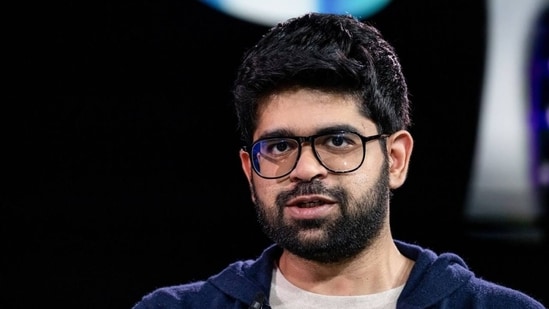
Following a new round of funding this month, Perplexity is valued at $18 billion. Early investors in the startup include Jeff Bezos, former YouTube CEO Susan Wojcicki, and
Could Aravind Srinivas have achieved his full potential by remaining in India instead of moving to Silicon Valley? The co-founder and CEO of the AI-powered search engine Perplexity, which Mr. Srinivas, 31, describes as “a marriage of Wikipedia and ChatGPT,” is the latest tech superstar to be feted by the Indian media.
Following a new round of funding this month, Perplexity is valued at $18 billion. Early investors in the startup include Jeff Bezos, former YouTube CEO Susan Wojcicki, and entrepreneur Balaji Srinivasan. Mr. Srinivas sees search engine behemoth Google as ripe for disruption.
On one level, the answer is obvious. Mr. Srinivas couldn’t have built a cutting-edge tech company in India, but neither could he have done so in France, Brazil or Russia. The unique mix of talented engineers and risk-taking investors that defines Silicon Valley doesn’t exist anywhere else on the planet.
But Mr. Srinivas’s story also highlights an issue that Indians tend to overlook. The Indian media has published countless laudatory stories about Indian tech titans in the West. According to the Times of India, for instance, the roots of Mr. Srinivas’s success lie in his mother’s early encouragement to study one day at the prestigious Indian Institute of Technology in his hometown, Chennai in Tamil Nadu. Among educated Indians, Google’s Sundar Pichai, Microsoft’s Satya Nadella, IBM’s Arvind Krishna and Adobe’s Shantanu Narayen—all Indian-born tech CEOs—are household names.
Sanjaya Baru, an Indian author and journalist, believes Indians are too sanguine about a sustained brain drain from their country. In a new book, “Secession of the Successful,” he points out that nearly 1.9 million Indians renounced their citizenship between 2011 and 2023. That’s a small fraction of India’s 1.45 billion people, but it includes some of the country’s most talented engineers, doctors and scientists.
Since independence in 1947, no Indian working in India has won a Nobel Prize in science or a Fields medal, the equivalent in mathematics. The last Indian in India to win a Nobel Prize for science was the physicist C.V. Raman in 1930. A 2023 National Bureau of Economic Research paper found that of the top 1,000 students who cleared the grueling nationwide entrance exam for the Indian Institutes of Technology in 2010, 36% had migrated eight years later, mostly to the U.S. At the very top—the top 10 students to clear the exam that year—the migration rate was 90%.
“It’s not accurate to look at this as a pinprick on an elephant,” Mr. Baru says in a phone interview from Hyderabad. “Why has no Indian government been able to get some of the top guns to come back?”
Why do so many Indians leave and so few go back? Economic opportunity plays a big part. In purchasing power parity terms, which takes into account the lower cost of most goods and services in poor countries, India’s gross domestic product per capita of $11,000 is roughly an eighth of America’s $86,000.
But it isn’t only about money. Venkatraman Ramakrishnan, an Indian-born scientist who won the Nobel Prize for Chemistry in 2009, has pointed out that a lack of infrastructure, excessive bureaucratic and political interference, and overly complex rules make it hard for India to attract scientific talent. India spends only 0.6% to 0.7% of its GDP on research, a far smaller fraction than the U.S. or China.
Urban squalor is another problem. The flashy Delhi suburb of Gurugram (formerly Gurgaon) pays a large chunk of the state of Haryana’s taxes. But due to a lack of urban planning, and a political class beholden to voters in the countryside, Gurugram lacks a proper drainage system. Videos of luxury cars in Gurugram drowning in murky brown rainwater are a staple of Indian social media. The richest neighborhoods of Bangalore feature garbage rotting on the streets. Delhi has some of the most expensive real estate in Asia and some of the least breathable air in the world.
India’s failure to retain and attract global talent has geopolitical implications. Over the past two decades, China, with which India shares a disputed 2,200-mile border, has moved aggressively to attract global scientific talent to its shores.
In 2008 the Chinese government launched the Thousand Talents Plan to bring top-tier scientific talent to China. Since then scores of high-profile scientists, many of Chinese origin, have moved to Chinese universities and laboratories. The Nature Index, which tracks “high-quality” research, counts 45 Chinese universities in the top 100. (The U.S. has 31.) The highest ranked Indian institution, the Indian Institute of Science in Bangalore, is ranked 212.
Mr. Baru believes that rising anti-immigrant sentiment in the West may make it easier for India to retain or attract back some of its smartest people. But arguably the deeper cause—a political and intellectual culture geared toward redistributive justice rather than individual excellence—may be hard to overcome.
One Subscription.
Get 360° coverage—from daily headlines
to 100 year archives.
Archives
HT App & Website