India on Friday issued standard names for 27 places and geographical features in Arunachal Pradesh located along the Line of Actual Control (LAC), a move officials described as a riposte to China’s efforts to rename dozens of locations in the state in recent years.
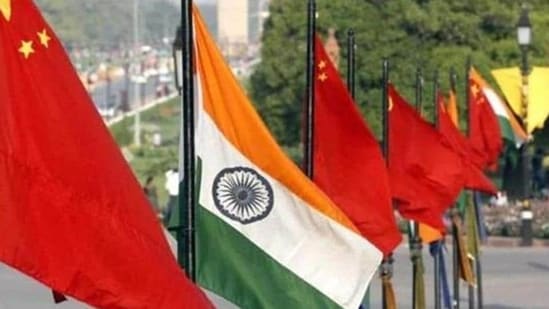
Among the places included in the list is the border village of Longju, which has been controlled by China since 1959 but falls within the Indian claim line, officials said on condition of anonymity. The move is aimed at reinforcing India’s absolute sovereign and legal jurisdiction over these territories.
An official statement from the Union home ministry said the Indian government, in consultation with the government of Arunachal Pradesh, “identified a total of 27 places or features in Arunachal Pradesh, by standard place and feature names on the official maps of Survey of India (SoI)”.
Deep Dive
What prompted India to issue standard names for 27 locations in Arunachal Pradesh?
How does India's naming of places contribute to its claim over Arunachal Pradesh?
What has been China's response to India's actions regarding Arunachal Pradesh?
“Identifying them formally on the Survey of India map of Arunachal Pradesh is aimed at facilitating their accurate recognition and better awareness among the public at large,” the statement said.
The home ministry said the locations identified on the Survey of India map include 21 land areas, four passes, a lake, and a monument. The land locations are Longju, Maja, Bisa, Bara Kundun, Chhota Kundun, Dhan Bari, Pritnagar, Buddhamandir, Jairampur, Teritnagar, Ramnagar, Jaswant Garh, Sagar, Padma, Jyotinagar, Baisakhi, Chhota Ropuk, Bara Ropuk, Shivaji Nagar, Sunpura, and Kamlang Nagar.
{{/usCountry}}The home ministry said the locations identified on the Survey of India map include 21 land areas, four passes, a lake, and a monument. The land locations are Longju, Maja, Bisa, Bara Kundun, Chhota Kundun, Dhan Bari, Pritnagar, Buddhamandir, Jairampur, Teritnagar, Ramnagar, Jaswant Garh, Sagar, Padma, Jyotinagar, Baisakhi, Chhota Ropuk, Bara Ropuk, Shivaji Nagar, Sunpura, and Kamlang Nagar.
{{/usCountry}}The passes are Dzo La, Riza La, Pukur La, and Thag La, and the list included Sambho Sarovar lake and Sher-e-Thapa Memorial.
An official familiar with the development said: “There has been a lot of ambiguity regarding the maps. China uses this to give fictitious names to Arunachal Pradesh’s territories, which are part of sovereign India.
“Putting these 27 locations on the Survey of India map provides clarity, makes our claim status strong and strengthens the official documentation of geographical features.”
Over the past few years, China has repeatedly announced its own “standardised names” for dozens of places in Arunachal Pradesh as part of its claims on Indian territory. China refers to Arunachal Pradesh as “south Tibet”, and there have been instances of Chinese authorities issuing stapled visas to residents of Arunachal Pradesh.
In November 2025, India registered a strong protest after a woman from Arunachal Pradesh was detained by Chinese authorities at Shanghai airport on the grounds that her Indian passport was invalid.
The officials said identifying a place on the Survey of India map gives administrative and governance value to it, as mapped places are easier to reference in land, revenue, and census records, infrastructure planning, and border road construction.
They also said the move is aimed at discrediting China’s efforts to assign “fictitious names” to places in Arunachal Pradesh.
In April this year, after China assigned names to 23 locations in Arunachal Pradesh, the external affairs ministry said such attempts to manufacture “baseless narratives” would not alter the reality and could even hit efforts to normalise bilateral relations.
External affairs ministry spokesperson Randhir Jaiswal said at the time that India categorically rejected “any mischievous attempts by the Chinese side to assign fictitious names to places which form part of the territory of India”. He added, “China should refrain from actions which inject negativity into relations and undermine efforts to create better understanding.”
Jaiswal said such moves by China, aimed at introducing false claims, cannot alter the “undeniable reality that these places and territories, including Arunachal Pradesh, were, are, and will always remain an integral and inalienable part of India”.
China’s ministry of civil affairs — which is responsible for standardising the names of geographical features in “south Tibet” — had issued a notification renaming the 23 locations, including rivers, mountains, and towns.
In the past too, India has rejected China’s moves to rename dozens of locations in Arunachal Pradesh, including towns, rivers, and geographic features, arguing that such actions will not change the reality. China has resorted to such renaming exercises in 2017, 2021, 2023, and 2024, usually during periods of strained relations.
India and China are currently normalising their relations, which plummeted to an all-time low due to a military standoff on the LAC that began in 2020 and lasted more than four years. As part of this process of normalisation, the two countries have held talks aimed at resolving their long-standing border dispute.