India will be among only a handful of nations globally, which are unlikely to face any serious food shortage during 2022-23. But extreme weather this year has alarmingly pared its overflowing granaries, raising food-security concerns in a country home to 1.38 billion people, or 17% of the world’s population.
The reason the country will escape a food shortage has do with surplus harvests in the previous six years.
Record high food prices due to supply bottlenecks and the Ukraine war
India will be among only a handful of nations globally, which are unlikely to face any serious food shortage during 2022-23. But extreme weather this year has alarmingly pared its overflowing granaries, raising food-security concerns in a country home to 1.38 billion people, or 17% of the world’s population.
The reason the country will escape a food shortage has do with surplus harvests in the previous six years.
Record high food prices due to supply bottlenecks and the Ukraine war have triggered a global crisis that “will drive millions more into extreme poverty, magnifying hunger and malnutrition, while threatening to erase hard-won gains in development,” the World Bank said in an update last week.
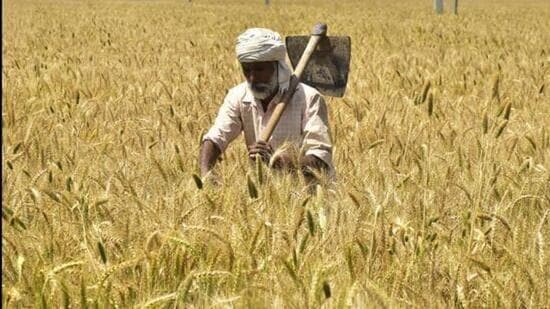
This year, a record heatwave in northern India, and flooding in eastern and southern regions affected the output of winter-sown wheat. The staple’s production is officially estimated to touch its lowest levels in three years, at 106 million tonne.
Acreage of summer rice, another staple, has shrunk 6% compared to last year. The government held ample reserves of 41 million tonnes of rice stocks as of August 1. That’s way above the buffer requirement of 13.5 million tonnes by July 1, only because the government has a massive pool of old stocks.
The buffer or emergency reserve required to be held by the government changes throughout the year, depending on seasonal consumption patterns.
This year, India recorded its hottest March in 122 years. A searing early summer impacted wheat yields, leading to lower government purchase of wheat for state-held stocks. Federally-held wheat reserves plunged to their lowest levels in 14 years.
Under the National Food Security Act 2013, the government offers subsidised foodgrains to nearly 800 million food-insecure people. So, sufficient annual food reserves are critical.
In May, when it was clear that wheat output will fall due to a prolonged heatwave, Union food secretary Sudhanshu Pandey said in a briefing that the country had adequate stocks to tide over any shortage.
India’s opening wheat stock was 19 million tonnes (at the time), he said, and after meeting the requirement of welfare schemes through the year to March 31, 2023, it would have stocks of 8 million tonnes, he added. That’s higher than the minimum requirement of 7.5 million tonne of buffer the government has to end the year with.
Lower output this year saw wheat demand go up. Prices soared above the support price offered by the government. So, farmers preferred to sell to private traders, pulling down federal stocks close to minimum requirements. On May 13, the government banned private wheat export to shore up supplies.
“Our rice procurement last year was about 600 lakh metric tonne (60 million tonne) and this year the same figure is expected,” Pandey said on May 4. The country’s annual requirement for subsidised distribution of the cereal is roughly about 35 million tonne. “So, we are in a surplus situation,” he added.
However, scanty monsoon rains in major rice growing states will likely to crimp rice output this year by 10-15%, said Siraj Hussain, a former Union agriculture secretary.
The impact of extreme whether on food output serves as a cautionary tale. Lower stocks prompted the government to rejig the allocation of grains under the Pradhan Mantri Garib Kalyan Ann Yojana (PMGKAY), a Covid-time scheme offering 5 kg free grains to every person covered under the food security law, in addition to routine subsidised food allocations.
The food ministry had to allot 5.5 million tonne of additional rice in place of wheat for the PMGKAY programme.
“These weather patterns are getting frequent. Markets react quickly and prices go up,” said Rahul Chauhan, a commodity analyst with IGrain India Ltd.
For India, the first of the four Intergovernmental Panel on Climate Change (IPCC) reports being released this year highlighted hard evidence of a changing monsoon, rising seas, deadlier heat waves, intense storms, flooding and glacial melts.
Risks to agriculture tend to be more acutely felt because they are most visible, but shocks to manufacturing could also be huge, studies have shown.
Rising temperatures have already made Indian agriculture more resource hungry. According to ongoing studies by the Indian Council of Agricultural Research (ICAR), farming now consumes up to 30% more water due to “high evaporative demand and crop duration due to forced maturity” in states such as Andhra Pradesh, Punjab and Rajasthan.
Apple orchards in Himachal Pradesh are shifting to higher altitudes for lack of sufficient cold weather. “Temperature in apple-growing regions of Himachal Pradesh showed an increase, whereas precipitation showed a decrease in recent years in Lahaul and Spiti and Kinnaur,” one of the ICAR studies said.
The government’s 2017-18 Economic Survey said extreme weather and drought, when rainfall loss is greater than 40% than the median, will cut farmer incomes by up to 14%.
“We know what will happen. The key question is what is to be done? We know that too,” said Pramod Aggarwal, a top scientist and a co-author of the fourth IPCC report .
Some of the programmes India has taken up will help to mitigate climate change, such as the Pradhan Mantri Fasal Bimal Yojana (a farm insurance scheme), Sinchai Yojana (irrigation scheme) and the rural job guarantee scheme MNREGA, Aggarwal said, adding: “But the problem lies in governance and implementation.”
One Subscription.
Get 360° coverage—from daily headlines
to 100 year archives.
Archives
HT App & Website