India is looking to army chief Gen MM Naravane’s upcoming visit to Nepal to help put bilateral ties back on an even keel after a bitter border row, especially by building on the traditionally strong ties between the two armies, people familiar with developments said on Friday.
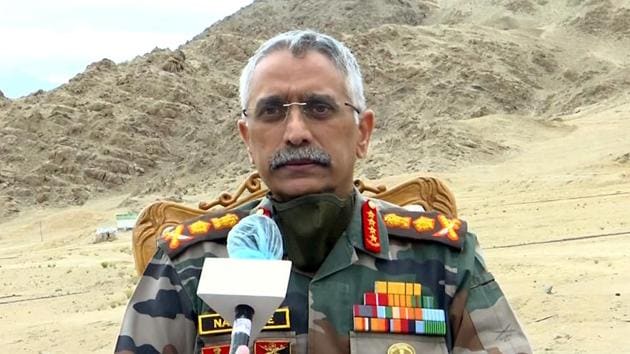
Naravane is expected to be in Nepal during Nov 4-6, when he will meet his Nepalese counterpart Gen Purna Chandra Thapa and top civilian leaders. Nepal’s President Vidya Devi Bhandari will also confer the honorary rank of general of the Nepali Army to Naravane at an investiture ceremony.
Ahead of Naravane’s trip, Research and Analysis Wing (RAW) chief Samant Kumar Goel made a low-key visit to Kathmandu on Thursday during which he met Prime Minister KP Sharma Oli.
Oli’s spokesman Surya Thapa was quoted by media as saying that Goel’s discussions with Oli focussed on not allowing any “interruption in friendly relations between Nepal and India [and] resolving all outstanding issues through dialogue and continuing mutual cooperation”.
Also Read: Nepal Government not to bear costs of Covid-19 test, treatment
Bilateral ties were hit in May after defence minister Rajnath Singh inaugurated a key border road to Lipulekh region, which is claimed by Nepal. Kathmandu responded by issuing a new map that showed Kalapani, Lipulekh and Limpiyadhura, all controlled by India, as part of Nepalese territory, exacerbating the row.
{{/usCountry}}Bilateral ties were hit in May after defence minister Rajnath Singh inaugurated a key border road to Lipulekh region, which is claimed by Nepal. Kathmandu responded by issuing a new map that showed Kalapani, Lipulekh and Limpiyadhura, all controlled by India, as part of Nepalese territory, exacerbating the row.
{{/usCountry}}The two sides are yet to hold talks on the border issue, though the people cited above said on condition of anonymity that the visits by the RAW and Indian Army chiefs are expected to calm relations and prepare the ground for more substantive engagements.
“The ties between the two militaries are very robust and there are 136,000 Indian Army pensioners in Nepal, who form part of the strong links between the two sides,” said the person cited above.
Oli’s decision to remove deputy Prime Minister Ishwar Pokhrel – who was critical of India – from the defence ministry during a cabinet reshuffle on October 14 was seen by some in New Delhi as an indication of a desire to improve ties before the Indian Army chief’s visit. However, the people played down speculation in this regard. “We see this more as an internal compromise between two groups in the Nepal government and more of an internal matter for them,” one of the people said.
Also Read: Himalayas poised for a series of big earthquakes, may extend to Delhi, Chandigarh: Study
The people noted that Nepalese leaders themselves have referred to what is called the “roti-beti ka rishta” – a reference to close links forged through trade and inter-marriages in border districts of the two countries – and said this one of the foundations for the strong economic and political linkages with Nepal.
Despite China’s efforts to forge stronger economic links, Nepal’s access to the sea is via India, and it imports a large proportion of its requirements from and through India. Nepal imported goods worth $6.52 billion from India in 2017 and exported goods worth $420.18 million the same year.
India’s security establishment also continues to have concerns about China’s activities along Nepal’s borders, including possible encroachment of territory, despite a recent denial issued by both Kathmandu and Beijing about the reported occupation of land by Chinese troops in the remote border district of Humla.
“There are reports that China has illegally occupied Nepal’s land in several places spread over the border districts of Dolakha, Gorkha, Darchula, Humla, Sindhupalchowk, Sankhuwasabha and Rasuwa. Several of these places are catchment areas of rivers,” a second person said.