The drone attack by Pakistan based Lashkar-e-Taiba (LeT) terror group on Jammu air base last Sunday has red-flagged the need for India to acquire latest anti-drone technologies as terrorists and Maoists have started using stand-off weapons at the behest of their handlers across the borders.
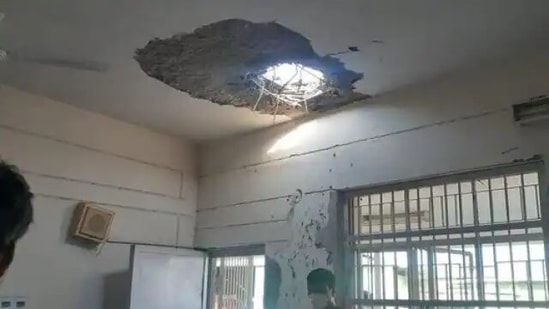
The attack has also brought home the stark truth to not only the national security planners but as well as the air warriors who thought that the armed drones will not be able to survive the hostile environment of the Line of Control (LoC) between India and Pakistan with both countries deploying air defence radars along the active line. The Sunday attack showed that how a mere system costing around six lakh of rupees can cause damage to the Indian Air Force's (IAF) key installations.
Fact is that since 2020, the Border Security Force (BSF) has recorded no less than 99 drone sightings on the western borders - from Jammu and Kashmir to Gujarat. To add to the discomfiture is that the BSF has even sighted drones in Maoist infested areas of eastern India. The Indian intelligence agencies and the J&K police know that both Lashkar and Jaish-e-Mohammed have better capability that the drone used in the June 27 attack with majority of drones being used to drop weapons in the Jammu sector.
The national security council secretariat is aware of the threat posed by terror drones to Indian security for the past few years but the Indian acquisition processes are so tedious that to date only a request for information (RFI) has been floated for acquisition of anti-drone systems. The Defence Research and Development Organization has also developed a demonstrator anti-drone system but that is still to be tested either on the LoC or the Line of Actual Control (LAC). The DRDO system was tested in NSG facility in Manesar in January 2021 but the users have to still to take a final call.
{{/usCountry}}The national security council secretariat is aware of the threat posed by terror drones to Indian security for the past few years but the Indian acquisition processes are so tedious that to date only a request for information (RFI) has been floated for acquisition of anti-drone systems. The Defence Research and Development Organization has also developed a demonstrator anti-drone system but that is still to be tested either on the LoC or the Line of Actual Control (LAC). The DRDO system was tested in NSG facility in Manesar in January 2021 but the users have to still to take a final call.
{{/usCountry}}While China has moved far ahead in armed and swarm drone technologies with Pakistan being a collateral beneficiary, the Indian drone and anti-drone capability is still work in progress. This is perhaps also to do with the fact that the Indian military and security forces take time to assimilate new technologies despite the fact that US has used the drones to good effect in Afghanistan and Balochistan to take out high value terror targets. There are many within the security establishment who believe that drones cannot stand a chance in a contested air space and will be detected and brought down. This was proved wrong on June 27 as the two drones not only intruded across the border without detection (which is very difficult in mountainous terrain) but also dropped the payload using GPS coordinates. Had it not been windy in the wee hours of last Sunday morning, the LeT would have embarrassed the IAF.
The truth is that even if the two drones had been detected and shot down by the BSF, are the Indian security forces prepared for swarm drones attacks on Indian vital installations all along the border. An armed drone is a cheap option for targeting by anti India terror groups as the controller sits across the border and achieves the objective without crossing the LoC by tunneling under the border fence. India has no options but to rapidly acquire anti-drone systems by involving the private sector while the public sector can continue developing its own. A perfect drone strike by Pakistan based terror groups will destroy the much earned LoC ceasefire but also bring the two arch rivals to each other’s throats.