
 E-Paper



India, Russia to assess Taliban actions before any recognition move
Russian President Vladimir Putin and Prime Minister Narendra Modi agree on the rise of Islamic radicalization in the region and are concerned over spread of terrorism by Taliban affiliated groups in Pakistan.

 Prefer HTon Google


Russia and India have decided to consult each other over Taliban’s actions in Afghanistan and assess where there is any marked change in the Sunni Pashtun Islamist force since they first came to power in 1996 before deciding to recognise the new Emirates of Afghanistan.
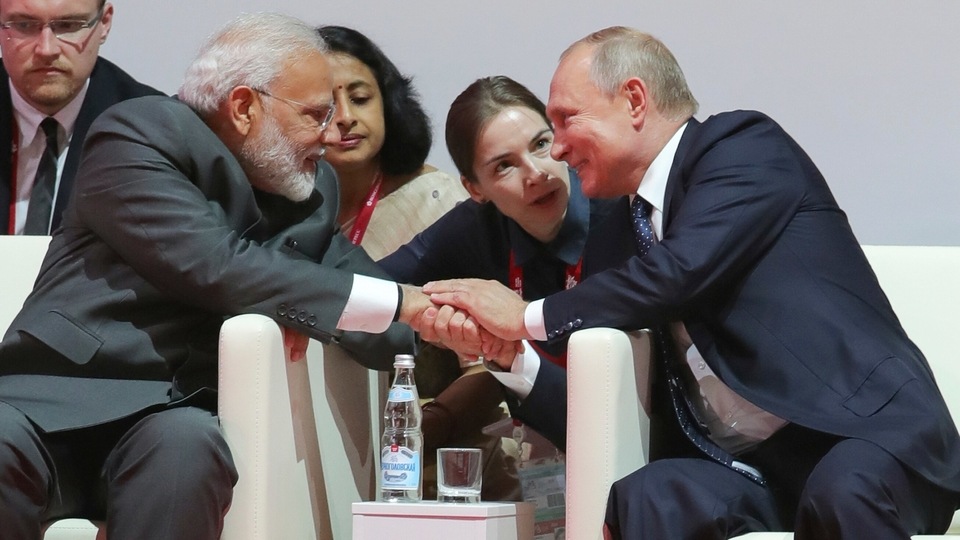
The two countries have also decided to set up combined teams comprising of foreign ministry and national security officials of each country to conduct a detailed assessment of the Afghan situation so that future course of action with the Taliban Islamic government is decided by both India and Russia.
These crucial decisions were taken after Russian President Vladimir Putin called up Prime Minister Narendra Modi on Tuesday and held detailed conversation over telephone on Afghanistan situation and its impact on both South and Central Asia ahead of the G-7 summit. President Putin has been discussing Afghanistan situation with leaders of Central Asian Republics, who are extremely worried about the impact of rise of an Islamist terrorist force in Kabul, and European leaders like French President Emmanuel Macron and Italian Prime Minister Mario Draghi. The conversation between PM Modi and President Putin has been described by diplomats as extremely cordial and warm, with both leaders appearing to be on the same page on Afghanistan.
The call by German Chancellor Angela Merkel to both PM Modi and Russian President Putin was a farewell call from the German leader and was set up before the Taliban seized Kabul with the US forces virtually running out of Afghanistan.
While Russian National Security Advisor Gen Nikolai Patrushev was in touch with his US counterpart Jake Sullivan this week, the discussion was tactical in nature with Moscow offering a helping hand to US forces trying to evacuate civilians from Kabul. A similar conversation took place between Russian Defence Minister and his UK counterpart.
During the conversation between the two leaders, Prime Minister Narendra Modi told President Putin that India was concerned about Islamic radicalization in the region and how Taliban affiliated terrorist groups in Pakistan could use the developing situation to spread terrorism. It is understood that President Putin agreed with PM Modi’s assessment and expressed concern over radicalization in the Central Asian Republics.
President Putin made it evident that Russia is still to assess whether there is any change in the methodology of Taliban from the past before taking steps to recognize the Islamist regime. He said that Russia would consult India before any such decision is taken and hence the combined national security and intelligence teams of the two countries were asked to carry out this assessment. During 1996-2001, the Taliban carried out a reign of terror against minorities and women. The Taliban then went after their political opponents by castrating and publicly hanging former Afghan president Mohammed Najibullah, an Ahmedzai Pashtun, from a traffic light pole on September 26, 1996.
While India is in discussion with the US, EU leadership and at the UN on Afghanistan development, one must remember the role both Russia and India played in bolstering the anti-Taliban Northern Alliance in the 1990s along with Iran. All three countries have a legitimate stake in Afghanistan as neighbors and understand the perfidious role of Pakistan in Taliban 2.0.


