
 E-Paper



India shooting down Pakistani aircraft from 300km dealt huge psychological blow: Military officials
Air Chief Marshal Amar Preet Singh has confirmed that India shot down five Pakistani fighter jets during Operation Sindoor.


Air Chief Marshal Amar Preet Singh's comment about the Indian Air Force downing a large Pakistani aircraft from a distance of around 300 km reflected its unprecedented air superiority that dealt a "huge" psychological blow to Pakistan during Operation Sindoor, military officials have said, reported PTI.
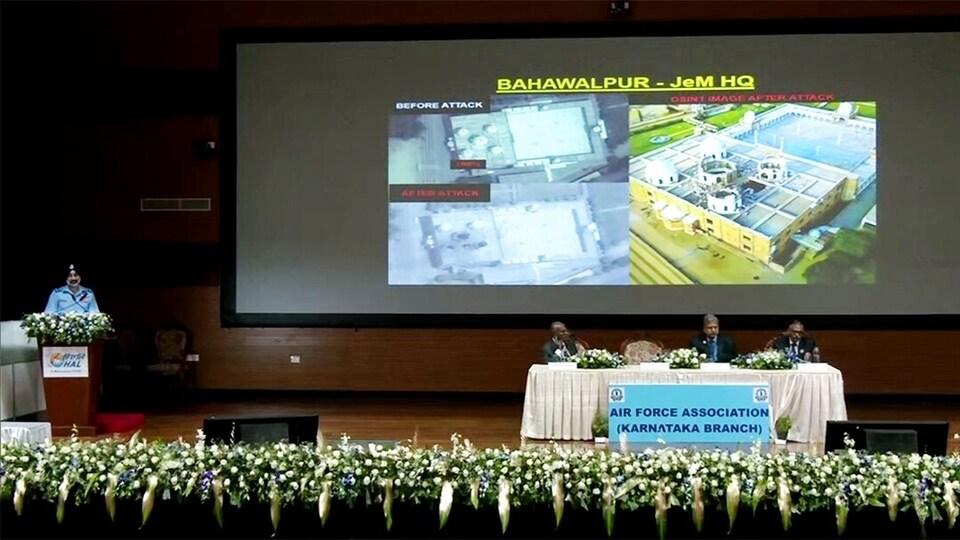
During an event on Saturday, Air Chief Marshal Amar Preet Singh said that the one large Pakistani aircraft destroyed during Operation Sindoor was taken down from a distance of 300 kilometres, the longest-ever recorded surface-to-air kill.
He had also confirmed that India shot down five Pakistani fighter jets during Operation Sindoor – India's response to April 22 terror attack in Jammu and Kashmir's Pahalgam.
Also Read | 'Your turn will come': What PM Modi told Naval chief soon after India-Pak ceasefire
"It is significant as there is no publicly available information of a surface-to-air missile bringing down such an asset at a distance of 300 kms or beyond," the senior military official told PTI on condition of anonymity.
Another official told PTI that the strike dealt a “massive psychological, strategic and tactical blow” that will be difficult for Pakistan to overcome.
Also Read | ‘In Operation Sindoor, we played chess’: Army chief on military operation against Pakistan
"The kill showed we can reach every corner of Pakistan," he said, while adding that the induction of Russian S-400 air defence missile systems helped India enhance its air dominance.
According to PTI, the officials also pointed out how India managed to hit multiple Pakistani installations while jamming its communication systems.
India's Operation Sindoor
India launched Operation Sindoor in the early hours of May 7 when the military hit nine terror camps inside Pakistan and Pakistan-occupied Kashmir (PoK), killing more than 100 terrorists.
It was New Delhi’s direct military response to the April 22 Pahalgam terror strike that killed 26 people. The operation triggered four days of strikes and counterstrikes with drones, missiles and long-range weapons before the two sides reached an understanding on stopping all military action on May 10.


