India has signed the Biodiversity Beyond National Jurisdiction (BBNJ) Agreement, which seeks to promote the conservation of marine genetic resources and the fair and equitable sharing of benefits.
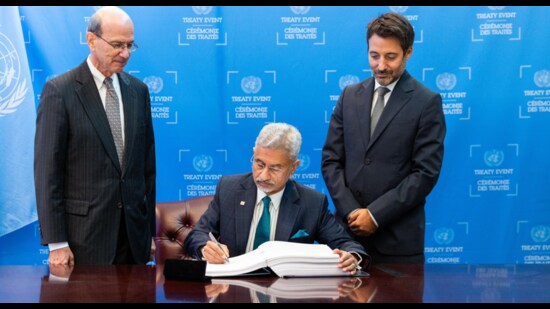
“India is proud to join the BBNJ Agreement, an important step towards ensuring that our oceans remain healthy and resilient,” external affairs minister S Jaishankar said in a post on X after singing the treaty at the United Nations headquarters in New York on Wednesday.
The agreement, or the High Seas Treaty, is an international accord under the United Nations Convention on the Law of the Sea (UNCLOS). The high seas cover areas nearly two-thirds (64%) of the ocean – almost half the planet’s surface. It includes some of the most ecologically vital, but critically threatened and least protected areas on earth; less than 1% of what is fully or highly protected.
The treaty aims to address the growing concerns over the long-term protection of marine biodiversity in the high seas. It sets precise mechanisms for the sustainable use of marine biological diversity through international cooperation and coordination. Parties cannot claim or exercise sovereign rights over marine resources derived from the high seas and ensure fair and equitable sharing of benefits.
The treaty follows an inclusive, integrated, ecosystem-centric approach based on the precautionary principle and promotes using traditional knowledge and the best available scientific knowledge. It seeks to minimise impacts on the marine environment through area-based management tools and establishes rules for conducting environmental impact assessments.
{{/usCountry}}The treaty follows an inclusive, integrated, ecosystem-centric approach based on the precautionary principle and promotes using traditional knowledge and the best available scientific knowledge. It seeks to minimise impacts on the marine environment through area-based management tools and establishes rules for conducting environmental impact assessments.
{{/usCountry}}In March 2023, after five years of negotiations, the world reached a significant milestone in efforts to stem global biodiversity decline when nations agreed to the new High Seas Treaty to protect ocean life. Once it has been ratified by at least 60 countries, the treaty will provide the legal framework to address many of the governance gaps that have plagued the ocean and provide a roadmap to conserve biodiversity areas beyond national jurisdictions.
According to the High Seas Alliance, following two decades of discussions, the implementing agreement to UNCLOS on the conservation and sustainable use of marine biological diversity of areas beyond national jurisdiction – or High Seas Treaty – is the world’s first cohesive, international and legally binding framework to specifically protect high seas biodiversity.
At a workshop on the BBNJ in Chennai last month, PK Srivastava, an advisor to the Union earth sciences ministry, said the ministry will establish a dedicated institutional mechanism to oversee the developments regarding the agreement. “This authority will deal with the necessary regulations, studies, and other activities related to the treaty,” Srivastava said.
He emphasised the need for detailed discussions and modifications to existing legislation to ensure compatibility with the requirements for the effective implementation of the treaty. Srivastava said the Environment Protection Act could be used for the environmental impact assessment of the BBNJ Agreement.