...
...
Next Story

India still needs to tackle its solid waste problem

Although the state governments has made huge progress in managing solid waste in the past five years under the Centre’s Swachh Bharat Mission, the 2018 cleanliness survey found that only 10% of 471 cities segregated household waste.

Updated on: Oct 03, 2019 02:53 AM IST
Hindustan Times, New Delhi | By
Prefer HTon Google
Advertisement

New Delhi: India was declared open defecation free (ODF) on Wednesday, the 150th birth anniversary of Mahatma Gandhi, but the big challenge ahead is solid waste management. Indian cities generate about 1.5 lakh tonnes of garbage every day, of which only one-fourth gets processed.
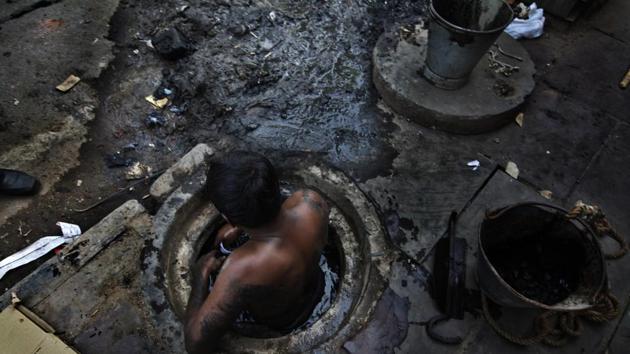
India was declared open defecation free (ODF) on Wednesday, the 150th birth anniversary of Mahatma Gandhi, but the big challenge ahead is solid waste management. (Raj K Raj / Hindustan Times)

Although the state governments has made huge progress in managing solid waste in the past five years under the Centre’s Swachh Bharat Mission, the 2018 cleanliness survey found that only 10% of 471 cities segregated household waste.

The urban development ministry, which conducted the survey, found out that 4% of the all solid waste generated in the country is treated and 10% is dumped in landfill sites, many of which are unscientifically built and do not do a good job of preventing ground water and soil contamination.

The ministry estimates that the volume of solid waste generated in cities will increase to 4.5 lakh tonnes per day by 2030 as people move from villages to cities.

“How will our cities manage this gargantuan amount of waste, considering that they struggle to manage even the current quantities?” asked Chandra Bhushan, former deputy director general of Centre for Science and Environment (CSE).

The results have been mixed.

Among the metros, Delhi had the lowest (39%) collection of garbage from homes, and Ahmedabad the highest (95%) , according to a study released by ICRIER in January. Mumbai and Chennai, two other big metros covered under the study, had 80% of door to door garbage collection.

Most of the homes in the 19 cities surveyed fared badly on segregation on the waste at homes. Except Tirunelveli in Tamil Nadu, Suryapet in Telangana and Alappuzha in Kerala, segregation at homes was less than 50%. In Delhi and Mumbai, it was as low as two percent.

“Segregation at home will not happen unless there are economic incentives and disincentives,” Bhushan said.

Some cities such as Muzaffarpur in Bihar and Indore in Madhya Pradesh have improved segregation at source by including a fine for failure to segregate and a rebate in property tax for doing so. In Muzaffarpur, the fine is of 100 and rebate of 10% of the property tax. In Indore, the fine is 1,000.

Indore, which won the cleanest city award started in 2017 and 2018,has eliminated garbage dumps, ensured 100% household collection of waste and converts waste to usable products such as compost and fuel. The award was started in 2016. “If Indore can manage its urban waste, other cities can also do,” said Swati Singh Sambyal, programme manager at the Centre for Science and Environment (CSE).

Experts say the other challenge is scientifically disposing solid waste, which the union government has been trying to address through waste to energy plants. .

Niti Aayog has set a target of constructing 800 MW of waste to energy plants, to deal with growing urban waste problem. Under this programme, some cities have come up with innovations. Indore has successfully converted waste into compressed natural gas (CNG), a model that 72 countries under the aegis of United Nations Environment Programme want to replicate. Dehradun is working on generating bio-oil from urban waste.

Although work has started on some pilots, Bhushan said the problem with waste to energy plants is that they can’t work efficiently in India because of low calorific value of garbage, high moisture content and improper segregation.

“We need to look at local solutions which is building small bio-gas plants and pushing for recycle and reuse,” he said.

 
ABOUT THE AUTHOR
Chetan Chauhan

Chetan Chauhan is the National Affairs Editor looking into all aspects of news and features from across India. A Chevening scholar with over three decades of experience in reporting and news management, Chetan has extensively covered all important aspects of the social sector, political economy, environment and climate change nationally and internationally. He did a journalism course at the Reuters Institute of Journalism in Oxford and Digital Media training at Nanyang Technological University in Singapore. He started as a reporter with The Statesman in 1996 and joined the Hindustan Times in 2000 in the metro bureau covering environment, crime and Delhi politics. He covered hot local news, from the Jessica Lal murder case to the rebellion of Delhi Congress MLAs against then Chief Minister Sheila Dikshit, to the replacement of toxic vehicle fuel with cleaner compressed natural gas (CNG) in the national capital. Some of his stories on air pollution became part of the Supreme Court’s landmark MC Mehta versus Government of India case in the National Capital Region (NCR), forcing the government to take corrective measures. As part of the national political bureau since 2004, he covered important central sectors such as environment, education, social justice, labour, rural development, water resources, renewable energy, agriculture, broadcasting and the Planning Commission for more than a decade producing several exclusive and investigative breaking stories. His specialisation is the environment, having covered at least a dozen United Nations global conferences on climate change, biodiversity and wildlife including climate summits in Paris, Copenhagen and Bali. He also covered India’s two five-year plans ---11th and 12th and reported on drafting and execution of right based laws such as Right to Education, Right to Information and rural job guarantee law, MG-NREGA, now being introduced in new format as VG-RAM-G Act. He has in-depth knowledge of social sector issues. He was one of the first to report on tigers vanishing from Sariska and Panna wildlife reserves in 2004 and 2008, respectively, leading to the setting up of the National Tiger Conservation Authority (NTCA) and the introduction of stringent penal provisions for poaching. He has written extensively on the rising human-animal conflict in India and the degradation of India’s biodiversity hotspots because of mining and other activities. Since 2004, Chetan has covered Parliament comprehensively and participated in training on the nuanced coverage of Parliament proceedings. He has travelled extensively across India to cover national and provincial elections since 1998, especially in the Hindi heartland states, considered India’s road to power. He writes a regular column for Hindustan Times, Ecostani, on important national politics, economy, Himalayan ecology and environmental issues. His other responsibilities include providing inputs for edits and edit page articles for the publication, apart from managing news flow from across India.

Check India news real-time updates, latest news on Hindustan Times and more across India.
SHARE THIS ARTICLE ON
Hindustantimes wants to start sending you push notifications. Click allow to subscribe