The Indian Railways have unlocked a new milestone by successfully operating its first ever double-stack long-haul container train. The train started its journey from Jawaharlal Nehru Port Trust (JNPT), Mumbai and carried 360 TEUs (Twenty-foot Equivalent Units) of containers to CONCOR's Goods Cargo Terminal (GCT) at Varnama in Vadodara Division.
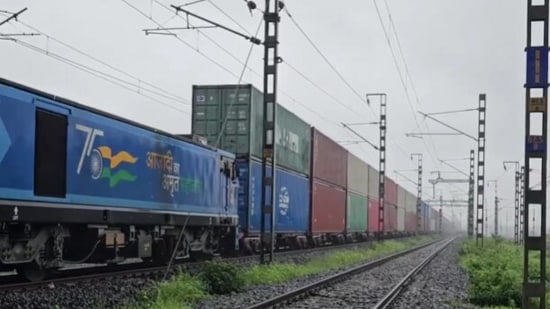
The achievement unlocks long-term benefits in the form of higher returns from a single train journey, transport efficiency and reduced traffic load on roads.
The pilot project
As per an official release, the train departed from JNPT at 7 pm on August 21 and covered a distance of approximately 422 km. The long-haul formation comprised two double-stack rakes, with the leading rake carrying 45 1 loads and hauled by locomotive number 60311 with a tonnage of 1,817 tonnes. The trailing rake also carried 45 1 loads and was hauled by locomotive number 24690 with a tonnage of 2,105 tonnes.
Also Read I Cabinet approves 4 multitracking railway projects covering 8 districts
Together, the two rakes transported 360 TEUs in a single movement, showcasing Indian Railways' capability to handle higher volumes of containerised freight through long-haul operations.
{{/usCountry}}Together, the two rakes transported 360 TEUs in a single movement, showcasing Indian Railways' capability to handle higher volumes of containerised freight through long-haul operations.
{{/usCountry}}Union Minister Ashwini Vaishnaw commemorated the moment by sharing a video of the train on his X handle.
Delhi's chief minister Rekha Gupta also reacted to the developments, she wrote on X: “Indian Railways is redefining the economic geography of India with scale, speed and ambition."
"The first 1.3 km Double Stack Container Train on the Western Dedicated Freight Corridor, from JNPT to Vadodara, marks another significant leap in India’s freight and logistics capabilities.”
Benefits of double-stack long-haul freight trains
The benefits of expanding this project may offer not only economic benefits but also environmental reaps. The ability to move more containers in a single trip would help distribute traffic at over-congested terminals and ports. Double occupancy could also help reduce transportation costs.
In addition, the ability to transport more in a single journey could help decrease the delivery time of products by ensuring more goods are carried in a single freight train. Diverting more goods to the railways for transportation would result in enhanced and a more efficient use of the country's trains network.
Also Read I 146 vehicles, 13 lodges checked in Pune railway station security drive
Apart from economic and logistical ease, the move could also benefit society environmentally. Since the trains are electrically powered, the ability to shift more cargo VIA railways instead of roads, in a single journey, would ease traffic congestion and reduce the amount of fuel used in transportation.