
 E-Paper



India’s great poverty debate: Season 2
Almost two and a half years after the 2017-18 Consumption Expenditure Survey (CES) was scrapped, the ‘great Indian poverty debate’ seems to have resurrected itself. The second season of this debate, interestingly, has started from Washington DC, not India.

 Prefer HTon Google


Poverty statistics in India have always been the subject of controversy. The country saw a big debate on the trend in poverty and the veracity of poverty estimates in the 2000s. Such was the intensity of the debate and the polemics involved that the episode was termed as the “great Indian poverty debate”. It continued through the decade and into the next, but was interrupted when the current government decided to junk the findings of the 2017-18 National Sample Survey’s (NSS) Consumption Expenditure Survey (CES) in November 2019. CES is the official source of data for calculating poverty numbers in India. The latest available CES data is for 2011-12.
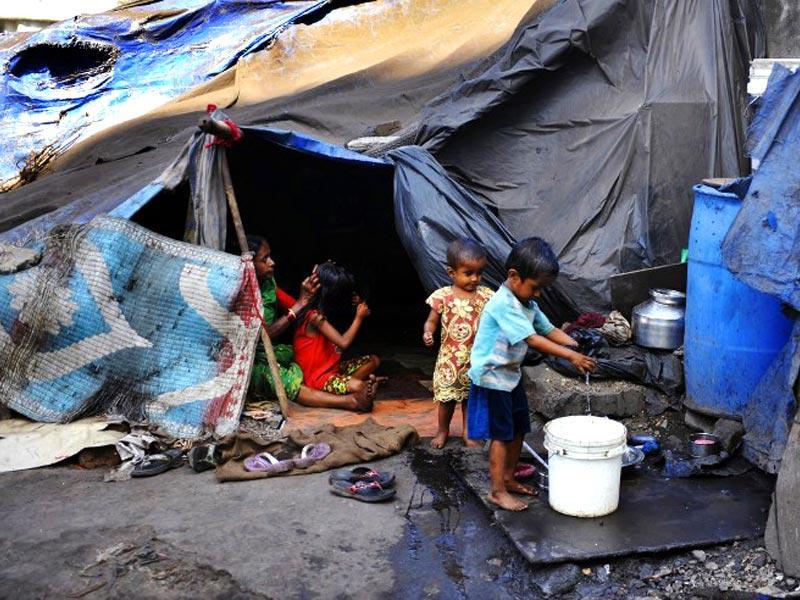
Almost two and a half years after the 2017-18 CES was scrapped, the ‘great Indian poverty debate’ seems to have resurrected itself. The second season of this debate, interestingly, has started from Washington DC, not India. Two new working papers, one published by the World Bank and another by IMF, have given drastically different estimates of extreme poverty – it is compatible with the World Bank’s $1.9 purchasing power parity (PPP) poverty line – in India. The World Bank paper puts it at 10%, while the IMF one puts it at 0.86%.
What explains this wide discrepancy? Here are three charts which explain the issues involved in detail.
What are the summary findings of the IMF and World Bank papers?
First, the disclaimer. While these papers have been published by the IMF and the World Bank, they are to be considered as views of the authors and not the institutions.
The World Bank paper’s title is self-explanatory. “Poverty in India has declined over the last decade but not as much as previously thought”, Sutirtha Sinha Roy and Roy van der Weide argue in their paper. The paper gives estimates of poverty in India until 2019 using recalibrated data from the Consumer Pyramid Household Surveys (CPHS) – many economists have argued that the really poor are underrepresented in the CPHS – conducted by the Centre for Monitoring Indian Economy (CMIE). At 10.2%, extreme poverty is 12.3 percentage points lower in 2019 than in 2011, the paper argues.
The IMF paper, on the other hand, argues that extreme poverty had almost vanished in India before the pandemic and it did not increase even after the pandemic struck. “Extreme poverty was as low as 0.8% in the pre-pandemic year 2019, and food transfers were instrumental in ensuring that it remained at that level in pandemic year 2020”, Surjit Bhalla, Karan Bhasin and Arvind Virmani argued in their paper. Bhalla is the Executive Director for India, Bangladesh, Sri Lanka and Bhutan at the International Monetary Fund.

How do Bhalla et al arrive at their estimates of almost zero poverty?
The first author of the IMF working paper, Surjit Bhalla, is a veteran in the debate on poverty estimation in India and has usually argued that official poverty figures in India have an overestimation bias. His basic argument has been the same; that there is a large underestimation of consumption spending in CES surveys done by the NSS and the Private Final Consumption Expenditure (PFCE) numbers in the National Account Statistics (NAS) are a more appropriate measure of consumption spending.
Because poverty ratio is essentially the share of population below a certain consumption level, Bhalla has argued that use of CES data has been leading to an overestimation of poverty. To be sure, Bhalla is not alone in highlighting the growing divergence between NAS and NSS. Former RBI governor C Rangarajan and former vice chancellor of IGIDR S Mahendra Dev highlighted this problem in an Indian Express article published on December 13, 2019.

But Bhalla’s idea of using NAS to calculate poverty is controversial
While the growing gap between NSS and NAS consumption spending is indeed a problem, this need not mean a carte blanche to use Private Final Consumption Expenditure numbers from NAS to calculate poverty ratios.
Princeton economist Angus Deaton weighed in on the issue in his 2015 Nobel Prize lecture. “That per capita consumption as measured in NAS grows more rapidly than per capita consumption as measured in the surveys happens not only in India, but in many countries including, over some periods, the United States…While the sources of the discrepancies are largely obscure—itself a testament to the lack of attention devoted to the topic by national and international agencies—it is clear that the national accounts cannot be held blameless”, Deaton said, while underlining the possibility that India’s GDP growth rates were likely overestimates.
To be sure, the issue of divergence between NSS and NAS numbers was also taken up by a National Statistical Commission (NSC) committee in 2008. Bhalla was a member of the NSC then and his name is mentioned in the preface of the January 2008 report which is called Report of the Group for examining discrepancy in PFCE estimates from NSSO Consumer Expenditure data and estimates compiled by National Accounts Division. “The difference in the two sets of estimates (NAS and NSSO) is inherent in the methodologies adopted for preparing the estimates. It is difficult to say which one is more accurate”, the report said, echoing Deaton’s argument.
Bhalla’s policy recommendations could attract more interest than his poverty numbers
Because Bhalla’s basic rationale (NSS surveys underestimating consumption spending) for poverty being lower than what official numbers have shown it to be has remained unchanged in the latest paper, it is not likely to take the veterans of the great Indian poverty debate by surprise.
The major innovation in the latest paper – imputing the value of Public Distribution System (PDS) entitlements at market prices in consumption spending – makes only a little change, about two percentage points, in Bhalla’s poverty numbers.
However, Bhalla’s defence of India’s in-kind food security programme (against ideas such as Universal Basic income or even cash-transfers) could have a big policy influence. “Our work treats in-kind transfers as a transfer of income in monetary terms and therefore considers them as cash transfers. This is a reasonable assumption given that households could always sell the subsidized food grains in the open market”, the latest paper says. Bhalla himself has been extremely critical of the Minimum Support Price (MSP) based PDS programme in the past and had asked for abolition of MSP as recently as in 2019.
The latest paper also argues for an upward revision of the official poverty line to $3.2 PPP line from the $1.9 level.
These two recommendations, when read together, could be used to argue for more income support programmes to boost existing consumption spending of the poor. Given the fact that share of cereals – the PDS primarily gives rice and wheat – has been declining in average consumption spending overtime, an expansion of the PDS to non-cereal food items could be a good place to begin.


