MHOW: India’s response to future challenges must be “unified, swift and decisive” as new technologies reshape the contours of warfare across land, sea, air, cyber and space domains; and tomorrow’s battlefields will not recognise service boundaries and will demand joint thinking, planning and execution, chief of defence staff General Anil Chauhan said on Monday.
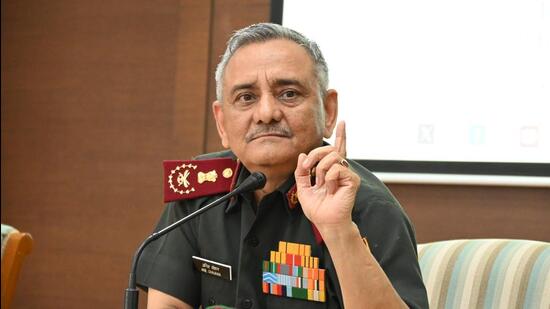
“Jointmanship is no longer aspirational. It is the foundation of our ongoing transformation through theaterisation, integrated logistics and joint training,” Chauhan said, introducing Ran Samwad --- a top military conclave being held at the prestigious Army War College at Mhow in Madhya Pradesh, on August 26-27.
Ran Samwad will delve into how technological advancements are continuously changing the nature of warfare and how these changes affect operational planning, tactics and strategies.
The seminar represents a significant step forward, with serving officers leading the conversations on the realities of war, warfare, and warfighting, Chauhan said.
“This seminar is not about showcasing power. It’s about shaping clarity of purpose, unity of effort and shared operational understanding across services. We must prepare not just to fight together but also to think together,” said the CDS, who conceived the event being organised by the Headquarters Integrated Defence Staff (IDS) and the Army War College.
Top military officers will speak on a raft of topics including recent conflicts and their impact on modern warfare, identifying emerging technologies impacting warfighting, leveraging and actualising technologies in the Indian armed forces, autonomous swarm tactics, leveraging artificial intelligence for coordinated drone swarm in maritime multi-domain operations, measures to integrate technology for warfighting through training initiatives, integration of unmanned systems in land warfare, and reimagining force structures and tactical operations by 2035.
{{/usCountry}}Top military officers will speak on a raft of topics including recent conflicts and their impact on modern warfare, identifying emerging technologies impacting warfighting, leveraging and actualising technologies in the Indian armed forces, autonomous swarm tactics, leveraging artificial intelligence for coordinated drone swarm in maritime multi-domain operations, measures to integrate technology for warfighting through training initiatives, integration of unmanned systems in land warfare, and reimagining force structures and tactical operations by 2035.
{{/usCountry}}Ran Samwad should become the doctrinal crucible for India’s joint warfighting future, Chauhan said.
Moving beyond academic discourse, the seminar will offer a ground-up understanding of the evolving nature of warfare, rooted in live experience and professional expertise from combat soldiers, the defence ministry said in a statement on the eve of the seminar.
“Ran Samwad aspires to evolve into a prominent forum for addressing global security challenges while reinforcing India’s security priorities. It reflects a growing recognition of the need for strategic autonomy, inter-service synergy and credible military discourse that speaks not only about Indian realities but also of the broader international security environment,” the ministry said.
The planning of Operation Sindoor, its execution and the outcomes of the May-7-10 military confrontation with Pakistan will also be in sharp focus at the top military conclave. India launched Operation Sindoor in the early hours of May 7 and struck terror and military installations in Pakistan and Pakistan-occupied Kashmir (PoK) following the April 22 Pahalgam terror strike in which 26 people were killed. Between the launch of the operation and the ceasefire on May 10 evening, Indian forces bombed nine terror camps in Pakistan and PoK, killing at least 100 terrorists, and struck targets at 13 Pakistani airbases and military installations.
In his Independence Day speech, Prime Minister Narendra Modi touched upon the changing nature of warfare as he announced the creation of a formidable military capability to defend India’s military and civilian installations against aerial attacks and set a 10-year deadline for developing an indigenous air defence shield integrated with offensive weapons under Mission Sudarshan Chakra.
Three joint doctrines on multi-domain operations, Special Forces operations, and airborne and heliborne operations will also be released during Ran Samwad, which is being attended by defence attaches of several countries.