Restoring the Old Pension Scheme (OPS) is an injudicious step and will put the states’ finances under great difficulty, said NK Singh, chairman of the 15th Finance Commission, on Friday.
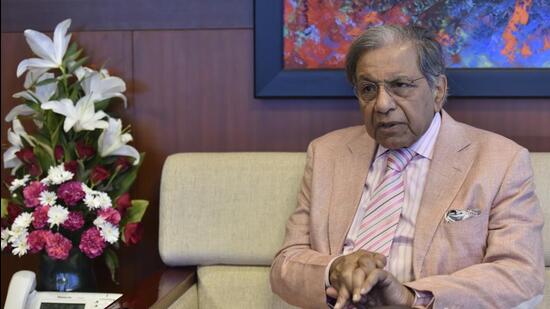
His remarks came against the backdrop of political parties promising to implement the old pension scheme. Two Congress-ruled states, Rajasthan and Chhattisgarh, have restored the old pension scheme, as has the JMM-Congress government in Jharkhand. The Aam Aadmi Party government in Punjab has also announced that it will restore the scheme.
Speaking to reporters on the sidelines of the CII Global Economic Policy summit 2022, Singh said: “In my view, giving up the new pension scheme and going back to adopting the old pension scheme is an injudicious step... It was debated very carefully during the earlier government, and (former prime minister) Dr Manmohan Singh was one of the voters,” he said.
He added: “My colleague Montek Singh Ahluwalia has commented extensively on the subject that it would be a fiscal disaster for states to go back and adopt the old pension scheme. Some states, which are embarking on this, would really be putting the state’s finances under great difficulty and duress.”
Under the old pension scheme, government employees received 50% of their last drawn basic pay plus dearness allowance or their average earnings in the last ten months of service, whichever is more advantageous to them. Here, employees are not required to contribute to their pensions. Under the new pension scheme, those employed by the government contribute 10% of their basic salary to the scheme, while their employers contribute up to 14%.
{{/usCountry}}Under the old pension scheme, government employees received 50% of their last drawn basic pay plus dearness allowance or their average earnings in the last ten months of service, whichever is more advantageous to them. Here, employees are not required to contribute to their pensions. Under the new pension scheme, those employed by the government contribute 10% of their basic salary to the scheme, while their employers contribute up to 14%.
{{/usCountry}}