
 E-Paper



Intense cold wave, snowfall hit J&K, Himachal Pradesh; Lahaul-Spiti coldest at minus 12.7 degrees C
Water pipelines have frozen as mercury dipped below freezing point. Officials said unusual dry spells in the plains have led to colds and coughs.


An intense cold wave has hit parts of Himachal Pradesh, with minimum temperatures dropping 3 to 5 degrees below normal in most areas of the state on Tuesday, leading to light snowfall.
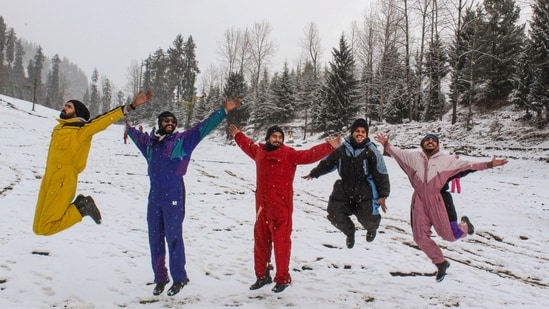
In the past 24 hours, very light rain and snowfall have occurred in isolated areas across the state, but the weather has remained dry.
The local meteorological station said dry weather will continue to prevail in most parts of the state for the next seven days. Light rain and snowfall at isolated places in Lahaul and Spiti, Chamba, Kullu, Kinnaur districts and higher reaches of Kangra on December 12.
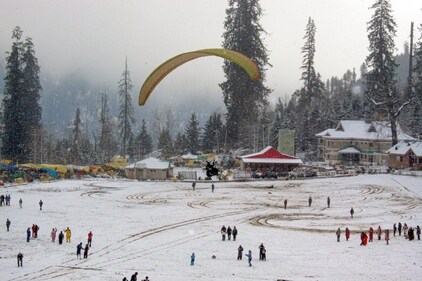
The mercury dipped below freezing point in many areas. Tabo in the tribal district of Lahaul and Spiti was the coldest in the state, with a low of minus 12.7 degrees. Spiti’s Kukumseri recorded a low of minus 8.1 degrees, Sumdo minus 7.9 degrees, Kalpa minus 5.4 degrees, Narkanda minus 3.4 degrees and Manali minus 2.8 degrees.
Shimla’s Khadrala, Koksar (Lahaul and Spiti) and Kalpa received 2.0 cm, 0.5 cm and 0.2 cm of snowfall, respectively.
Fifteen roads, including Atari-Leh National Highway 3 and Firozpur-Shipki La National Highway 5, were blocked for traffic in the Kullu, Lahaul and Spiti districts.
Water pipelines froze in many places in the mid and higher hills, and a dense fog covered some parts of Bilaspur’s Bhakra dam and Balh Valley in Mandi. The weather department said dense fog will continue to prevail on December 11 and 12, with temperatures dropping further.
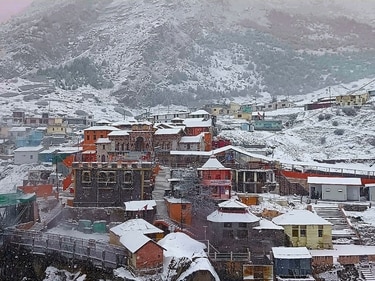
Jammu & Kashmir
On Tuesday, intense cold conditions prevailed in Jammu and other parts of the Kashmir valley. The night temperature was 2.7 to 5.7 degrees below normal. Clear skies contributed to the lowest minimum temperature of the season in Srinagar and many parts of the state, officials said.
In the famous ski resort of Gulmarg in north Kashmir, temperatures hit the lowest this season at minus 9.0 degrees Celsius. Pahalgam, a base camp for the annual Amarnath Yatra, recorded a minus 8.4 degrees Celsius low.
Officials said unusual dry spells in the plains have led to ailments like colds and coughs. Doctors have advised people, especially the children and elderly, to take precautions and stay indoors.
(With PTI inputs)


