
 E-Paper



Is cloud seeding worth the effort? Scientists to release data
Delhi had toyed with the concept in 2018 to deal with the deadly November smog, but never got around to the implementation

 Prefer HTon Google


The Union Ministry of Earth Sciences (MoES) would soon release a white paper on whether cloud seeding is a viable technology to trigger rainfall, M Rajeevan, secretary, MoES, said during a lecture organised by the Indian Meteorological Society on Wednesday.
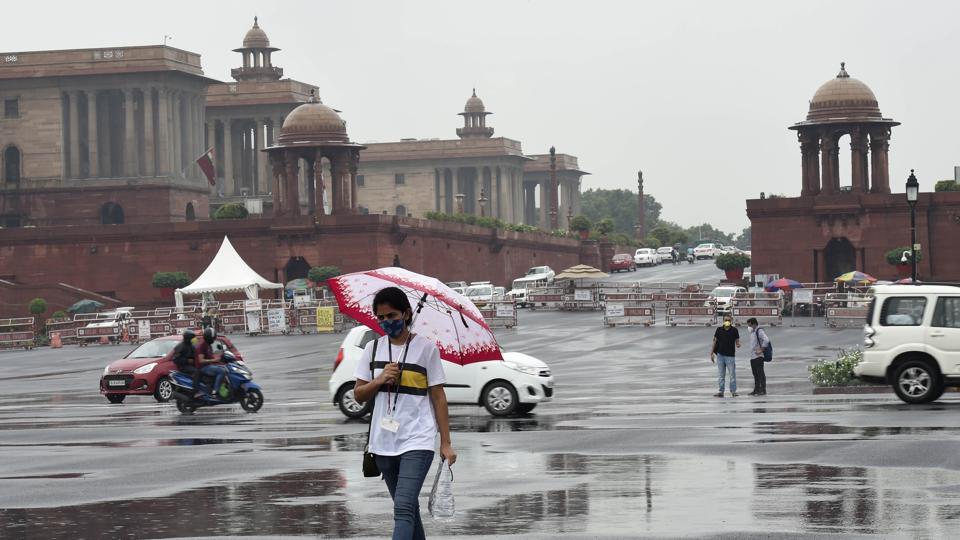
The drought-prone states such as Karnataka and Maharashtra had tried cloud seeding with large investments in the past.
Delhi, too, had toyed with the concept in 2018 to deal with deadly November smog, but never got around to get it implemented.
Delhi-based Indian Institute of Tropical Meteorology (IITM) has concluded its two-year experiment on cloud seeding and has drafted a report.
A team of IITM scientists conducted airborne experiments with two aircraft missions over Solapur in Maharashtra. “There is not much evidence on whether cloud seeding works. The literature is not conclusive. So, based on our experiments, we will release a white paper on how useful or successful is cloud seeding, how it should be done, and the commercial viability of the intervention,” said Rajeevan.
MoES is also setting up an atmospheric research test-bed programme, “a highly focussed observational and analytical research effort”, to study atmospheric processes, particularly clouds and convection; land-atmosphere interactions; aerosol and radiation for developing and testing weather and climate models. This will also help understand monsoon dynamics in the core monsoon zone, including parts of eastern and central India.
Apart from an overall improvement in forecast reliability which has made significant progress in the past three years, according to Rajeevan, IMD’s monsoon mission coupled forecast model has ensured that the authorities are able to make a short-range prediction of rain and associated weather for five days now instead of three days, when the initiative was launched in 2012.
The first phase of the monsoon mission was completed in 2017.
IMD and other teams from the MoES are now working on the second phase of the monsoon mission, where the focus will be on extreme weather events and development of applications for various sectors such as renewable energy (solar and wind energy projects require accurate forecast); agriculture and hydrology.


