Supreme Court justice Ujjal Bhuyan has said that there is no law barring anyone from eating chicken over the Ganga, criticising the arrest of Muslim students over the consumption of chicken biryani in iftar while on a boat ride in the river in Uttar Pradesh a few months ago.
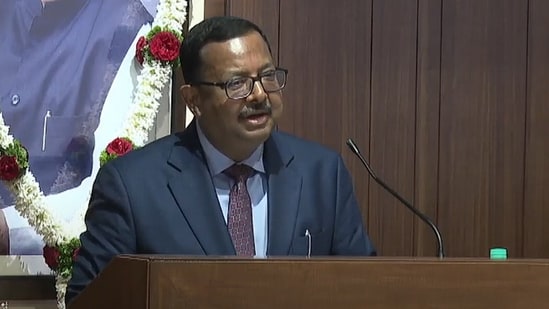
Speaking at the 4th Memorial Lecture of Justice GP Singh at the National Law Institute University (NLIU), Bhopal, justice Bhuyan pointed out that the youth had to spend three months in jail for something that isn't an offence.
“I am sure consuming chicken biryani is not an offence. It can’t be an offence…they were arrested for that very reason, and they had to remain in jail for three months,” he said.
The Varanasi Police arrested 14 Muslim youths in March under the Bharatiya Nyaya Sanhita (BNS) sections 298 and 299 for outraging religious feelings, promoting enmity, public nuisance, and violating the Water Pollution Control Act. Complainants alleged that the youths were consuming chicken biryani and discarding meat bones and leftovers directly into the sacred river, which holds deep spiritual significance in Sanatan Dharma.
Peaceful protest central to democracy
The apex court judge also said that peaceful protest is central to a democracy, but ordinary acts of dissent are increasingly being treated as criminal conduct.
{{/usCountry}}The apex court judge also said that peaceful protest is central to a democracy, but ordinary acts of dissent are increasingly being treated as criminal conduct.
{{/usCountry}}“The right to express one’s views and to demonstrate peacefully are fundamental freedoms of the citizens. Debate and dissent are the essence of democracy. Unfortunately, even normal activities are being criminalised,” he further added.
Justice Bhuyan pointed out that the people voicing concern over the environment are treated as criminals, and students spend over a month in jail for campus protests.
“People who come to voice their anguish over environmental degradation, which is a reality, are chased away as if they are criminals. Students protesting on campuses are arrested, and they do not get bail for 30-40 days,” the judge said.
He added that students are often suspended as well, forcing them to approach courts before they can resume their education.
Courts discouraging dissent?
Justice Bhuyan questioned whether courts, through restrictive bail conditions, were also discouraging dissent.
“ Though the courts are responsive and do grant bail, many a time it is belated. But it is the restrictive conditions which are imposed while granting bail that are causing the greatest concern. By such restrictive orders, are the courts indirectly telling the citizens or discouraging the citizens not to express their dissent?” he said.
Referring to the Supreme Court’s 2024 judgment against punitive “bulldozer justice”, Justice Bhuyan said the ruling was welcome but had come “two years too late”. He also referred to cases where accused persons granted bail were restrained from attending public meetings or posting on social media, saying such conditions “severely undermine their fundamental freedoms and liberty”.
He also criticised the Bombay high court’s refusal to permit a demonstration in solidarity with Palestine, saying he found the court’s observations “very amusing.” He recalled that the petitioners had been asked why they wanted to protest over events in Gaza instead of issues within India, adding that India has traditionally recognised Palestine and hosts a Palestinian Embassy.