China’s outgoing ambassador to India, Sun Weidong, said on Tuesday that it is “only natural” for the two countries to have differences, though they should seek common ground and not allow their relationship to be defined by disagreements.
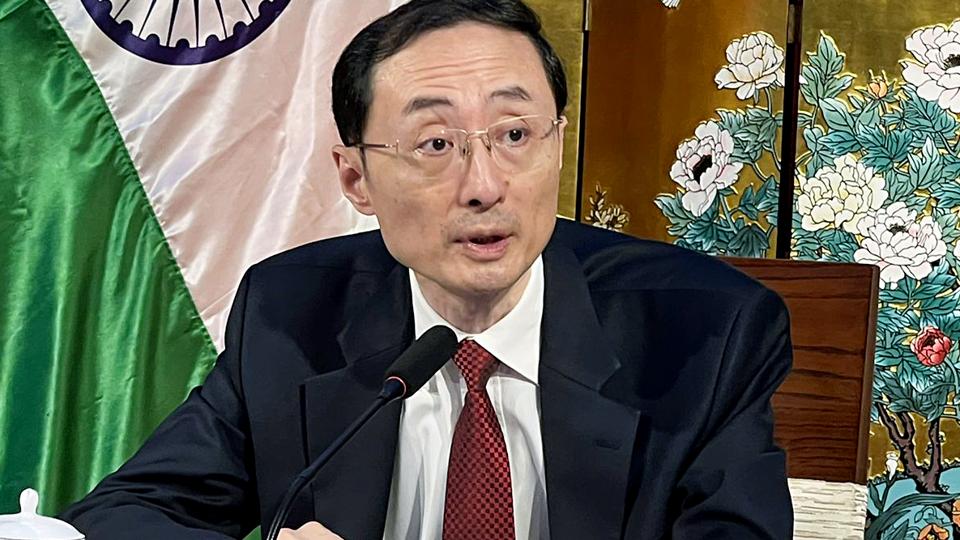
The comments were part of Sun’s farewell remarks released by the Chinese embassy on Tuesday evening, and came at a time when bilateral relations are at an all-time low because of a dragging military standoff in Ladakh sector of the Line of Actual Control (LAC).
Also Read| Won’t say the situation is normal, says govt on LAC row with China
The Chinese envoy made no mention whatsoever of the tensions on the LAC or the border issue and instead sought to imply that differences between the two countries were due to the “Western theory of geopolitics”, which he said will only lead to “competition and confrontation” and a zero-sum game.
“We should seek common ground while reserving differences and properly handle the differences. China and India are important neighbors to each other. It is only natural for China and India to have some differences,” he said.
{{/usCountry}}“We should seek common ground while reserving differences and properly handle the differences. China and India are important neighbors to each other. It is only natural for China and India to have some differences,” he said.
{{/usCountry}}“The key is how to handle the differences. We should be aware that the common interests of the two countries are greater than differences. Meanwhile, the two sides should strive to manage and resolve differences, and look for a proper solution through dialogue and consultation, instead of defining China-India relations by differences,” he said.
India and China, Sun said, need to “respect each other’s political systems and development paths, and uphold the principle of non-interference in each other’s internal affairs”.
After outlining his thoughts on three aspects of bilateral relations – “who we are”, “how we got where we are today” and “where we are going” – Sun contended that these dimensions “demonstrate that harmonious coexistence and mutually beneficial cooperation between China and India are the aspiration of the people and the trend of the times”.
Noting that the two countries will continue to be neighbors, he said: “If the Western theory of geopolitics is applied to China-India relationship, then major neighboring countries like us will inevitably view each other as threats and rivals.
“Consequently, competition and confrontation will be the main mode of interaction, and zero-sum game will be inevitable result. But the reality is that geographical proximity is an objective existence. It should be an opportunity for us to have more interaction and cooperation, tap our potential and learn from and complement each other.”
Also Read| Special forces to soon get new gear for surveillance
He added that the two sides should break out of the “geopolitics trap” and find a new path since there is “enough room...for China and India to develop together” and achieve win-win cooperation.
The remarks by Sun, who served as the envoy in New Delhi for three years and three months that witnessed one of the worst downturns in bilateral relations, were in marked contrast to the stand adopted by the Indian government. External affairs minister S Jaishankar has repeatedly said that bilateral ties are passing through one of the most challenging phases and that the overall relationship cannot be normalised till there is peace and tranquility along the border.
India and China have been unable to address all the friction points along the LAC despite more than two dozen rounds of diplomatic and military talks, which have resulted in the withdrawal of frontline troops from both banks of Pangong Lake, Gogra and Hot Springs.