
 E-Paper



Special forces to soon get new gear for surveillance
“Parachute (Special Forces) battalions are mandated to execute special missions behind enemy lines and, hence, should be equipped with state- of-the-art equipment. The current volatile situation along Northern Borders (with China) warrants expeditious procurement of operational equipment,” the army said in a request for proposal (RFP) published on Tuesday.

 Prefer HTon Google


The Indian Army has firmed up plans to boost the surveillance capabilities of its Special Forces (SF) battalions with 750 indigenous remotely piloted aerial vehicles (RPAVs), with new equipment to be bought through the fast track procedure under emergency procurement to meet critical operational requirements amid the lingering border standoff with China in the Ladakh sector, officials familiar with the development said on Tuesday.
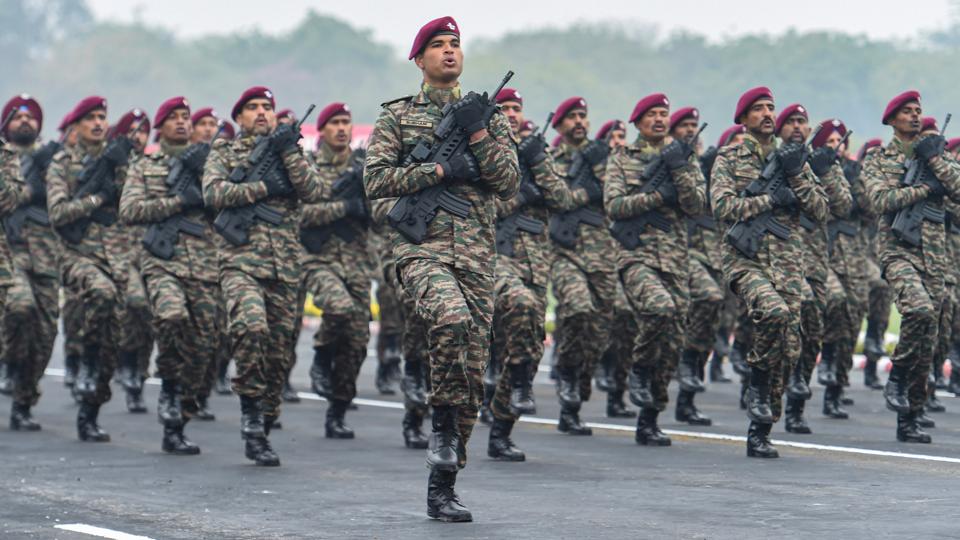
“Parachute (Special Forces) battalions are mandated to execute special missions behind enemy lines and, hence, should be equipped with state- of-the-art equipment. The current volatile situation along Northern Borders (with China) warrants expeditious procurement of operational equipment,” the army said in a request for proposal (RFP) published on Tuesday.
Also Read| Agni-P missile moves towards induction after user trials
India and China have been locked in a border standoff for 29 months, and talks have led to disengagement at four friction points along the Line of Actual Control (LAC) in eastern Ladakh so far, with resolution of outstanding problems at two friction areas still elusive. Despite the disengagement goals achieved thus far, both armies remain heavily deployed in the Ladakh theatre.
RPAV is a potent situational awareness system that provides day-night surveillance along with ability to scan the target area and obtain a processed 3D image to execute special missions, the document said.
“RPAVs are a force multiplier in special operations that depend on surveillance, real-time intelligence and quick reaction,” said former director general of military operations Lieutenant General Vinod Bhatia (retd).
The development comes at a time the army has sharpened its focus on acquiring a range of unmanned systems including different types of unmanned aerial vehicles, surveillance drones and armed drone swarms in the backdrop of drone technology proving to be a force multiplier in military operations and recent conflicts around the world.
Also Read| No breakthrough at India-China meet, only agree to continue talks on LAC standoff
“This force multiplier (RPAVs) enables the Special Forces to execute pin point precision strikes during direct action tasks such as raids, and elimination of high value targets and command and control elements including enemy leadership. It is, therefore, imperative for SF battalions to be equipped with this niche technology,” the RFP said.
The delivery of the surveillance hardware (required to be up to 60% indigenous) is to be completed within 12 months of the signing of a contract, and the supplier will have to provide product support for at least 10 years.
The RFP states the weight of the RPAV should not exceed two kg, must be operable by a single soldier, have endurance of at least 30 minutes and a range of five km. Also, the system’s launch time should be under 10 minutes, be capable of operating in temperatures ranging from -20 °C to 45 °C and have a shelf life of at least 10 years.


