
 E-Paper



Jaishankar meets Israel, US, UAE counterparts; in-person talks aimed for future
The ministers, at the end of the meeting, decided to appoint senior-level professionals to a joint working group that will formulate options for cooperation in the fields of transportation, technology, maritime security, economics, and trade, as well as for additional joint projects.


India, Israel, the US, and the United Arab Emirates (UAE) have decided to establish an international forum for economic cooperation. The decision was taken at a virtual meeting between US secretary of state Antony Blinken, minister of external affairs S Jaishankar, minister of foreign affairs of the United Arab Emirates Abdullah bin Zayed Al Nahyan, and the minister of foreign affairs of Israel, Yair Lapid.
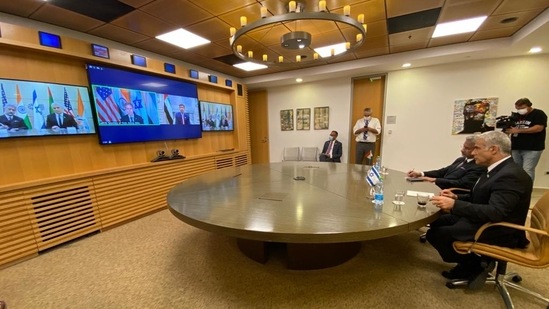
They also expressed willingness to hold an in-person meeting of the ministers in the coming months at Expo 2020 in Dubai.
Also Read | India, Israel share ties of centuries: Jaishankar
During the meeting, the four ministers also held a discussion on possibilities for joint infrastructure projects in the fields of transportation, technology, maritime security, and economics and trade, as well as for additional joint projects. At the end of the conversation, it was decided that each minister will appoint senior-level professionals to a joint working group that will formulate options for cooperation in the aforementioned areas.
Lapid, the Israeli foreign minister, who initiated the meeting during his visit to Washington, said at the beginning, “Around this virtual table, there is a unique set of capabilities, knowledge, and experience that can be used to create the network that we all want to see created.”
“I think the word we’re looking for here is synergy because this is what we’re going to try and create, starting with this meeting," he added. "Synergy that will help us work together on infrastructure, digital infrastructure, transport, maritime security, and other things that preoccupy us all.”
Jaishankar, in his brief comment, said, "the three of you are among the closest relationships we have, if not the closest".
He agreed with Blinken that this kind of a forum could work much better than three different bilateral engagements, citing the fight against Covid-19 as an example of the benefits of such cooperative mechanisms where bilateral ties tend to fail.


