Chief Justice of India Surya Kant on Saturday said that while the Juvenile Justice (Care and Protection of Children) Act, 2015 allows children aged 16 to 18 to be tried as adults for the gravest offences after a careful preliminary assessment of their capacity and circumstances, the law must not lose sight of the fact that they are still children.
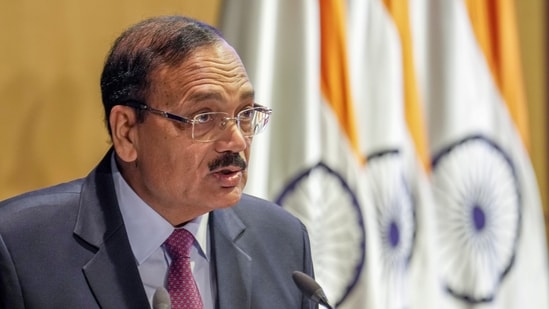
“The act does not ask us to forget the harm that may have been caused. It asks us to remember that the one who caused it is still a child,” the CJI said, speaking at the ‘National Annual Stakeholders Consultation’ organised by the apex court, on 10 years of the act.
Organised by the Court’s JJ committee led by justice BV Nagarathna, in association with UNICEF, the consultation is being held at the Supreme Court’s Administrative Buildings Complex in New Delhi between October 10 and 11.
Before his inaugural address, the CJI also released a compendium of landmark judgments under the act, describing it as “a valuable record of how our courts have interpreted” the statute.
Also read: Justice BV Nagarathna flags gaps in juvenile justice law implementation
CJI calls for rehabilitation instead of retribution
{{/usCountry}}Also read: Justice BV Nagarathna flags gaps in juvenile justice law implementation
CJI calls for rehabilitation instead of retribution
{{/usCountry}}He said that children who come into conflict with the law often face interrupted schooling, family strain, poverty and, at times, substance use. Most come before the law for the first time. “Our answer to such a predicament is restoration and not retribution.”
He also called for old records to be destroyed on time and for the names of children in conflict with the law to remain off the internet.
He called for “regular, independent evaluation that can tell us, with due care for privacy, how many young people return to school, find work and never come before the board again.”
Also read: CJI releases e-compendium of landmark verdicts of SC, HCs relating to Juvenile Justice Act
Nagarathna calls juvenile justice a delicate constitutional balance
Addressing the event, Supreme Court judge justice BV Nagarathna said the juvenile justice system must not treat children as a “file, placement or a statistic”, adding that the question of treating a child in conflict with law as an adult was one of the “most delicate fault lines” in India’s criminal justice system.
“When a child breaks the law, the law must not break the child...It is a question where anxiety about crime confronts constitutional commitment to childhood, where public outrage meets legislative restraint, and where the impulse of punishment competes with the philosophy of reform,” justice Nagarathna said.
The Supreme Court judge, however, refrained from calling for any change in legislation, saying the law was “largely clear on paper”. The real challenge lay in its implementation, she said.
Also read: Punishment not sole aim of Juvenile Justice Act: HC
Judge questions consistency of preliminary assessments
The judge also questioned whether Juvenile Justice Boards (JJBs) carried out the preliminary assessment of a child’s mental and physical capacity, mandated under Section 15 of the Act, with “consistency, expertise and sensitivity.” A JJB, she said, “is not intended to be a miniature criminal court.”
Justice Nagarathna also cited the India Justice Report from November 2025, which showed that, as of October 2023, 55% of cases before JJBs across 18 States and two Union Territories were pending. More than 55,000 children were awaiting decisions, while 111 of the 470 responding Boards were functioning without their full complement of a principal magistrate and two social-worker members.
Also read: Delhi plans integrated juvenile justice complex at Alipur, proposes 950-bed capacity
She asked what happens to a child while a case drags on. Does the child receive education, counselling, legal help and medical care? Does the child live in a suitable place? “A disposed case is not necessarily a rehabilitated child,” she said.