The Supreme Court collegium’s decision to recommend Patna high court chief justice Vipul M Pancholi for elevation to the top court triggered a rare split, with justice BV Nagarathna strongly dissenting on the ground that his controversial transfer in 2023 over “serious and grave reasons” cannot be ignored, reviving questions over his July 2023 transfer from Gujarat to Patna.
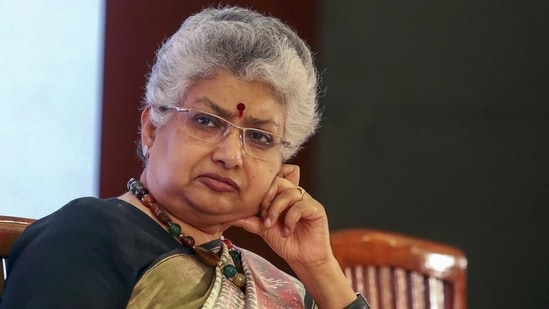
As reported first by HT on Tuesday, the collegium, in a 4–1 decision, on Monday recommended justice Pancholi’s name along with that of Bombay high court chief justice Alok Aradhe, but justice Nagarathna underlined that the credibility of the system itself was at stake if past concerns about a judge’s transfer were brushed aside at the time of making the recommendation.
Justice Pancholi’s transfer to Patna in July 2023 followed a prolonged standoff — the Union government kept the collegium’s September 29, 2022 proposal pending for over nine months before issuing the notification; one lawyers’ body opposed the transfer while another strongly advocated for it; and a Supreme Court bench, led by justice Sanjay Kishan Kaul, warned in a series of judicial proceedings at that time that holding up transfer recommendations could invite administrative and judicial measures “not palatable” to the Centre.
Under Article 222 of the Constitution and the memorandum of procedure (MoP), transfers are to be made in public interest for better administration of justice, with the collegium consulting “consultee judges” -- Supreme Court judges who previously served in the relevant high courts. MoP sets out that once the CJI recommends a transfer, the law minister places it before the Prime Minister for advice to the President. The pattern of delay in 2022-23 became a flashpoint even as the then law minister Kiren Rijiju publicly criticised the collegium system and the top court responded that the system is the law of the land and must be followed “to a T”.
{{/usCountry}}Under Article 222 of the Constitution and the memorandum of procedure (MoP), transfers are to be made in public interest for better administration of justice, with the collegium consulting “consultee judges” -- Supreme Court judges who previously served in the relevant high courts. MoP sets out that once the CJI recommends a transfer, the law minister places it before the Prime Minister for advice to the President. The pattern of delay in 2022-23 became a flashpoint even as the then law minister Kiren Rijiju publicly criticised the collegium system and the top court responded that the system is the law of the land and must be followed “to a T”.
{{/usCountry}}It is this transfer’s context that justice Nagarathna now brings back to centre stage.
Justice Nagarathna’s note, according to a person aware of the matter, recounts that the idea of elevating justice Pancholi was first floated in May 2025; she says she opposed it then, and noted that justice Vikram Nath also expressed reservations at that time. In that setting, justice NV Anjaria, senior to justice Pancholi in the Gujarat high court, was elevated, preserving representation from Gujarat after justice Bela M Trivedi’s retirement in June this year. She writes that she believed justice Pancholi’s proposal had been dropped, only to see it resurface within three months, prompting her written dissent.
On the transfer, justice Nagarathna stressed that it followed deliberations at the highest level—with consultee inputs sought from justice MR Shah (then an SC judge), and from justices Vikram Nath and JB Pardiwala, as well as from justice Aravind Kumar (then the Gujarat chief justice; now an SC judge)—and that all of them concurred with the move.
“The note urged that the confidential record underlying the transfer must be called for and reviewed before any elevation decision,” added this person. To disregard those reasons now, her note cautioned, would not only be counterproductive to the administration of justice but also undermine public confidence in the collegium system.
The note listed specific questions the collegium should confront: What necessitated the transfer from Gujarat to Patna in July 2023? Why did a delegation of senior advocates and bar office-bearers meet then CJI Dhanananjaya Y Chandrachud, in the presence of justice MR Shah, to press for an immediate transfer? Were confidential minutes recorded contemporaneously, and have they been examined now? Why did then Gujarat chief justice Vikram Nath summon and severely reprimand justice Pancholi?
The judge’s dissent was particularly sharp in its focus on consistency and transparency. If the collegium itself had earlier deemed it necessary to shift justice Pancholi out of his parent high court, justice Nagarathna asked, how could it now justify recommending him for the nation’s highest court and put him in the line to become the CJI in 2031 without revisiting the underlying circumstances?
According to the note, the lone woman judge in the top court further noted that when justice Pancholi was proposed as chief justice of Patna earlier this year, a similar consultative process, in particular, seeking justice Pardiwala’s views, does not appear to have been followed, and questions the quick turnaround from that appointment to proposing his elevation to the Supreme Court within about three months.
If cleared by the government, justice Pancholi will not only add to the strength of the apex court but also will be in line for the position of the CJI in 2031. He is expected to hold the top post for nearly 18 months after the retirement of justice Joymalya Bagchi in October 2031.
Meanwhile, the Campaign for Judicial Accountability and Reforms (CJAR), in a statement on Tuesday, criticised the collegium’s August 25 resolution, and described it as a “mockery” of earlier commitments to transparency in judicial appointments. The statement cited HT’s August 26 report on justice Nagarathna’s dissent against justice Pancholi’s elevation, which has not been made public despite her explicit request. The report added that justice Pancholi is relatively junior (57th in the all-India seniority list).
CJAR complained the resolution recommending the elevation of justice Pancholi fails to disclose crucial details that were once standard practice, such as the candidate’s background, the criteria for selection over more senior judges and the composition of the collegium coram.
The organisation has also flagged issues of potential conflict of interest in another collegium resolution of August 19, which recommended 14 advocates for elevation to the Bombay high court, including CJI Bhushan R Gavai’s nephew – as reported first by HT on August 26. CJAR has underlined that convention required the CJI to recuse himself from deliberations involving a close relative, yet the collegium resolution does not disclose which judges participated in the decision. This, the group argues, prevents meaningful public scrutiny and risks undermining the credibility of the collegium system.