The President of India has nominated Supreme Court judge Justice Vikram Nath as the new executive chairperson of the National Legal Services Authority (NALSA), with the appointment taking effect from November 24. A notification issued by the ministry of law and justice on November 19 said the nomination was made under the Legal Services Authorities Act, 1987.
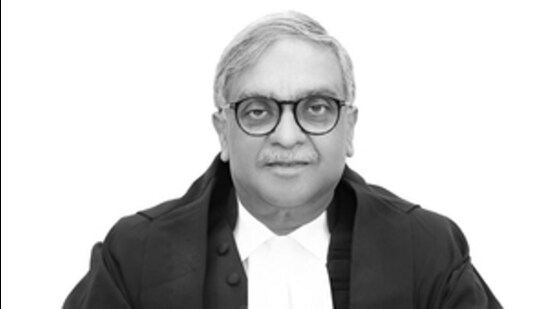
As per convention, the post goes to the second senior-most judge of the Supreme Court. Justice Nath, currently next in line after Chief Justice of India (CJI) Surya Kant, succeeds him in this key administrative role. He will now helm the country’s top legal aid institution, which is tasked with ensuring free and competent legal services for marginalised and economically weaker citizens. Justice Nath is also in line to serve as the CJI for seven months between February 10 and September 24, 2027.
NALSA, in a statement, said Justice Nath’s leadership will further its constitutional mandate under Article 39A to ensure that “no individual is denied justice due to financial or social constraints.” Before this appointment, he served as Chairman of the Supreme Court Legal Services Committee (SCLSC), where he played a crucial role in strengthening access to justice and advocating for institutional reforms.
Justice Nath, elevated to the Supreme Court in 2021, previously served as chief justice of the Gujarat High Court.
{{/usCountry}}Justice Nath, elevated to the Supreme Court in 2021, previously served as chief justice of the Gujarat High Court.
{{/usCountry}}His tenure at the apex court has been marked by a mix of constitutionally significant decisions, interventions aimed at improving justice delivery, and a focus on balancing competing public interests.
Justice Nath was part of the five-judge Constitution bench that delivered an authoritative opinion on the President’s Article 143 reference concerning delays in granting assent to state bills. The bench held that neither the Governors nor the President could be bound by judicially imposed timelines for granting assent, cautioning that any such mandate would disrupt the separation of powers. The ruling nullified a 2023 decision of a two-judge bench in the Tamil Nadu case, which had introduced strict deadlines and the controversial notion of “deemed assent.”
The Constitution bench noted that the earlier ruling had created “a state of confusion and doubt,” necessitating clarification from a larger bench.
Justice Nath also led the three-judge bench that, on August 22, modified the previous directions issued by a two-judge bench concerning mass capture and non-release of stray dogs in Delhi-NCR. Earlier this month, the larger bench directed all states and Union territories to remove stray dogs from schools, hospitals, sports complexes, bus depots, and railway stations, and said they cannot be released back after sterilization.
In a significant step toward recognising state accountability, Justice Nath’s bench sought the Union government’s response on whether individuals acquitted after years on death row are entitled to compensation for wrongful incarceration. The matter concerned three men who were exonerated earlier this year after spending years in prison for offences including murder, rape, and POCSO violations.
Justice Nath also authored the judgment for the three-judge bench that acquitted Surendra Koli in the sole surviving Nithari killing case, in which his conviction and life sentence still stood. The bench held that the 2011 verdict upholding his guilt could not be sustained when he had already been acquitted in 12 other connected cases arising from the same set of facts and evidentiary material.
Justice Nath, along with Justice Sandeep Mehta, issued comprehensive guidelines to address the mental health crisis among students, particularly in coaching hubs. The judgment mandated preventive and remedial frameworks for educational institutions and highlighted the systemic pressures contributing to rising student suicides.