A day after he returned from an official visit to Indonesia, chief of naval staff Admiral Dinesh Tripathi flew down to Mumbai on Friday to review safety procedures in the aftermath of the collision between an undertrial special operations Rhib (rigid-hull inflatable boat) and an overloaded tourist ferry at Mumbai harbour on December 18 in which 15 people lost their lives.
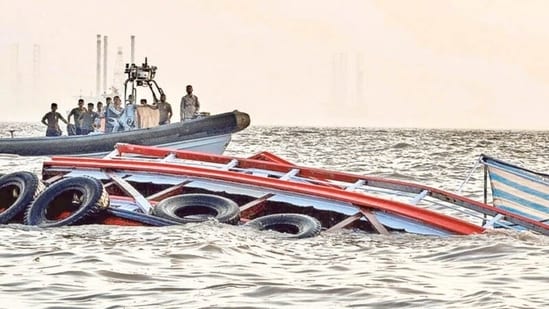
While a probe has been instituted by the Indian Navy, the navy chief had discussions with Western naval commander Vice Admiral Sanjay Singh and other senior officers on the deadly accident.
Since he took over, Admiral Tripathi has been constantly harping on safety and discipline and as early as June 4, he had written a letter to the entire force on the safety of personnel and naval platforms.
Defence Minister Rajnath Singh and the Prime Minister’s Office (PMO) have been informed of the preliminary assessments about the accident in writing by the naval headquarters.
However, many questions have been raised after the preliminary inquiry, people familiar with the matter said.
The Rhib, which is capable of reaching speeds of 45 knots, crashed into the ferry “Neel Kamal” as the engine and rudder of the special operations boat got stuck in high-speed mode. However, the key question that has emerged is why the boat in charge did not use the on-board crash stop button to kill the engine.
These questions can only be answered by the chief petty officer, who was driving the boat and is currently in the ICU, said the people cited above. The other naval marine commando lost his life in the incident and the statements from one civilian survivor and the original equipment manufacturer have been taken.
{{/usCountry}}These questions can only be answered by the chief petty officer, who was driving the boat and is currently in the ICU, said the people cited above. The other naval marine commando lost his life in the incident and the statements from one civilian survivor and the original equipment manufacturer have been taken.
{{/usCountry}}Three other civilians on board the Rhib lost their lives as the boat was undergoing user trials at the harbour.
A preliminary probe indicates ferry was overloaded
While the boat capsized, preliminary investigations have indicated that the ferry en route from the Gateway of India to the nearby Elephanta caves was overloaded and the passengers were not wearing the mandatory life jackets.
This resulted in the majority of victims drowning in the Arabian Sea and not because of any extraneous injuries. While the ferry allowed 84 passengers and six crew members, it was carrying 107 passengers plus crew with mandatory safety procedures not being observed, the preliminary findings revealed.
This is the second accident in the western naval command after the guided missile frigate INS Brahmaputra caught fire while undergoing an overhaul in the Mumbai naval dockyard on July 21. The frigate has now been recovered and a decision on its refurbishment will be taken soon, officials said.