After pulling India back from a near 40% rainfall deficit at the end of June, the southwest monsoon is losing momentum again. The all-India rainfall deficit remained stuck at 12% as of August 13 despite widespread showers in the first half of August, and forecasts suggest rainfall could weaken further through the month.
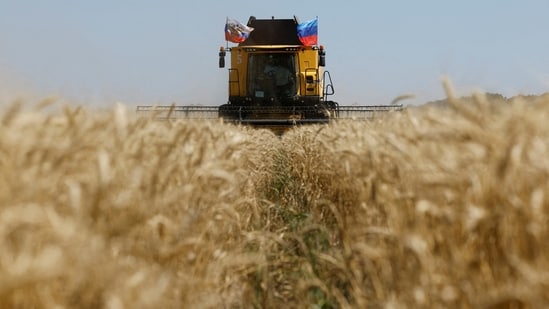
Soybean, maize, paddy and other kharif crops are now entering the growth stages that determine final yields, and experts say the next fortnight could decide whether the uneven monsoon dents productivity.
The sowing season has virtually ended. Agriculture ministry data show kharif crops were sown over an area about 2% lower than a year earlier as of August 14 — rice acreage down 3.7%, tur and maize by 4% each, cotton by 1% and sugarcane by 0.5%. With little room left for additional planting, this year’s harvest will depend on yields, and on whether crops get adequate moisture through August and September.
IMD predictions amid continuous showers
The national rainfall deficit has barely moved in a fortnight — from 13% below the long period average (LPA) on July 31 to 12% by August 13 — even as many parts of the country received regular showers this month.
In its July 31 long-range forecast, the IMD had projected below-normal rainfall for both August and September, estimating August rainfall at 94% of its long period average of 254.9 mm, with the first half of the month broadly normal before activity weakened later. Its August 13 extended-range forecast reinforces that outlook: near-normal rainfall from August 13-19, turning normal to below normal during August 20-26 as the monsoon trough shifts north again.
{{/usCountry}}In its July 31 long-range forecast, the IMD had projected below-normal rainfall for both August and September, estimating August rainfall at 94% of its long period average of 254.9 mm, with the first half of the month broadly normal before activity weakened later. Its August 13 extended-range forecast reinforces that outlook: near-normal rainfall from August 13-19, turning normal to below normal during August 20-26 as the monsoon trough shifts north again.
{{/usCountry}}Also Read I From street food to cut fruits: 7 everyday foods that may increase food poisoning risk during monsoon
Mahesh Palawat, vice president at Skymet Weather, said the first half of August has prevented the rainfall deficit from worsening but has not delivered the widespread soaking rainfall needed to significantly improve the seasonal balance. “We expected some recovery during the first half of August, but substantial rainfall has been missing. Daily rainfall has remained close to the daily long period average… We now expect this to increase slightly after August 15 as the monsoon trough shifts towards the Himalayan foothills...,” he told HT.
The all-India deficit conceals sharp regional variation.
Rainfall deficits across the country
As of August 13, central India had almost erased its rainfall deficit, at just 1% below normal. Northwest India remained 11% below normal and the south peninsula 20% below average. East and northeast India saw the sharpest shortfall, still 27% below the long period average. Several agricultural states lag well behind normal: Bihar is down 39%, East Uttar Pradesh and Punjab 31% each, Jharkhand 25%, and the Haryana-Chandigarh-Delhi subdivision and West Uttar Pradesh around 11%. In the south, Karnataka is down over 21%, Kerala 22%, and parts of Andhra Pradesh over 30%.
IMD data show 40 of India’s top 50 rice-producing districts are running rainfall deficits — as are 21 of the top 25 soybean districts, 18 of the top 21 tur districts and 16 of the top 20 maize districts.
Also Read I Monsoon woes: Potholes on Sherpur road safety hazard; Ludhiana residents see red
Impact on kharif crops
Bhashkar Dubey, Assistant Professor and Agriculture Expert at KIT College, Prayagraj, said the district-level numbers matter more than the all-India deficit. “The biggest concern for kharif crops at this stage is not merely the cumulative rainfall deficit, but the uneven distribution of rainfall, prolonged dry spells and moisture availability during the crop’s critical growth stages,” he said.
Dubey said the 2026 monsoon shows why seasonal totals alone often fail to explain agricultural outcomes. “One or two days of heavy rain cannot compensate for a seasonal rainfall deficit. If heavy rainfall is followed by a long dry spell, soil moisture declines rapidly. This year, some districts have experienced flooding while others continue to struggle with rainfall deficiency and prolonged dry spells.”
Crops are now entering the stages that determine final output. Soybean is particularly at risk, and continued moisture stress through late August could hurt flowering, pod formation and grain filling, reducing yields, Dubey said.
Dubey said most rice-producing districts are rainfall deficient, though irrigation could cushion production in several regions. Rainfed and upland paddy remain vulnerable if dry conditions persist during tillering, panicle initiation, flowering and grain filling. Tur, though relatively drought tolerant, could lose flowers and pods if moisture stress extends into its reproductive stage.
Also Read I Weather Bee: Dry second week of August erased monsoon gains from the first week
Rainfed maize is vulnerable during tasselling, silking and grain filling; cotton faces risk from both dry spells and waterlogging. Dr Vishwas Chitale, Fellow at the Council on Energy, Environment and Water (CEEW), said this year’s monsoon reflects a longer-term shift — the monsoon is becoming more erratic, not simply wetter or drier.
CEEW’s assessment of four decades of rainfall data shows 55% of India’s tehsils received over 10% higher southwest monsoon rainfall in the past decade compared with the 1982-2011 baseline, while 11% received over 10% less, concentrated across the Indo-Gangetic plains, the northeast and the Himalayan region.