
 E-Paper



Kharif planting normal for most crops, barring pulses
The area under kharif crops in India remains nearly the same as last year, with rice acreage expanding despite a patchy monsoon. However, the sowing of pulses is trailing last year's levels, which could impact food supply and contribute to high inflation. The monsoon is vital for India's economy as it waters nearly half of the country's net-sown area.


The area under kharif or summer-sown crops, which account for half of the country’s annual food supply, stands at 108.8 million hectares, nearly the same as last year, with a robust expansion in acreage under rice, the key staple, despite a patchy monsoon, official data released on Monday show.
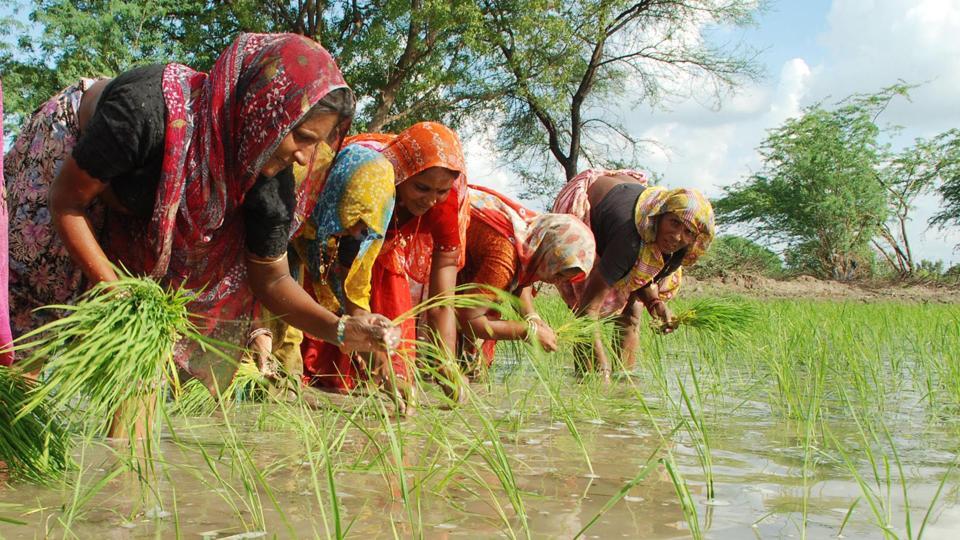
As on September 8, farmers have planted nearly 40.3 million hectares with paddy, marginally higher than last year’s 39.2 million hectares. The June-September monsoon had been scanty in August and key rice growing states, such as Bihar, Jharkhand and West Bengal, are still rain-deficient.
Pulses, grown mostly in rain-dependent farm belts, continue to be a pressure point, with sowing trailing last year’s levels. Total pulses sown till September 8 stood at 11.9 million hectares, a fall of nearly 15% over last year.
Robust food supply is critical this year to put a lid on high inflation, which quickened to 7.44% in July, a 15-month high, led by food prices. To cool prices, India has banned the export of wheat and rice, imposed a 40% duty on shipments of onion and removed tariffs on import of pulses. August inflation data is expected this week.
The monsoon is vital to Asia’s third-largest economy because it waters nearly half of India’s net-sown area and replenishes over 100 nationally important reservouirs critical for drinking, irrigation and energy.
Pulses are not a homogenous group of crops. The output and productivity of key pulses varieties vary widely, depending on where and how they are grown. India still imports 5-6% of its domestic needs, and consequently, ‘imports’ inflation when global commodity prices go up.
On June 2, the government imposed caps on the quantity of two widely consumed variety of pulses -- tur (pigeon pea) and urad (black gram) – that retail shops and traders are allowed to store, a measure known as stock-holding limits that is invoked to control inflation.
Acreage of coarse cereals stands at 18.2 million hectares over last year’s 18.1 hectares. Total oilseeds have been sown in about 19 million hectares, the same as last year. Sugarcane acreage stood at 5.9 million hectares, marginally higher than last year’s 5.5 million hectares.
The onset of southwest monsoon, currently 10% below normal, was delayed by more than a week, followed by patchy rains in June. There were surplus rains in July, before turning scanty in August again.
“Although the paddy acreage is normal, deficient rains may affect yields. There is a concern over a big gap in pulses, while sugarcane yield may be impacted in Maharashtra and Karnataka,” said Abhishek Agrawal of Comtrade.


