
 E-Paper



Kharif sowing rises as rain picks up
The June-September monsoon rains, which water nearly 60% of the country’s net-sown area, have been forecast to be normal by the India Meteorological Department (IMD).


Planting of summer-sown kharif crops, which account for half of India’s annual food output, accelerated in August as the monsoon revived, but acreage under key crops are still down 1% over last year due to erratic rainfall, even as experts warned that extreme weather this year could trim yields.
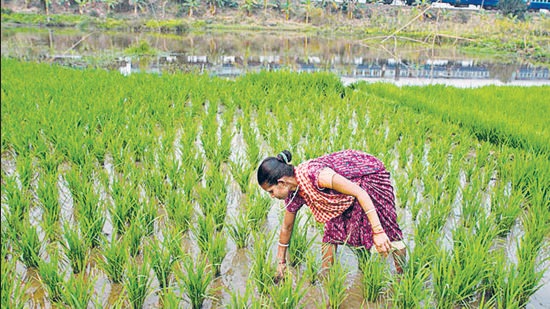
The June-September monsoon rains, which water nearly 60% of the country’s net-sown area, have been forecast to be normal by the India Meteorological Department (IMD).
Current official numbers of the area under various crops more or less offer a full picture of the sowing season, marked by short spurts of heavy rainfall and long pauses from late June to mid-July, and then again, in the first half of August.
The revival of rainfall has improved sowing levels of crops such as paddy, soyabean, pulses, oilseeds, millets and vegetables, but farmers have been unable to match the record levels of 2020. Nearly half of all Indians depend on a farm-based income.
The national weather agency officially forecast a normal monsoon during 2021. A normal monsoon means a strong sowing season and a good harvest which drives up rural demand for goods and services, helping the economy grow.
Overall, farmers have been able to plant 104 million hectares by August 20, exceeding the normal area of 101 million hectares by 3.2%. However, this is about 1% less than the total area of 104 million hectares sown in 2020. An average of the past five years’ acreage is considered normal, according to the agriculture ministry’s classification. The five-year average in this case is 101 million hectares.
But heavy rains disrupted sowing of cotton, a key commercial crop, and its acreage stands at close to 11.7 million hectares, almost 7% less than the 12.7 million hectares of last year. A reviving monsoon drove sowing of soyabean, a key oilseed that is widely used for edible oil, to about 18 million hectares, roughly what is considered normal.
Planting of coarse cereals too picked to 16 million hectares, while that of pulses stood at 13.4 million hectares, both considered normal.
The monsoon is one of the factors that influences the Reserve Bank’s inflation forecast and monetary policy, which determines key interest rates.
July is agriculturally the most critical month during the kharif season, since rains during this month determine yields and crop health. Economists are looking to a robust farm growth to cushion the impacts of the pandemic on the overall economy.
Rains were fairly poor in many parts in the initial weeks of July. More than the deficiency, this year’s uneven rains have been a cause of concern, agriculturally and climate-wise.
“I more or less expected sowing to catch up to stand at normal levels,” said KJ Ramesh, a climatologist and former chief of the India Meteorological Department, the national weather-forecast agency.
Longer monsoon pauses followed by heavy spells of rainfall are telltale signs of the climate crisis, experts say. “The consensus is that the number of rainy days will decrease because of climate change but overall quantum of rainfall will remain same. So, there will be segments or periods of very heavy rain,” Ramesh added.
In 2020-21, when India faced a recession due to the pandemic, agriculture was the only sector to post positive growth of about 3.1%. This helped to keep farm incomes steady.


