
 E-Paper



Kumbh Mela to generate ₹1.2 lakh crore revenue for UP: CII
Although the Kumbh Mela is a spiritual gathering, the economic activities associated with it generate employment for over six lakh workers across various sectors, the CII said in a report.

 Prefer HTon Google


The Kumbh Mela, which began on January 15 and will continue till March 4, is expected to generate a revenue of ₹1.2 lakh crore for Uttar Pradesh, says apex industry body Confederation of Indian Industry (CII).
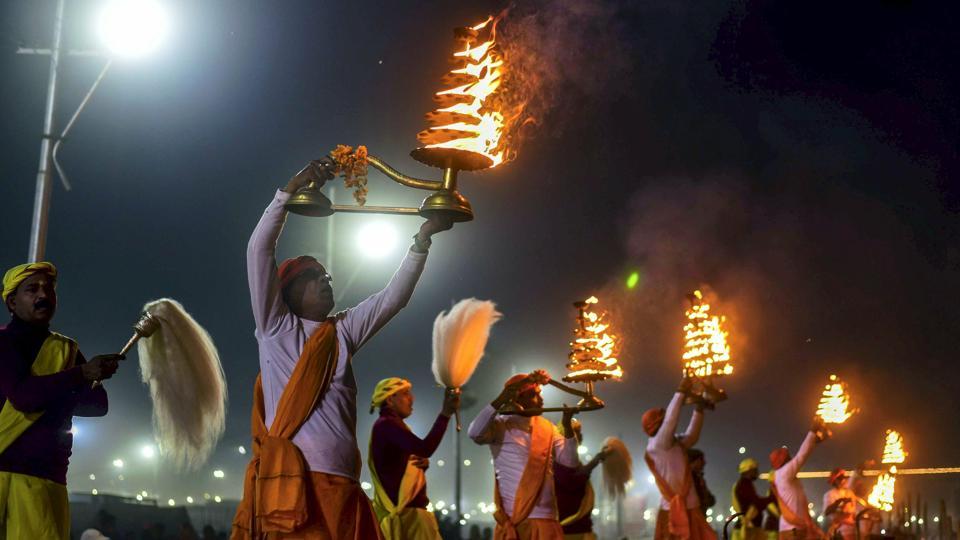
Although the Kumbh Mela is a spiritual gathering, the economic activities associated with it generate employment for over six lakh workers across various sectors, the CII said in a report.
The Uttar Pradesh government has allocated ₹4,200 crore for the 49-day mela this time, which is over thrice the budget of the Maha Kumbh in 2013, making the mega pilgrimage perhaps the costliest ever.
The hospitality sector aims at employing 250,000 people, airlines and airports around 150,000 and tour operators around 45,000 people. The employment numbers in eco-tourism and medical tourism are being estimated at 85,000, says the CII study.
Apart from this there will be around 55,000 new jobs in the unorganized sector comprising tour guides, taxi drivers, interpreters, volunteers etc. This will lead to increase in income levels for government agencies and individual traders.
Attracting a massive number of foreign tourists from various countries like Australia, UK, Canada, Malaysia, Singapore, South Africa, New Zealand, Mauritius, Zimbabwe and Sri Lanka, the Kumbh is also a festival of the world.
“The ‘mela’ is expected to generate a revenue of ₹1,200 billion for Uttar Pradesh, the state where it is being held, while neighbouring states like Rajasthan, Uttarkhand, Punjab and Himachal Pradesh will also benefit from the enhanced revenue generation with a large number of national and foreign tourists expected to explore other destinations,” the report said.
“The UP government has allocated ₹4,200 crore for 2019 Kumbh Mela. The previous state government had spent around ₹1,300 crore for the Maha Kumbh, which was held in 2013,” state Finance Minister Rajesh Agarwal had told PTI.
The area of the mela has also been doubled to 3,200 hectares as compared to 1,600 hectares in the previous melas.
The Kumbh is a unique with a massive gathering of both rural and urban population and also has a huge dispersal factor as people travel long distances across the country. In order to house this multitude, authorities have erected a mini-city of more than 4,000 tents. The city is being lit by installing over 40,000 LED lights, say local authorities. Overhauling of key infrastructure has been done, including upgrading nine railways stations and construction of a new airport terminal in Prayagraj.
The setting up of this new city in the huge mela area involves 250 km roads and 22 pontoon bridges, which will make it the largest temporary city in the world.
The kumbh is thus expected to generate direct and indirect business activities, the fruits of which would hopefully benefit the economy not only of Uttar Pradesh, but that of India as a whole, the CII document says.
Around 12 crore people are expected to visit the Kumbh between now and Maha Shivratri on March 4, when the mela will come to a close.
(This story has been published from a wire agency feed without modifications to the text. Only the headline has been changed.)


