The Lok Sabha on Monday approved a draft legislation that allows election officials to ask registered voters to provide Aadhaar details, despite stiff resistance from the opposition benches, who demanded further scrutiny of contentious provisions by a parliamentary standing committee.
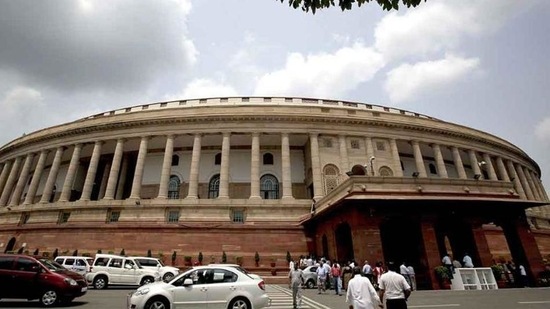
The Election Laws (Amendment) Bill 2021 was passed by voice vote barely hours after it was tabled by law minister Kiren Rijiju. The bill proposes to allow Election Commission officials to seek Aadhaar details of registered voters on a voluntary basis and makes the language of the Representation of the People Act (RP Act), 1950, gender neutral. The bill was scheduled to be presented in Rajya Sabha on Tuesday, according to the list of business uploaded on the Upper House website.
The provisions related to the linking of the unique Aadhaar numbers with voter identity records was hotly debated by the opposition, claiming it was a violation of Supreme Court orders and a threat to privacy. It could eventually lead to mass disenfranchisement of voters, opposition parliamentarians said.
The Lok Sabha on Monday approved a draft legislation that allows election officials to ask registered voters to provide Aadhaar details, despite stiff resistance from the opposition benches, who demanded further scrutiny of contentious provisions by a parliamentary standing committee.
{{/usCountry}}The Lok Sabha on Monday approved a draft legislation that allows election officials to ask registered voters to provide Aadhaar details, despite stiff resistance from the opposition benches, who demanded further scrutiny of contentious provisions by a parliamentary standing committee.
{{/usCountry}}The Election Laws (Amendment) Bill 2021 was passed by voice vote barely hours after it was tabled by law minister Kiren Rijiju. The bill proposes to allow Election Commission officials to seek Aadhaar details of registered voters on a voluntary basis and makes the language of the Representation of the People Act (RP Act), 1950, gender neutral. The bill was scheduled to be presented in Rajya Sabha on Tuesday, according to the list of business uploaded on the Upper House website.
The provisions related to the linking of the unique Aadhaar numbers with voter identity records was hotly debated by the opposition, claiming it was a violation of Supreme Court orders and a threat to privacy. It could eventually lead to mass disenfranchisement of voters, opposition parliamentarians said.
Verification through Aadhaar will lead to the elimination of bogus voting, the law minister countered, slamming the opposition for not understanding the proposed modification. “They are opposing it unnecessarily,” Rijiju said. He cited findings of the standing committee on law to justify the government’s decision.
“Appropriate actions for the purpose of linking Aadhaar card number with voter I-card to purify the electoral roll is in larger interest of democratic polity,” the committee said last year. The recommendation was part of its report on demands for grants (2020-21) of the law ministry tabled in Parliament.
The Bill should be referred to a standing committee for analysis, leader of opposition and Congress MP Adhir Ranjan Chowdhury demanded. “Linking of Aadhaar numbers with the voter IDs will lead to mass disenfranchisement.”
Several other members also opposed the Bill, including Congress’s Manish Tewari and Shashi Tharoor, Bahujan Samaj Party’s Pritesh Pandey, Trinamool Congress’s Sougata Ray and Revolutionary Socialist Party’s NK Premchandran.
Members also opposed the Bill on grounds of passage, arguing that they were not given a chance to propose amendments. “What is parliamentary democracy? What is the use of this debate?” asked Premchandran.
“Aadhaar was only meant to be proof of residence, it does not reflect any proof of citizenship,” Tharoor pointed out.
The Bill proposes an amendment of Section 23 of the RP Act, allowing the linking of electoral roll data with the Aadhaar ecosystem to “curb the menace of multiple enrollment of the same person in different places”.
In 2015, the Election Commission of India undertook pilot projects to use Aadhaar data to remove duplication and fake entries from electoral rolls before the Supreme Court struck down the exercise. In the 2017 Puttaswamy judgment, the top court enumerated only certain areas – mostly subsidies – for which Aadhaar could be made mandatory. The government in 2019 amended the Aadhaar Act, allowing for the 12-digit identity number to be used for more utilities and services.
The issue has been controversial with civil society and opposition parties flagging implications on privacy and potential voter profiling.
Digital rights groups including the Association for Democratic Reforms, Bahujan Economists, the People’s Union for Civil Liberties and the Internet Freedom Foundation (IFF), have criticised the legislation.
IFF trustee Apar Gupta said, “The introduction and passage in the Lok Sabha today prevented Opposition MPs from even proposing amendments or engaging in meaningful debate. The concerns around Aadhaar-Voter ID risks mass disenfranchisement as evidenced in Telangana or voter targeting as observed by the Madras high court.”
The Bill, however, makes a provision that no application for inclusion of name in the electoral roll “shall be denied and no entries in the electoral roll shall be deleted for inability of an individual to furnish or intimate Aadhaar number due to such sufficient cause as may be prescribed, provided that such individual may be allowed to furnish such other alternate documents as may be prescribed”.
The Bill further proposes a change to clause (b) of section 14 of the RP Act 1950, allowing voters to register four times a year, instead of just once. The new dates for registration will be January 1, April 1, July 1 and October 1.
By amending section 20 of the RP Act 1950 and section 60 of the RP Act 1951, the draft legislation calls for substitution of the word “wife” with the word “spouse”, making the statutes gender neutral. It also seeks to enable the requisition of premises for the purpose of being polling stations, counting, storage of ballot boxes, voting machines and poll related materials by proposing a change to section 160 of the RP Act, 1951.
The Bill also explains the power of delegated legislation with the government, which will allow it to formulate rules regarding the new provisions.