The Maharashtra government on Monday said that it will challenge the acquittal of all 12 people convicted for the 2006 Mumbai serial train blasts in the Supreme Court.
Maharashtra chief minister Devendra Fadnavis said that he would discuss the high court verdict with lawyers and that his government will approach the top court.
“I will go through the entire order. I have discussed with the lawyers, and the high court verdict will be challenged in the Supreme Court,” the chief minister said.
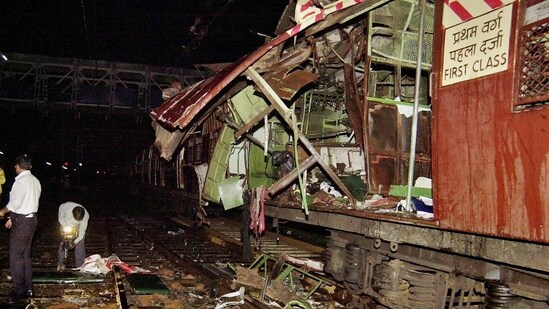
A series of coordinated blasts on Mumbai’s local trains on July 11, 2006 killed 189 people. The blasts killed more people than the 2008 terror attacks, and injured nearly 900, in what remains one of India’s worst-ever such strikes.
Also Read | Mumbai train blast verdict: Two lost decades, but a salve of vindication
The Maharashtra anti-terrorism squad arrested thirteen people in connection with the case. A local court convicted all but one in 2015.
On Monday, the high court found glaring gaps in the probe and cleared 12 men, many of whom had spent 19 years behind bars. Kamal Ahmed Ansari, one of the accused in the train blast case, died in 2021.
What the Bombay high court said
{{/usCountry}}On Monday, the high court found glaring gaps in the probe and cleared 12 men, many of whom had spent 19 years behind bars. Kamal Ahmed Ansari, one of the accused in the train blast case, died in 2021.
What the Bombay high court said
{{/usCountry}}While setting aside the 2015 convictions by the Maharashtra Control of Organised Crime Act (MCOCA) court, a special division bench of justices Anil Kilor and Shyam Chandak, said that the prosecution “utterly failed” to prove the case against the accused and that it is hard to believe that the accused committed the crime.
"Creating a false appearance of having solved a case by presenting that the accused have been brought to justice gives a misleading sense of resolution. This deceptive closure undermines public trust and falsely reassures society, while in reality, the true threat remains at large,” the bench said.
Also Read | ‘Justice got killed:’ What 2006 Mumbai train blasts survivor said on Bombay HC acquitting all 12 accused
“The prosecution has utterly failed to prove the case against the accused. It is hard to believe that the accused committed the crime. Hence their conviction is quashed and set aside,” the high court added in its 671-page verdict.
The high court's closer scrutiny revealed a trail of cut-and-paste confessions, unreliable witness narratives, material evidence handled without care, and vital call data records hastily destroyed.
“If we see each of the confessional statements, it can be realised that the earlier part of the confessional statement, i.e., the portion barring the relevant portion in bold, the narration is in detail and the information is provided in depth. Whereas, when it comes to the narration in relation to the bomb blasts, the information given by each of the accused is not only vague but also does not throw much light on the aspects, as regards which, the prosecution also could not find out any evidence,” said the court.