
 E-Paper



Mumbai train blast verdict: Two lost decades, but a salve of vindication
A 2015 judgement by a special Maharashtra Control of Organised Crime Act (MCOCA) court sentenced five accused to death and seven others to life imprisonment.

 Prefer HTon Google


MUMBAI: Of the 12 accused who were acquitted in the 7/11 serial bomb blasts of 2006 on Monday, Mohammad Sajid Magrub Ansari was the only one who could share the moment of relief and joy with his family. While the 11 other men have been in jail for 19 years Ansari was released on parole on July 1 and was slated to go back to the Nashik prison on August 10.
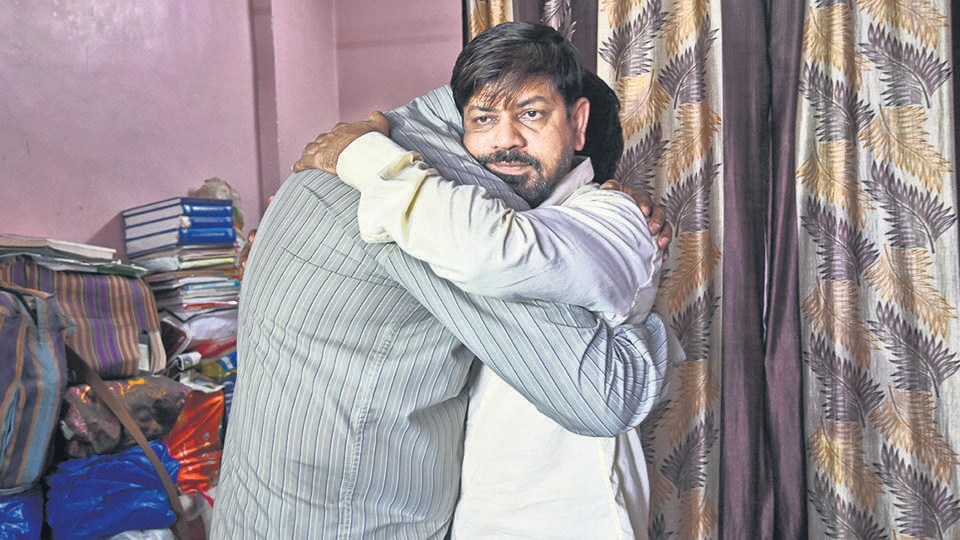
After watching the proceedings of the Bombay High Court online from his home, Ansari decided to leave for Nashik prison on Monday itself. He said he was returning early to prison to complete discharge formalities because he could not wait to return to his family a free man. “I have no words right now to describe how I feel. Everyone at home is overjoyed and we have been having sweets all morning. It hasn’t fully sunk in, I am feeling so many emotions simultaneously,” Sajid told HT soon after the High Court’s verdict.
The 48-year-old was accused of making the explosive device that was detonated at Borivali station on July 11, 2006, a charge he has strenuously denied. Before his arrest in 2006, he ran a mobile repair shop at Jogeshwari, and says he knows nothing about the new smart phones that are now in use. He learnt how to use WhatsApp only after coming out on parole earlier this month. “How can I go back to doing mobile repair work? I have been set back by almost 20 years. Despite my acquittal, I don’t think anyone will give me a job,” he said.
In prison, however, Sajid completed the first year of LLB and is now in his second year. He has been helping prison inmates with filing bail and parole applications as also those seeking information under the Right to Information Act. “I strongly feel that laws that were made to punish the guilty should not be misused to punish the innocent. That’s why I want to help people like me and provide legal aid to those who need it,” said Sajid. “People from our community are often targeted but in prison I have seen even non-Muslims accused of crimes they did not commit. Some of them face serious charges under laws like POCSO. I really want to help such people,” said Sajid.
He hopes to become a part of the Innocence Network, an advocacy group that works for justice for indigent inmates, started by Abdul Wahid Shaikh, his brother-in-law and former co-accused. The former school teacher was the only one of the 13 men accused in 2006 to have been acquitted by the trial court in 2015.
Sajid says he has been fortunate to have family and friends who never doubted his innocence even after the trial court convicted him and sentenced him to life. Not all of his co-accused, he said, have had a similar support system. His two brothers Khalid and Javed looked after his family while he was incarcerated, including his daughter, born two months after his arrest. “Growing up without her father she has become very sensitive. She told me she would often shed tears when she would see her cousins with both parents while she had only her mother to comfort her,” said Sajid.
“When I come back from Nashik, I want to spend time with my family including my extended family which always believed in my innocence. They have stood by me but in all these years I could not be a part of their happy or sad occasions. I want to make up for that. I will visit my relatives in in Bijnaur at the first opportunity I get.”
‘When I needed my father the most, he wasn’t there’
Mubashshara Majid was a one-month-old baby when her father, Mohammad Majid Mohamad Shafi, accused No. 5 in the 7/11 Mumbai train blasts case, was arrested by the Maharashtra Anti-Terrorism Squad (ATS) in 2006.
Near Kolkata’s Sealdah, she was raised by her mother, Farzana Yasmin. “I grew up without my father, but my mother never hid anything about him from me. She always believed he was innocent and that he would come back home one day,” Mubashshara, now 19, told HT.
In school, however, she could not avoid answering questions about her absent father, as her mother was the only parent who turned up at parent-teacher meetings. “Whenever someone asked me where my father is, I’d say he does not live here. If they asked me where he lives, I’d say Mumbai,” said Mubashshara.
On Monday, after hearing about her father’s acquittal, Mubashshara said, “I feel grateful and thankful to my lord. I really don’t know what to say. My mother waited for justice her whole life. She would have been the happiest person today.”
In 2013, Yasmin suffered a kidney failure, and her health started deteriorating. “In 2015, when the (trial) court convicted my father, that broke her. In 2021, I lost her,” said Mubashshara, who now lives with her maternal grandparents. Her mother’s passing was devastating for the teenager. “I was shattered. And in those moments, when I needed my father the most, he wasn’t there,” she said.
Majid worked at a shoe shop started by his father in the Raja Bazar area of Kolkata. However, Mubashshara’s early memories of him are those in the corridors of Mumbai’s City Civil and Sessions Court. “I would only get to see him coming in and out of one room and going to another,” she said. She got to know her father through letters they wrote to one another, sometimes eight pages long.
While Mubashshara could talk to her father twice a month over a video call, the last time she met her father in person was in 2020 at the prison in Amravati, where they were allowed “gala bhet” or physical contact between prison inmates and their family members. “I have learnt from my father that you cannot change the things that are not in your control, but I prayed because I believe that dua (prayer) can change one’s destiny,” Mubashshara said.
‘My brothers were made scapegoats by those who could not find the culprits’
In the 19 years that brothers Faizal and Muzammil Shaikh spent in prison, both their parents passed away, and their brother Rahil has been missing. Their only sister, Aaliya, a Math teacher in Dubai, has been waiting to see her brothers walk out of jail. “Of course, I feel great relief today but I also feel sad that my parents suffered so much before they passed away,” she told HT.
On July 11, 2006, Aaliya remembers Faizal calling her frantically, asking where their father was. “We lived in Mira Road, and so many of our family members travelled on the local train every day. It was a lifeline for us to travel anywhere from Mira Road. Faizal called my phone and asked me where Abu was. He asked me to make sure he was not on the train. He was so worried. Would someone who carries out a bomb blast make such a frantic call?”
In 2015, the special MCOCA court sentenced Faizal to death and Muzammil to life imprisonment. “When my brothers were arrested, the media was lined up outside our house. I said that day that my brothers were innocent, and it has been proven now. My parents suffered so much pain and harassment. My father died in 2019, and my mother died in 2024. I was the only one there for them after their sons were arrested,” said Aaliya, a mother of four, who made annual trips to Mumbai to look after her parents.
Her brothers, both unmarried at the time of their arrest, are now in their forties. She said Faizal ran his own business and Muzammil, a software engineer, had a job in Bengaluru before they were arrested.
“My brothers have been very strong and patient all these years. Even from prison, they have been giving us hope. And now, after 19 years, we’re seeing this day,” said Aaliya.
“Questions should now be asked of those who made false cases against my brothers. They could not catch the real culprits, and they made my brothers scapegoats to hide their own incapability,” she added.
‘His innocence was never in doubt, our whole town is happy today’
By afternoon on Monday, Anees Ahmed was in Pune setting the paperwork in motion for the release of his cousin, Asif Basheer Khan, from the Yerawada Central Jail. He was not surprised when he heard that the process may take longer than he expected, but he is hopeful of taking Khan back home to Jalgaon on Tuesday evening.
Khan, a civil engineer, worked with a construction company before he was arrested in 2006 in the 7/11 blasts case. His two daughters were toddlers at the time. One of them is now married. As a father, Asif may not have been able to watch his children grow up but he may be out of jail in time to meet his grandson, who was born only three days ago.
“His son has had a baby who is only a few days old. The family, our town, and our community are very happy today. People have been coming to his house to meet his family all day,” said Anees.
In 2017, over 2,500 people in Jalgaon had signed affidavits vouching for Khan’s innocence in the case, following a drive held outside local mosques.
‘After conviction, his wife divorced him; she too had suffered’
Much before he was named accused No. 11 in the case, Zameer Ahmed Shaikh was a footballer who played at the city’s famed grounds like Cooperage and YMCA. “He was a very good player. He even played for his college,” says Zameer’s brother, Sharif-ur-Rehman L Shaikh.
Sharif remembers his brother’s arrest. “The way the bomb blasts shook the entire city, my brother’s arrest in this case shook us the same way again,” he said. “Until Zameer was arrested, we had never even seen the gate of a police station in our lives.”
He also remembers their mother insisting on coming to the trial court on every date of hearing just to be able to see her “favourite son” for a few minutes. Her passing, in 2010, was a tragedy the family endured as they waited for justice.
At the time of his arrest in 2006, Zameer had a four-year-old son. His daughter was born the same year. “His wife stood by him all along. She always supported him and believed in his innocence. She thought they would start their life anew when the court acquits him. But in 2015, after the trial court convicted him, she couldn’t do that anymore. She lost hope of his return. They then got divorced. She, too, had suffered, and she had to think of her life and that of her two children,” said Sharif. “Growing up was not easy for his children. The family did look after them, but baap toh akhir baap hota hai na (a father is a father after all).”
Sharif added, “We were all very depressed after the conviction in 2015. But as they say, time is the greatest healer. Now once more, we are hopeful of Zameer’s return.”

Stay updated with all the Breaking News and Latest News from Mumbai. Click here for comprehensive coverage of top Cities including Bengaluru, Delhi, Hyderabad, and more across India along with Stay informed on the latest happenings in World News.


