
 E-Paper



Meghalaya villagers come together to save 200-yr-old living root bridge
The root bridge was getting damaged as people had lined it with large stones to help them cross it easily. These stones were damaging the bridge, which takes several decades to form, in the process by slowly putting stress on the roots.


Villagers in Nohwet village in the southern slopes of Meghalaya’s East Khasi Hills district knew they had to do something to save a nearly 200-year-old living root bridge.
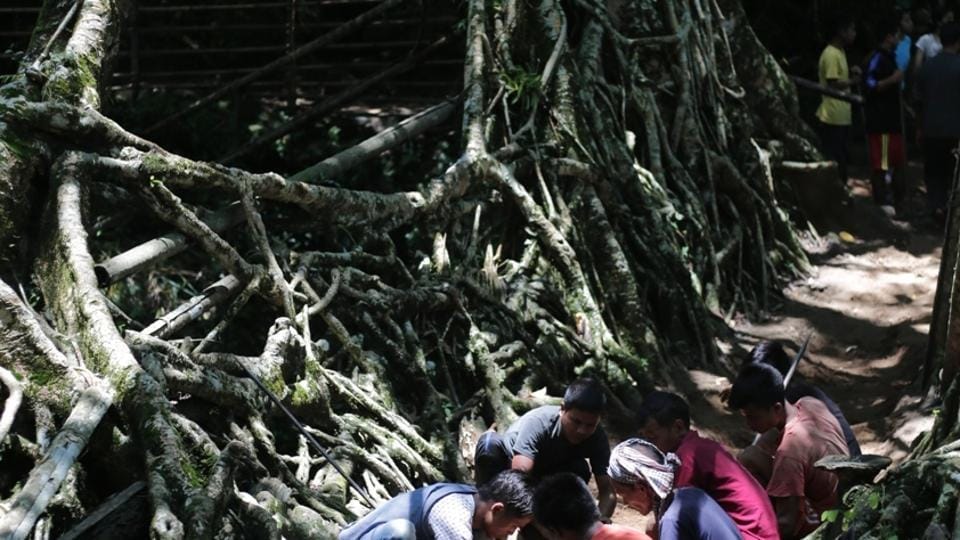
The root bridge was getting damaged as people had lined it with large stones to help them cross it easily. These stones were damaging the bridge, which takes several decades to form, in the process by slowly putting stress on the roots.
Village headman Bose Swell Khongthohrem and other residents came together on Saturday to remove the stones to allow the bridge to recover.
“In their place, dead wood from jackfruit trees mixed with a light layer of soil was used which according to the locals is a great source of nutrients for the roots,” said a release from the Meghalaya Basin Development Agency.
Areca nut trees were laid on top of this layer so that people could walk on the bridge without stepping directly on the roots to prevent further damage. As part of the drive, residents also planted several ‘Ficus elastica’ or rubber tree saplings, which would transform into living root bridges over the years.
Instead of construction material, the Khasi people of the region have been planting rubber trees on banks of rivers and streams to form these living bridges for years now.
These living root bridges are considered a marvel of nature and a big attraction among tourists visiting the northeastern state.



