The second wave of the Covid pandemic triggered a surge in demand for work under India’s rural job guarantee programme , with the 1.545 billion days of work generated exceeding the estimate by almost 5% as workers in rural areas avoided cities out of fear of Covid-19.
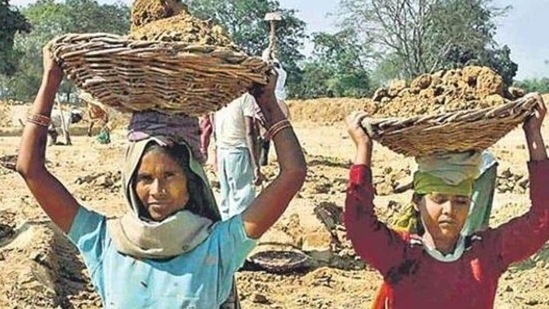
Experts believe that the Mahatma Gandhi National Rural Employment Guarantee Scheme will require a top-up with demand for work likely continuing to remain strong.
The rural job scheme generated 1.545 billion days of work against the official estimate of 1.473 billion days between April and July this year. with the demand led by some of the country’s larger states such as Rajasthan, West Bengal, Maharashtra, Gujarat, Karnataka and Tamil Nadu.
“Higher demand in work-days is related to the second wave. But even during the second wave, the uneven rate of Covid incidence is reflected in the MGNREGS job map. Demand is low in states with high incidence, creating a negative correlation between MGNREGS and the pandemic,” said, former rural development secretary Jugal Kishor Mohapatra.
With the economy still not recovered fully , and some workers not keen on travelling out of their villages, experts and politicians are pitching for more work. Parties such as the Congress and those that are part of the Left Front have suggested that in areas where there is a high demand for work, the annual cap of 100 days of work for individuals can be increased to at least 150 days. A government functionary said that in case of natural disasters, such flexibility can be offered under MGNREGA and the government only needs to treat the pandemic at par with a natural disaster.
{{/usCountry}}With the economy still not recovered fully , and some workers not keen on travelling out of their villages, experts and politicians are pitching for more work. Parties such as the Congress and those that are part of the Left Front have suggested that in areas where there is a high demand for work, the annual cap of 100 days of work for individuals can be increased to at least 150 days. A government functionary said that in case of natural disasters, such flexibility can be offered under MGNREGA and the government only needs to treat the pandemic at par with a natural disaster.
{{/usCountry}}While the demand for work has outpaced estimates, in the last two months, as the Covid-19 wave has ebbed, it has correspondingly slowed. Government data shows that while 50.5 million workers demanded jobs in June, reflecting the peak demand for this year, in July, only 42.6 million people sought work under the world’s largest guaranteed job scheme.
Rural development secretary NN Sinha, however, pointed out that “during the monsoon season, the job demand is usually low. A number of people are engaged in the agriculture sector. Also, a number of MGNREGS activities can’t be undertaken in the monsoon.”
The monsoon coincides with the sowing season in India, resulting in an increase in agricultural work.
Mohapatra is of the opinion that over the next few months more people will demand work under MGNREGS than the current estimate. “The budget will definitely require a top-up as a large section of the rural population would like to stay back home. While a number of migrant workers have not returned from the cities so far, shrinking opportunities can change the situation.”
The government had allocated ₹73,000 crore for MGNREGS for this financial year, out of which the ministry has already released ₹49,800 crore.