NEW DELHI: India and Pakistan should exercise maximum restraint and avoid a military confrontation that can “easily spin out of control”, UN Secretary-General Antonio Guterres said on Monday against the backdrop of heightened tensions between the South Asian neighbours over the Pahalgam terror attack.
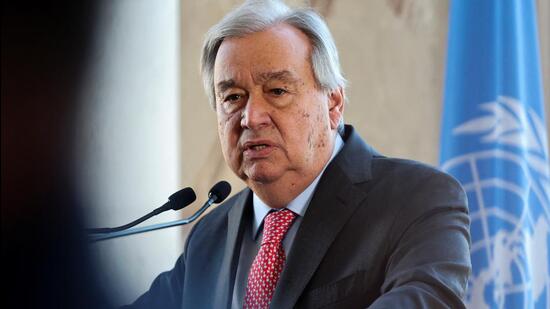
Guterres offered to mediate between the Indian and Pakistani governments and said the United Nations will support any initiative that promotes de-escalation and diplomacy. He made the remarks at a media stakeout in New York hours ahead of consultations behind closed doors at the UN Security Council on the situation between India and Pakistan.
Describing tensions between India and Pakistan at their “highest in years”, Guterres said: “It is.. essential, especially at this critical hour, to avoid a military confrontation that could easily spin out of control. Now is the time for maximum restraint and stepping back from the brink.”
He added, “Make no mistake, the military solution is no solution. And I offer my good offices to both governments in the service of peace. The UN stands ready to support any initiative that promotes de-escalation, diplomacy and a renewed commitment to peace.”
Guterres reiterated his condemnation of the Pahalgam terror attack of April 22 that killed 26 people, mostly tourists, and said: “Targeting civilians is unacceptable and those responsible must be brought to justice through credible, lawful means.”
{{/usCountry}}Guterres reiterated his condemnation of the Pahalgam terror attack of April 22 that killed 26 people, mostly tourists, and said: “Targeting civilians is unacceptable and those responsible must be brought to justice through credible, lawful means.”
{{/usCountry}}Acknowledging the significant contributions of India and Pakistan to the work of the UN, including peacekeeping operations, and the “raw feelings” following the terror attack, Guterres said he was pained to “see relations reaching a boiling point”. He said his message in his ongoing outreach to both countries has been to exercise restraint and step back from the brink.
Tensions have soared between India and Pakistan after New Delhi unveiled a slew of economic, diplomatic and political punitive measures, including the suspension of the Indus Waters Treaty, against Islamabad over “cross-border linkages” to the attack. Pakistan has launched its counter-measures, including closing its airspace to Indian airliners and suspending all trade. Its armed forces have conducted military exercises, including the test firing of missiles.
Last week, Prime Minister Narendra Modi gave India’s armed forces “complete operational freedom” to decide the mode, targets and timing of India’s response to the Pahalgam terror attack. Pakistan’s leadership has said it will respond to any military or escalatory action by India.
The UN Security Council is expected to meet in New York shortly after midnight, Indian standard time, for consultations behind closed doors on the situation between India and Pakistan.
Pakistan, which is currently among the 10 non-permanent members of the Security Council, sought the meeting, and its request was accepted by Greece, which holds the rotating presidency of the body for May.
Over the past few days, India has reached out to the permanent members of the Security Council and external affairs minister S Jaishankar has dialled his counterparts from the nine other non-permanent members of the body to brief them on New Delhi’s resolve to punish the perpetrators of the terror attack and to ensure the focus remains on the fight against terrorism.
.